
Legal Requirements: US Citizens Marrying in France
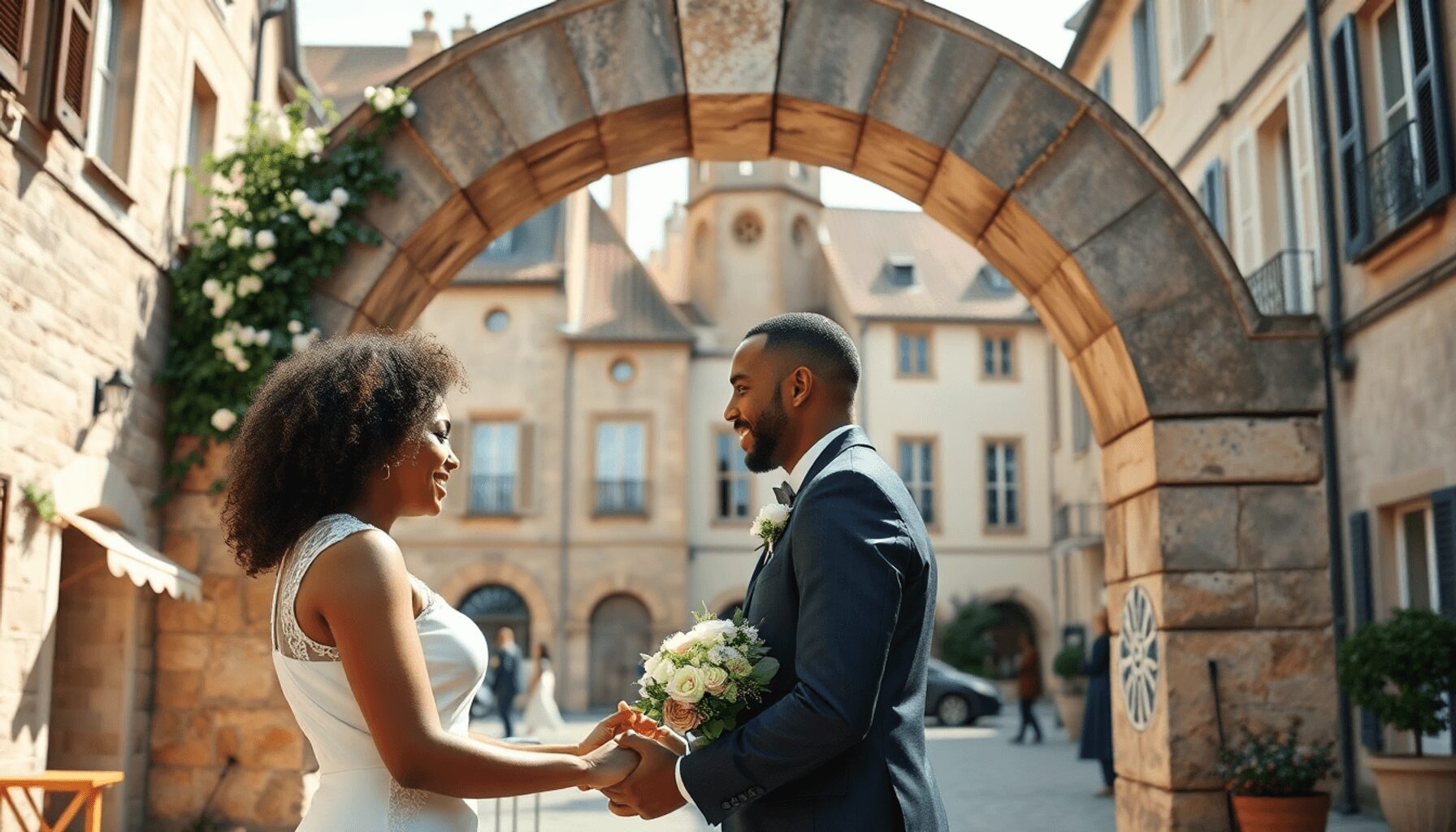
Planning an international marriage celebration in France brings excitement and romance. However, US citizens marrying in France need to navigate a specific legal framework that differs significantly from American procedures. The French marriage system operates under civil law, requiring all couples to complete a mandatory civil ceremony at a town hall before any religious or symbolic celebration holds legal validity.
While you might dream of exchanging vows in a charming Provençal château or a Parisian garden, understanding the legal marriage requirements that France imposes becomes your first priority. French authorities maintain strict documentation standards, residency prerequisites, and procedural steps that demand careful attention and advance planning. Missing a single requirement can delay or derail your wedding plans entirely.
This comprehensive guide walks you through every legal aspect of getting married in France as an American citizen. You'll discover:
- The mandatory civil ceremony process and how it differs from US weddings
- Specific residency requirements that impact your timeline
- Essential documentation you
Understanding the Legal Framework for Marriage in France
French marriage law operates under a strict principle: only civil ceremonies conducted at a town hall hold legal validity. You cannot legally marry in France through a religious ceremony alone, regardless of how meaningful or elaborate that celebration might be.
The mairie (town hall) serves as the exclusive venue where your marriage becomes legally binding. A mayor or an authorized deputy must officiate your ceremony for it to carry legal weight. This official represents the French Republic and ensures your union complies with all civil code requirements.
Civil ceremony France regulations distinguish clearly between what's legally recognized and what's purely ceremonial:
- Civil ceremony: The only legally binding marriage format, conducted at the town hall during official business hours
- Religious ceremony: Holds spiritual significance but carries zero legal status in France
- Symbolic ceremony: Popular for destination weddings but provides no legal recognition
You must complete your civil ceremony before scheduling any religious or symbolic celebration. French law actually prohibits religious officials from conducting marriage ceremonies for couples who haven't first obtained their civil marriage certificate. This sequence is non-negotiable.
The marriage legality France framework protects both parties by ensuring marriages meet specific legal standards. Your civil ceremony typically lasts 20-30 minutes and includes reading relevant articles from the French Civil Code, exchanging vows, and signing the marriage register.
However, if you're considering a more picturesque setting for your wedding, exploring the Beaujolais region could provide the perfect backdrop. The area is known for its stunning landscapes and charming venues, such as the luxurious Domaine de Vavril, which has been transformed into a beautiful wedding location.
It's essential to remember that while planning your wedding, you might want to incorporate some personal touches. For instance, creating beautiful decor corners can significantly enhance the aesthetic appeal of your wedding venue.
Also, if you're considering extending your wedding celebrations over a long weekend, it could offer you exclusivity and more time to enjoy with your loved ones. This long weekend wedding idea could be an excellent way to make the most of your special day.
Lastly, don't forget about the culinary aspect of your wedding. Choosing the right wines can complement your menu beautifully. Here are some helpful tips on selecting wines for your wedding, ensuring a delightful experience for you and your guests.
Residency Requirements for US Citizens
The 30 days residency rule is a significant factor for US citizens planning to marry in France. According to French law, at least one partner must establish residency in the specific municipality where the marriage is intended for a minimum of 30 consecutive days before submitting the marriage application to the mairie.
What qualifies as residency for marriage purposes:
- Physical presence in the municipality for 30 uninterrupted days
- Documentation proving your address (lease agreement, utility bills, or attestation d'hébergement if staying with someone)
- Registration at your accommodation address
- The residency period must be completed before you can even schedule your marriage appointment
This residency requirement marriage France regulation significantly impacts your wedding timeline. You cannot simply arrive in France and marry within a few days or weeks. The process demands careful advance planning:
- Account for the mandatory 30-day residency period
- Add time for document preparation and submission
- Include the 10-day public announcement period (marriage banns)
- Allow processing time for the mairie to review your application
For US citizens accustomed to quicker marriage processes, this municipality residence marriage requirement means you're looking at a minimum two-month timeline from arrival in France to your actual wedding date.
Many couples opt to rent apartments or extended-stay accommodations specifically to fulfill this legal obligation, making budgeting for accommodation a necessary part of wedding planning. Some have even chosen stunning venues like the Domaine de Vavril in Beaujolais which not only provides a beautiful setting but also offers a unique experience that blends legal requirements with memorable moments.
Age and Consent Regulations
French law establishes 18 years as the minimum marriage age for both parties entering into a civil union. This requirement applies universally to all couples, including US citizens planning to marry in France. You must provide valid identification proving your age meets this threshold when submitting your marriage application to the mairie.
When one or both partners are minors (under 18), the process becomes significantly more complex. The couple must obtain:
- Parental consent from both parents or legal guardians of the minor(s)
- Judicial approval from the public prosecutor (procureur de la République)
- Documentation proving "serious reasons" justifying the marriage
The public prosecutor evaluates each case individually, examining whether the marriage serves the minor's best interests. This judicial review process can extend your timeline by several weeks or months.
French authorities take consent verification seriously. During your marriage interview at the town hall, officials will assess whether both parties are entering the marriage freely. They specifically look for signs of:
- Coercion or pressure from family members
- Fraudulent marriages for immigration purposes
- Lack of genuine understanding of marital obligations
You may be interviewed separately to ensure your consent is authentic and voluntary. The mayor or authorized official has the legal authority to refuse to perform the ceremony if they suspect duress, fraud, or any violation of consent principles. This protection exists to safeguard both French nationals and foreign citizens, including Americans, from forced or fraudulent marriages.
If you're considering such a significant step as marriage in France, it might be worth exploring some local accommodations for your stay. For instance, L'Appartement des Vignes au Domaine de Vavril offers a refined lodging option that can comfortably host up to six people, making it ideal for witnesses, friends, or family accompanying you on this journey.
Moreover, if you're interested in sampling some of the local produce while in France, particularly wine, you could consider visiting during harvest season. The 2007 vendanges in Beaujolais serve as a perfect example of how unique and prolonged these harvests can be.
And if you're a wine enthusiast looking for quality options from Beaujolais, you might want to try Les Perles de Vavril, a high-quality sparkling white wine made using traditional methods.
Lastly, if you're interested in innovative products in the wine sector, Domaine de Vavril offers a range of innovative wines including sparkling rosé and Chardonnay white from Beaujolais.
Documentation Needed for Marriage Application
Gathering the right marriage documents France requires careful attention to detail and advance planning. You'll need to compile a comprehensive dossier that satisfies French administrative requirements.
Essential Documents You Must Provide:
- Valid passports for both partners with at least six months validity
- Birth certificates issued within the last three to six months (depending on your mairie's requirements)
- Sworn French translations of all foreign documents by a certified translator (traducteur assermenté)
- Proof of residence in the municipality where you're applying (utility bills, lease agreements, or attestation from your landlord)
- Certificate of celibacy (certificat de célibat) confirming you're legally free to marry
- Certificate of custom (certificat de coutume) from the US Embassy or Consulate explaining American marriage laws
If you've been previously married, you'll need your divorce decree or death certificate of your former spouse. These documents require apostille translation documents certification through the Hague Convention process. The apostille authenticates your documents for international use, and you must obtain this from the state where the document originated before having it translated.
The required paperwork marrying in France demands meticulous preparation. Each document must bear an apostille stamp, then receive official translation by a French-certified translator. Some mairies accept translations from specific translators only, so you should verify requirements with your chosen town hall before proceeding.
Once the documentation is sorted, you can start planning other aspects of your wedding. An essential part of your wedding will be the decoration. The decoration kit launched by Domaine de Vavril offers an exclusive selection that can help represent your personality through unique, subtle and refined decoration styles.
Public Announcement and Marriage Banns
French law requires the public display of marriage banns in France at the town hall where you intend to marry. The mairie posts these banns for a minimum of 10 consecutive days before your wedding ceremony can take place. Your names, occupations, addresses, and the proposed marriage date will be displayed on official notice boards at the town hall entrance.
This public notice wedding in France serves an important legal purpose: it allows anyone with valid objections to your marriage to come forward. The system exists to prevent marriages that violate French law, such as bigamy, forced marriages, or unions involving individuals who lack legal capacity to marry. During this 10-day period, any person with knowledge of legal obstacles must inform the mayor.
The timing of this requirement directly affects your wedding planning. You cannot schedule your ceremony until after the 10-day posting period ends. If you're planning a destination wedding in France, such as at a beautiful venue like the ones offered by Domaine de Vavril, you need to consider this mandatory waiting period in your timeline. The banns posting starts only after the mairie accepts your complete marriage application and verifies all your documents.
Some municipalities may also post banns at the
Ceremony Requirements and Witnesses
The civil ceremony requirements in France mandate specific protocols for witnesses during the marriage process. French law requires a minimum of two witnesses and permits a maximum of four witnesses to be present during your civil ceremony at the mairie. These witnesses play a crucial role in validating your marriage and their names will appear on your official marriage certificate.
Who Can Be Your Witnesses?
You have complete flexibility in choosing your witnesses. They must be at least 18 years old and possess valid identification, but beyond these basic requirements, French law imposes no restrictions. Your witnesses don't need to be French nationals, family members, or even residents of France. You can select friends, relatives, or any adults who can be present on your wedding day and provide proper identification.
What Do Your Witnesses Need to Bring?
Each witness will need to present a valid form of identification such as a passport or national identity card during the ceremony. The mayor or authorized official will record their full names, dates of birth, addresses, and occupations on your marriage certificate. This documentation becomes part of the permanent legal record of your marriage.
Important Considerations for Your Witnesses
When planning your Legal Requirements: US Citizens Marrying in France, coordinate with your chosen witnesses well in advance. They'll need to be physically present at the town hall during your ceremony—remote or proxy witnessing isn't permitted under French marriage law. You should confirm their availability for your specific wedding date and ensure they understand they'll need to bring their identification documents to the ceremony.
Adding Personal Touches to Your Wedding Ceremony
In addition to fulfilling these legal requirements, you may want to consider adding personal touches to your wedding ceremony. One unique idea is to incorporate DIY elements into your wedding decor. For example, you could create vintage-style centerpieces using recycled wine bottles, which would not only add a personal touch but also align with sustainable practices.
Post-Ceremony Formalities and Recognition
Once you complete your civil ceremony at the mairie, you'll receive your French marriage certificate (livret de famille) immediately. This official document serves as your primary proof of marriage in France and includes all relevant details about your union, including the witness information you provided.
The French marriage certificate automatically holds legal validity in the United States through international treaty agreements. You don't need to take additional steps for your marriage to be recognized when you return home. That said, registering your marriage with the US Embassy in Paris offers practical advantages you should consider.
Benefits of US Embassy registration include:
- Creating an official US government record of your marriage abroad
- Simplifying future administrative processes like name changes on US documents
- Providing an English-language report of your marriage for US authorities
- Establishing a backup record accessible through the State Department
You can register your marriage by submitting a Consular Report of Marriage form along with your French marriage certificate and a certified translation. The embassy charges a fee for this service, which you'll find listed on their official website.
Keep multiple certified copies of your French marriage certificate. You'll need these documents for updating your passport, Social Security records, and other legal documents in both countries. French authorities can provide additional certified copies (copies intégrales) upon request for a small fee.
Same-Sex Marriage Provisions in France
France legalized same-sex marriage on May 18, 2013, through the "Marriage for All" law (Loi ouvrant le mariage aux couples de personnes de même sexe). This landmark legislation granted full marriage equality, making France the fourteenth country worldwide to recognize same-sex unions with identical legal standing as opposite-sex marriages.
You'll find that LGBTQ+ marriage rights in France are comprehensive and non-discriminatory. The French legal system applies the exact same requirements, procedures, and rights to all couples regardless of gender composition. This means:
- The 30-day residency requirement applies equally
- Documentation requirements remain identical
- The civil ceremony format and legal validity are the same
- Parental rights and adoption laws extend to same-sex couples
- Tax benefits and inheritance rights mirror those of opposite-sex marriages
When you apply at the mairie as a same-sex couple, you'll complete the same forms and follow the same timeline as any other couple. The mayor or authorized official conducts your ceremony using identical legal language and procedures.
Your French marriage certificate will hold the same legal weight whether you're in a same-sex or opposite-sex marriage. The US government recognizes valid French same-sex marriages for immigration and federal benefits purposes, following the 2015 Supreme Court ruling in Obergefell v. Hodges.
You won't encounter any additional bureaucratic hurdles or special provisions—French law treats all marriages identically once you meet the standard legal requirements outlined in previous sections.
Moreover, if you're considering a picturesque setting for your wedding, Le Domaine de Vavril offers a stunning venue in the Beaujolais wine region. This magnificent 18th-century manor is perfect for hosting rustic chic weddings.
And after your wedding, you might want to enjoy some quality time with friends and family at this beautiful domain. You can rent the luxurious family house located in the heart of the French vineyard near Lyon, where you can indulge in exquisite gastronomy and savor fine French wines.
Religious and Symbolic Ceremonies After Civil Marriage in France
French law is crystal clear on this point: only the civil ceremony at the mairie holds legal weight. You can plan the most elaborate religious ceremony after civil wedding France, but it won't be legally recognized unless you've already completed your civil marriage first.
This creates a specific sequence you must follow. The civil ceremony happens first—always. After receiving your official marriage certificate from the town hall, you're free to celebrate with any religious or symbolic wedding France you desire.
Many couples choose this path. You might have a simple civil ceremony at the mairie with just your witnesses, then host a larger religious celebration at a church, synagogue, or other venue days or weeks later. Some couples opt for symbolic ceremonies in picturesque French locations—think vineyard ceremonies in Provence or château celebrations in the Loire Valley.
The key distinction: these religious or symbolic events are celebrations of your marriage, not the legal establishment of it. French officials won't perform religious ceremonies that haven't been preceded by civil marriage. In fact, religious officials in France can face legal penalties for conducting marriage ceremonies before couples complete their civil requirements.
When planning your timeline, account for the civil ceremony first. You'll need that official documentation before any religious or symbolic celebration can take place. This requirement applies equally to all couples, including US citizens marrying in France.
FAQs (Frequently Asked Questions)
What are the legal requirements for US citizens marrying in France?
US citizens marrying in France must comply with French marriage laws, which require a mandatory civil ceremony conducted by a mayor or authorized official at the mairie (town hall). Religious or symbolic ceremonies have no legal status unless preceded by the civil marriage.
Is there a residency requirement for US citizens wishing to marry in France?
Yes, at least one partner must reside in the municipality where the marriage will take place for a minimum of 30 days prior to applying. This residency rule impacts the planning timeline for US citizens intending to marry in France.
What documents are needed for a US citizen's marriage application in France?
Essential documents include valid passports, birth certificates with sworn French translations, proof of residence, and a certificate of celibacy. If applicable, divorce decrees must be provided. Foreign documents require apostille legalization and official translations.
Are there age and consent regulations for marriage in France?
Both parties must be at least 18 years old to marry in France. If one or both partners are minors, parental consent and judicial approval are required. Free consent without duress or fraud is also mandatory.
How does the public announcement process work for marriages in France?
Marriage banns are publicly displayed at the town hall for 10 days before the wedding date. This public notification serves legal purposes by allowing any objections to be raised prior to the ceremony.
Can same-sex couples legally marry in France and do the same requirements apply?
Yes, same-sex marriage has been legally recognized in France since 2013. All legal requirements, including civil ceremonies and documentation, apply equally regardless of gender composition.