
Fleurie Wine: A Guide to Beaujolais’ Floral Cru
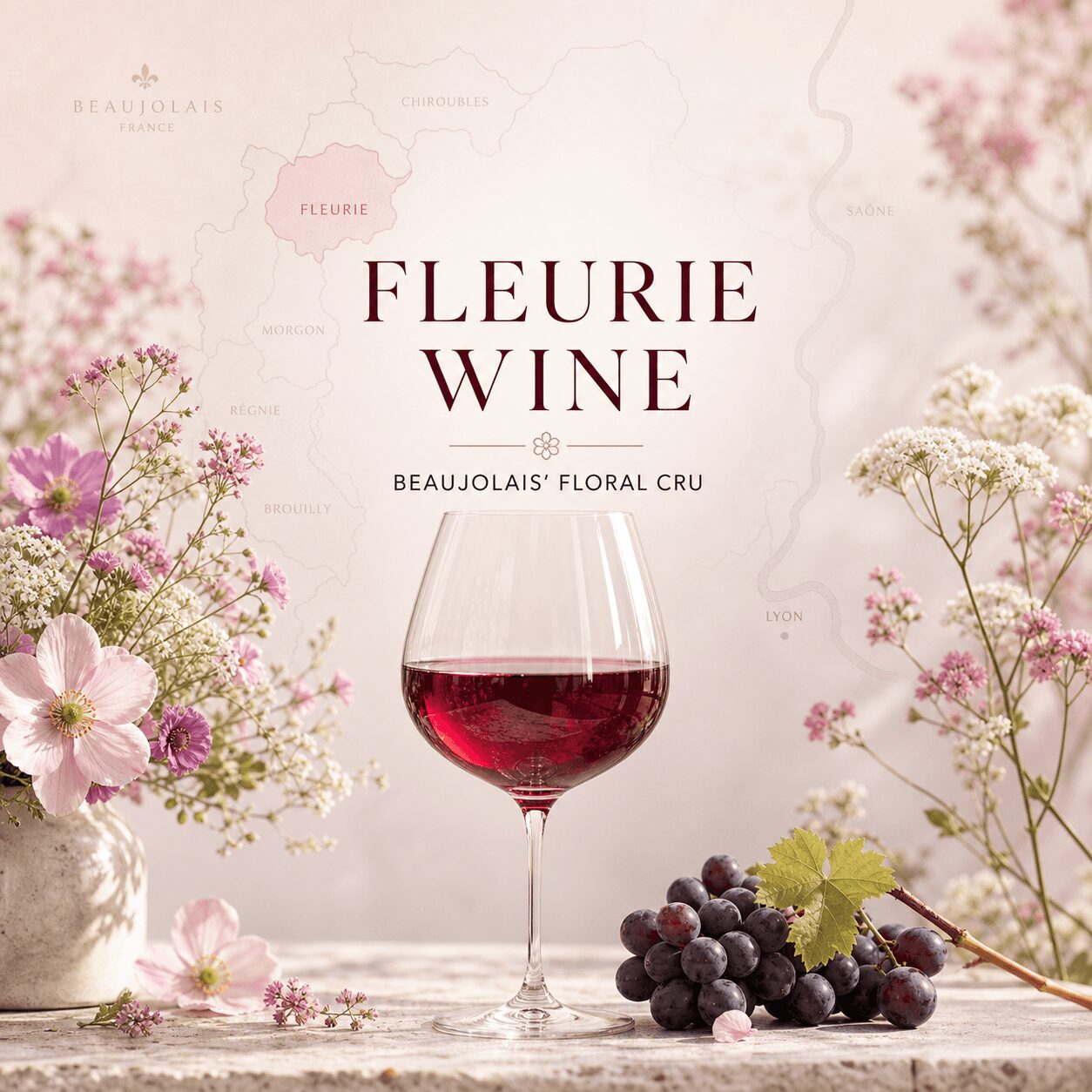
Fleurie is one of those wine names that sounds like it already smells good. And honestly, it kind of does.
If you have ever had a glass of Beaujolais that felt like biting into a ripe strawberry while someone waved a bouquet of peonies nearby, there is a decent chance it was Fleurie. Or at least it was trying to be.
Fleurie is a cru of Beaujolais, which basically means it is one of the ten villages in the region allowed to put its name on the label because it tends to produce more distinctive, more site-driven wines than the broader Beaujolais and Beaujolais Villages categories. The grape is still Gamay. Always Gamay. But in Fleurie, Gamay gets this extra lift. More perfume, more charm, and usually a softer, silkier feel.
This guide aims to make Fleurie make sense. What it tastes like, why it tastes like that, what to look for on labels, what to pair it with, and yes, how it fits into the kind of table you might set at a wedding weekend or private event at an estate like Domaine de Vavril, known for its stunning wine country settings in Beaujolais.
What is Fleurie, exactly?
Fleurie is a cru Beaujolais located in the northern part of the Beaujolais region, not too far from the better-known names wine people like to drop at dinner: Morgon, Moulin a Vent, Julienas.
It is also one of the most immediately lovable crus. Not always the most powerful. Not always the most age worthy. But it is often the one that disappears first once the bottle is open.
A typical Fleurie is:
- Floral, like violets, iris, peony
- Bright red fruit, like raspberry, wild strawberry, sometimes cherry
- Light to medium bodied
- Low tannin, or at least tannins that feel smooth and gentle
- Fresh acidity that keeps it lively
But here is the part people miss. Fleurie can be delicate, sure. Yet the best ones have structure underneath. Not loud structure. More like a good linen shirt. You only notice it because it hangs well.
When considering French wine and wedding pairing, Fleurie's unique characteristics make it an excellent choice for various occasions including weddings held at picturesque venues such as Domaine de Vavril.
Why Fleurie tastes so floral
Three main reasons. And they all stack together.
1. Gamay is naturally aromatic
Gamay is not a brute grape. It is expressive. Especially when it is grown on good sites and handled with care. It leans into red fruit and flowers more easily than, say, Cabernet Sauvignon.
2. Granitic soils (and friends)
Fleurie sits on a patchwork of soils, but pink granite is one of the recurring themes. Granite tends to give wines a certain brightness and tension. Not "minerality" in the abstract marketing sense. More like the fruit feels clearer. The wine feels lighter on its feet.
Some parts of Fleurie also have schist, clay, and sandy elements mixed in. Which is why Fleurie is not just one style. Some bottles are airy and perfumed, others are deeper and more spiced.
3. Winemaking style
Beaujolais is famous for semi carbonic maceration (whole clusters fermenting in a way that emphasizes fruit and aromatics). Not every producer does it the same way, and some go more traditional Burgundian too, with partial destemming and longer macerations.
But in general, Fleurie often gets treated in a way that preserves that lifted nose. So you smell flowers first, then fruit, then maybe a little peppery note after it has been in the glass for a bit.
Fleurie vs other Beaujolais crus (quick, useful comparisons)
If you are trying to choose a cru and do not want a lecture, this helps.
- Fleurie: Floral, silky, charming, red fruit. The "pretty" one, but not shallow when well made.
- Morgon: Darker fruit, more body, can go almost Burgundian with age.
- Moulin a Vent: More tannin, more structure, often the most age worthy.
- Chiroubles: Lighter, very fresh, high altitude feel.
- Brouilly: Easy, generous, often the crowd pleaser for big groups.
So if Morgon is a brooding novel and Moulin a Vent is a tailored jacket, Fleurie is… the good perfume you keep going back to. It pulls you in.
In addition to its unique taste profile, Fleurie also serves as an excellent backdrop for various life events such as weddings or destination celebrations. The region's charm adds an extra layer of beauty to any occasion. For those considering such an event in this picturesque area of France, it's essential to choose the right season for your wedding or event to fully enjoy what Beaujolais has to offer.
Moreover, the allure of Beaujolais isn't limited to its wine or scenic beauty; it's also experiencing a resurgence as noted in recent trends where [Beaujolais is bouncing back](https://vavril.fr/en/why-beaujolais-is-b
The best moments to drink Fleurie
Fleurie is not a "save it for a decade" wine in most cases, although some producers make serious versions that develop beautifully for 5 to 10 years.
In general though, Fleurie is best when:
- You want something red but not heavy
- You want a wine that works across a meal, not just with the main course
- You are hosting people with mixed preferences (it rarely offends anyone)
- You're planning a long lunch, a garden dinner, or even a wedding weekend where bottles are opened early and finished happily
And yes, Fleurie is one of those wines that looks classy on a table without being intimidating. Which is a real thing. People relax around it.
Serving Fleurie the right way (this matters more than people admit)
Fleurie gets flattened when it is too warm. And it gets muted when it is too cold.
The sweet spot:
- Serve slightly chilled: around 13 to 15°C
- If it is room temperature, pop it in the fridge for 20 minutes
- Use a medium sized red wine glass, not a tiny one
Decanting is optional. Young Fleurie usually does not need it, but giving it a little air can help the floral notes open up.
Also, Fleurie is one of the few reds that can handle a bit of daylight drinking. Which sounds silly, but it is true.
What does Fleurie pair with?
A better question is what does it not pair with. Because it is flexible.
That said, Fleurie shines with foods that echo its freshness and softness.
Classic pairings
- Roast chicken, especially with herbs
- Charcuterie boards, pâtés, terrines
- Grilled salmon or tuna (yes, red with fish, it works)
- Mushroom dishes, lentils, veggie stews
- Soft cheeses like Brie, Saint Marcellin, or young Tomme
For events and weddings
If you are planning a menu for a group, Fleurie is useful because it bridges a lot of plates. It can handle poultry, vegetarian mains, and even lighter beef dishes without clashing.
At a venue like Domaine de Vavril, where the vibe is often a mix of elegant and relaxed, Fleurie makes sense as a "red option" that still feels fresh for an outdoor cocktail hour, then carries through dinner. This wine is particularly suitable for wedding menus due to its versatility.
A small practical tip if you are choosing wine for a wedding: Fleurie is a safer red for warm weather months than many heavier styles. Guests will actually finish their glasses.
Understanding Fleurie labels (so you buy what you think you are buying)
Fleurie labels can be simple, but a few details help.
Look for:
- "Fleurie" (obviously)
- Vintage year (Beaujolais is vintage sensitive, more than people assume)
- Producer name (this matters a lot in Beaujolais)
When considering how to choose the right season for your Beaujolais wedding or event, it's important to remember that Fleurie can be enjoyed year-round. Additionally, if you're looking for itinerary ideas exploring Beaujolais before and after your celebration, the region offers stunning landscapes and delightful wine experiences.
Sometimes you will see lieux dits or special bottlings
You might find names of specific sites within Fleurie, like Madone, Grille Midi, Poncie, etc. These can hint at style, but do not overthink it unless you are already deep into the region.
If you see a bottling emphasizing a particular parcel, it often signals a more serious, structured take. Usually a bit more price too.
What vintages to look for (without turning this into a spreadsheet)
Beaujolais vintages vary, but Fleurie tends to show it clearly because the style is so aromatic.
As a general buying approach:
- If you want pure fruit and easy drinking, go for relatively recent, generous vintages.
- If you want more structure and aging potential, look for years known for concentration and balance.
If you are standing in a shop and unsure, ask for "a Fleurie with a little more structure" or "a very floral light Fleurie." The staff will get it.
Is Fleurie a "serious" wine?
Yes. But it does not always shout about it.
There is a weird bias in wine where power equals seriousness. Fleurie is serious in a different way. It is about perfume, texture, nuance, that little shift from raspberry to rose petal as the glass warms up.
And also, not every bottle is profound. Some are simply delightful. That is not a flaw. That is the point.
Planning a Beaujolais focused wine moment at Domaine de Vavril
Since Domaine de Vavril is both an events venue and a wine estate in Beaujolais, it is the kind of place where Fleurie makes sense as more than just a bottle on a list. It can become part of the experience.
A simple idea that works well for private weekends and weddings:
- Start with a crisp white or sparkling for arrivals
- Pour Fleurie (slightly chilled) for the main meal, especially if the menu leans poultry, mushrooms, or vegetarian
- Keep a second red option for guests who want more weight (Morgon or Moulin a Vent)
- Then circle back to Fleurie later, because people do, especially when the dancing starts and nobody wants something heavy
If you are exploring the estate for an event, you can also use the wine angle as a natural conversation point for guests. It feels local, grounded, and not forced.
For those considering hosting in this picturesque region, Vavril's website offers a comprehensive look at their reception spaces, gardens, accommodations, and the vineyard side of the property. This venue pairs very naturally with Beaujolais as it is literally from there.

A quick Fleurie buying shortlist (the style cues)
Instead of brand names, here are the cues that tend to get you what you want.
If you're interested in having your wedding in this beautiful region known for its wine country, consider exploring small luxury weddings or micro weddings in French vineyards. For those concerned about budgeting, this complete guide on French vineyard wedding costs could be invaluable.
Additionally, if you're looking to incorporate some unique experiences into your event such as wine tours for wedding guests, Vavril offers some fantastic options. And remember, whether it's for a wedding or any other event, there's always room for some delightful local cuisine. For instance, you might want to try out this recipe for Oeufs Meurette au Beaujolais Nouveau, which beautifully pairs with your wine selection.
If you want ultra floral and light
- Look for producers known for gentle extraction and whole cluster ferments
- Younger vines, higher elevation parcels can lean this way too
If you want more depth and aging potential
- Look for single vineyard or lieu dit bottlings
- Look for notes about longer maceration, older vines, or more traditional fermentation
- Expect more spice, darker fruit, and a little more tannin
If you want the safest crowd bottle
- A classic Fleurie from a reputable producer, not overly "natural" unless you know your crowd
- You want clean fruit, not funky surprises at a wedding table
Wrap up (and the main thing to remember)
Fleurie is Beaujolais at its most scented and graceful. Gamay that smells like flowers, tastes like bright berries, and drinks like it was made for long meals and good company.
Serve it a little cool. Pair it with food that is not trying to overpower it. And if you are planning a gathering in Beaujolais, Fleurie is one of the easiest ways to make the table feel local, generous, and quietly special.
If you're considering a destination wedding in Beaujolais, it's worth exploring some venues where wine is part of the experience. For instance, Domaine de Vavril, offers such an experience.
Additionally, if you're interested in experiencing the harvest season events during autumn in Beaujolais, or want to understand more about the weather patterns in the Beaujolais region, these resources can provide valuable insights.
FAQs (Frequently Asked Questions)
What is Fleurie wine and where does it come from?
Fleurie is a cru Beaujolais, one of the ten distinguished villages in the Beaujolais region of France allowed to put its name on the label due to its distinctive, site-driven wines. It is located in the northern part of Beaujolais and is known for producing charming, floral red wines made exclusively from the Gamay grape.
What are the typical tasting notes and characteristics of Fleurie wine?
A typical Fleurie wine is floral with aromas of violets, iris, and peony, accompanied by bright red fruit flavors like raspberry, wild strawberry, and sometimes cherry. It tends to be light to medium bodied with low, smooth tannins and fresh acidity that keeps it lively. Despite its delicate charm, well-made Fleurie has an underlying structure that adds elegance and balance.
Why does Fleurie have such a floral aroma and flavor profile?
Fleurie's floral character comes from three main factors: the naturally aromatic Gamay grape which leans into red fruit and flowers; the pink granite soils in the region that enhance brightness and clarity of fruit; and winemaking styles like semi carbonic maceration that preserve lifted, perfumed aromas emphasizing flowers first, then fruit with subtle peppery notes.
How does Fleurie compare to other Beaujolais crus like Morgon or Moulin à Vent?
Fleurie is often described as the 'pretty' cru — floral, silky, charming with red fruit flavors but not shallow when well made. Morgon tends to have darker fruit and more body with aging potential akin to Burgundy. Moulin à Vent offers more tannin and structure, often being the most age-worthy. Other crus like Chiroubles are lighter and fresher while Brouilly is generous and crowd-pleasing.
What food pairings work well with Fleurie wine?
Due to its light to medium body, bright acidity, and floral red fruit profile, Fleurie pairs beautifully with a variety of dishes including roasted chicken, charcuterie boards, grilled salmon, mushroom risotto, and soft cheeses. Its charm makes it an excellent choice for weddings or private events at scenic venues like Domaine de Vavril in Beaujolais.
How does winemaking influence the style of Fleurie wines?
Winemakers in Fleurie often employ semi carbonic maceration—a technique where whole grape clusters ferment in a way that emphasizes fruity aromatics and freshness—preserving the wine's lifted nose of flowers followed by fruit. Some producers also use traditional Burgundian methods with partial destemming and longer macerations which can add depth and spice complexity while maintaining elegance.