
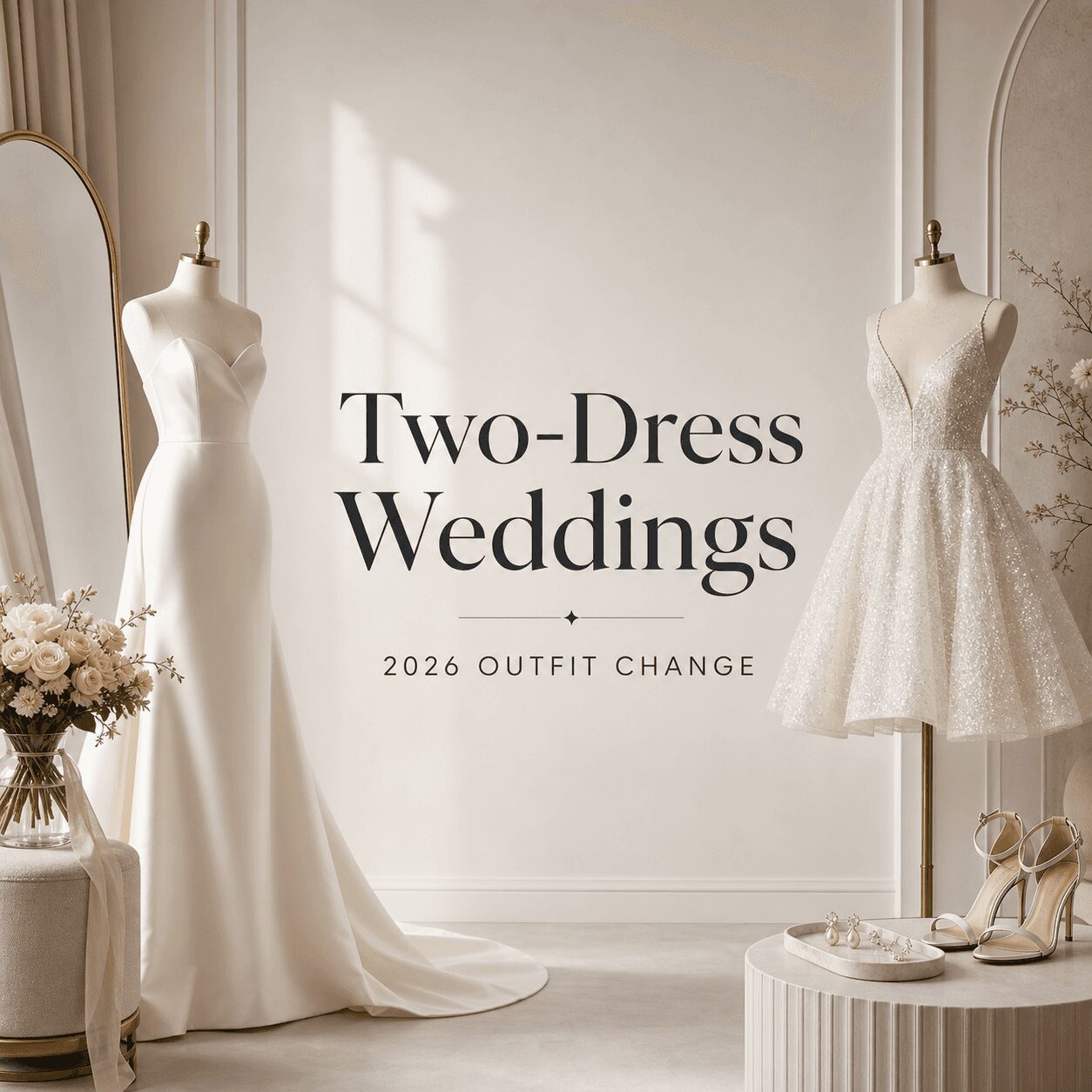
Two-Dress Weddings: The 2026 Bridal Outfit Change
There's a moment at a wedding that almost everyone remembers.
Not the vows, necessarily. Not even the cake.
It's when the bride disappears for a few minutes… and comes back looking like a different version of herself. Still her. But sharper. Lighter. Ready to move.
That outfit change is not new, but in 2026 it's feeling less like a celebrity thing and more like just smart wedding planning. The kind that says, I want the drama and I want to dance.
Two-dress weddings are having a real year. And if you're getting married in a venue where the day naturally flows through different spaces, like gardens into dinner into late night poolside, it makes even more sense. A place like Domaine de Vavril in Beaujolais, for example, already sets you up for chapters. You're not forcing the vibe. It's already there.
This venue not only provides a stunning backdrop but also seamlessly transitions between different wedding phases, making it an ideal choice for those considering a two-dress wedding.
So let's talk about it. What's driving the 2026 outfit change, how to do it without stress, what to wear, and how to make it look intentional not frantic.
Why two-dress weddings suddenly feel… normal
A few years ago, the second look was mostly a reception mini dress on Instagram. Very cute. Very sparkly. Sometimes a little random.
Now it's more thoughtful. More styled. And honestly, more practical.
Here's what changed:
1) Weddings got longer again
People want the full day. Not a quick ceremony and a rushed dinner. They want a welcome drink, a golden hour moment, a real dinner, then an actual party.
And one dress has to work hard across all of that. Sometimes too hard.
2) Brides are choosing comfort without sacrificing the main character moment
It's not that anyone wants to "tone it down".
They just want to breathe. Sit. Hug people. Dance. Eat something without holding their corset in place with sheer willpower.
3) Venues are more experiential
When the venue has multiple spaces, you naturally move. Gardens. Reception rooms. Terraces. Maybe even a pool area.
That shift in setting almost asks for a shift in outfit.
At a property like Vavril, with indoor reception rooms, outdoor gardens, accommodations on site, and those relaxed late night corners where people drift with a glass of wine, a second look can match the way the day evolves. Not just a trend. A rhythm.
The 2026 vibe: the second look is not "less", it's just different
In 2026, the reception outfit change is rarely about "going casual".
It's about switching energy.
Think:
- Ceremony look: structured, classic, cinematic, emotional.
- Reception look: lighter, touchable, movement, flirtier, sometimes a little unexpected.
And the key difference this year is that brides are planning the two looks as a pair, not as two separate decisions. Like styling a day-to-night outfit, but elevated.
Two-dress planning, without turning your wedding into a fashion production
If the idea of a dress change stresses you out, that's fair. It can get messy fast.
So here's the no drama version.
Step 1: Decide when you want to change
Most brides fall into one of these:
Option A: After the ceremony, before cocktail hour
You get photos in the main gown, do the ceremony, then switch before mingling.
Option B: After dinner, before the party kicks off
This is the classic reveal moment. Speeches end, lights shift, music starts, and you return.
Option C: A late-night change
You keep the main dress longer, then swap into something tiny and fun at like 11 pm. This one is underrated.
If you're at a venue with on-site accommodations or private rooms, it becomes easier because you're not trying to do a wardrobe change in a cramped bathroom. That's where estates have a real advantage.
At Domaine de Vavril, you're not stuck improvising. You've got space, flow, and privacy, which is basically what a calm outfit change requires.
Step 2: Plan the change like a 12-minute sprint
The best changes are fast. Not because you're rushed, but because you don't want to disappear for 45 minutes.
A smooth change usually needs:
- One person who knows the dress mechanics (zips, hooks, bustle)
- Your shoes already staged
- Jewelry pre-picked (don't "decide" in the moment)
- A mini touch-up kit: powder, lipstick, blotting paper
If you have a planner, they run this. If you don't, assign a friend who is weirdly good under pressure.
You know the one.
Step 3: Build a photo moment into the second look
Not a full second photoshoot. Just a moment.
For example, if you change before the party, you can re-enter down a staircase, through garden doors, onto a terrace. Even just a pause at the doorway, with guests turning.
That's the memory.
Incorporating unique ceremony rituals from around the world into your wedding can also add to these memorable moments.
The best two-dress combos for 2026
Trends shift, but the best pairings are still about contrast.
Here are the combinations that are showing up everywhere for 2026, and why they work.
1) The timeless ceremony gown + the sleek column
This is the "I cried in lace and now I'm ready to dance" pairing.
- Ceremony: ball gown, A-line, lace sleeves, dramatic train
- Reception: satin column, thin straps, clean neckline
It photographs insanely well because it looks like a deliberate mood change.
2) The sculptural modern gown + the soft draped second dress
This is for brides who want fashion, but also softness.
- Ceremony: structured bodice, architectural shapes, crisp fabric
- Reception: silk drape, cowl neck, low back, movement
It feels like exhale.
3) The romantic tulle gown + the short party dress
Still huge. But in 2026, it's less "sparkle overload" and more chic.
- Ceremony: tulle, florals, dreamy texture
- Reception: short dress with interesting detail (feathers, bows, pearl straps)
And yes, you can do sparkle. Just pick one statement element, not ten.
4) The classic gown + the bridal suit (or tailored set)
This trend is gaining momentum rapidly.
Imagine a white suit paired with a corset top and trousers, or a satin skirt complemented by a blazer. This look is particularly suited for late-night celebrations, especially if your crowd loves to party.
Moreover, if your venue exudes a wine estate ambiance like Vavril, a tailored second look can evoke a "French celebration" vibe that's difficult to articulate. It simply feels right.
What makes a second dress actually work (and not just look good online)
Here's the reality: the second dress has to earn its place.
So ask yourself:
Can you sit in it, comfortably?
This is not a trivial consideration. Tight mini dresses may look stunning, but then you find yourself perching like a mannequin for three hours.
Can you dance in it?
Test it out. Literally do a few dance moves in the fitting room. If the dress shifts in a way that makes you self-conscious, it's not the one.
Is it breathable?
Think about summer weddings, packed dance floors, and late nights. You want fabric that doesn't trap heat.
Does it fit the venue and the flow of the night?
A dress doesn't exist in isolation. If the evening transitions into gardens, terraces, or perhaps a poolside moment, you'll want a look that suits that scene.
That's why I emphasize the importance of venue choice here. For instance, if you're hosting one of those micro weddings in French vineyards, where the party naturally spills outside, you'll want a second look that feels good in motion, outdoors, under real lights. Not just flattering in indoor mirror lighting.
Real Weddings at French Vineyards
To inspire your vision further, consider exploring some real wedding stories from couples who have celebrated their love amidst the breathtaking landscapes of French vineyards.
"Two dresses sounds expensive." Not necessarily.
Yes, it can be. But it doesn't have to be.
Some budget-friendly ways brides are doing it in 2026:
- Main dress + secondhand reception dress — the pre-loved market is strong right now
- Main dress + tailored white mini from a contemporary brand
- Detachable elements instead of a full second dress — such as an overskirt, removable sleeves, a dramatic cape, or a transformable train
That last option is worth pausing on because it's the quiet winner of 2026.
A lot of brides don't want a full change. They just want a shift. A reveal. Removing an overskirt at the start of dinner can feel like a second outfit without needing a second outfit.
The logistics nobody tells you about (but you'll thank yourself for reading)
Alterations timing
If you're doing two outfits, do not leave alterations late. Two dresses means two timelines, two sets of fittings, and more chance for something to go slightly off.
Shoes
You can absolutely switch shoes with the second look — in fact, it's often the point. But please, break them in. Also, decide whether your reception look is meant for heels, flats, or sneakers, and build the hem length around that choice, not vibes.
Undergarments
This is where things get annoying, quickly.
Try on both looks with the exact undergarments you'll wear. If Dress 1 needs a longline corset and Dress 2 needs invisible seamless, plan for the change time and the complexity.
Hair
If you're doing a big hair change, that's a whole other event.
In 2026, a lot of brides are choosing hair that can evolve without redoing everything:
- down with soft waves for ceremony
- half-up for dinner
- sleek bun or pony for dancing
It keeps the "new look" effect without disappearing for too long.
How to make the second look feel meaningful, not just "I changed"
The best outfit changes are tied to something real.
A few ideas brides are doing:
- Wearing a second dress inspired by a parent's wedding style
- Changing into a look that reflects their cultural background
- A reception outfit that matches a specific part of the night, like a vineyard tasting moment, or a poolside afterparty
- A short dress that shows off special shoes, a family heirloom, a tattoo, whatever feels like you
It doesn't have to be deep. But it should feel like you meant it.
Venue matters more than you think, especially for two looks
Not every venue makes an outfit change easy.
If you're in a tight schedule, with no private space, or with guests watching you queue for the restroom. It's just not the vibe.
Estates and domains are naturally better for this because:
- there's room to breathe and reset
- the day tends to move through multiple spaces anyway
- you can time the change with a shift in the event, like moving from gardens to reception rooms
If you're looking at French venues and want that kind of flow, it's worth considering Domaine de Vavril. Not just because it's beautiful (which it is), but because it's designed for weddings that unfold across the property. With gardens, reception spaces, accommodation, and that relaxed vineyard atmosphere that makes a long day feel natural.
For more insights on why estate-style weddings might be better suited for your needs than traditional venues, take a look at this informative article.
If you're contemplating when to host your vineyard wedding in France, this seasonal guide could provide valuable insights.
Additionally, if you're interested in capturing the essence of your vineyard wedding through photography, this comprehensive photography guide might be helpful.
For UK couples considering an enchanting vineyard wedding in France, this guide offers useful tips and advice.
If you're curious about their offerings or need assistance planning from afar, their site provides clear visuals of the spaces available along with galleries and virtual tours.
Quick ideas for a "chaptered" wedding timeline (that fits two dresses)
If you like structure, here's a sample flow that makes the outfit change feel built in:
- Ceremony in the garden: main gown, veil, big romance
- Cocktail hour outdoors: still in the main gown, relaxed photos, mingling
- Dinner entrance: quick change right before, second look reveal as guests sit
- Party: second look, hair up, shoes swapped, freedom
- Late night: optional third vibe (not a third outfit), like a jacket, wrap, or sneakers
The point is not to cram everything in. It's to let the day breathe.
Incorporating pre-wedding parties into your timeline can add an extra layer of joy and celebration before the big day.
A few final notes, because someone has to say them
- You do not need a second dress to have a stylish wedding.
- But if your dream ceremony gown is heavy, structured, dramatic. Then yes, a second look can save your night.
- The best two-dress weddings aren't about showing off. They're about feeling good all day long.
And that's really the heart of the 2026 bridal outfit change. It's not maximalism for the sake of it.
It's a practical kind of luxury.
If you're planning a wedding in France in 2026
If your vision includes a ceremony outdoors, a long dinner, a real party, and space for the day to unfold naturally, start with the venue. Everything else gets easier once the setting makes sense.
You can explore Domaine de Vavril, an ideal venue for such weddings where you can seamlessly incorporate your two-dress plan. Take a look at their spaces, accommodation options and overall feel of the estate. It's the kind of place where a two-dress wedding doesn't feel like a production; it just feels like the day is moving forward as it should.
Also, if you are considering a fall wedding in France in 2026, Domaine de Vavril could be your perfect choice with its beautiful outdoor settings and accommodating facilities.
FAQs (Frequently Asked Questions)
Why are two-dress weddings becoming popular in 2026?
Two-dress weddings are gaining popularity in 2026 because weddings have become longer and more experiential, requiring outfits that can adapt to different phases of the day. Brides want comfort without sacrificing their main character moment, and venues with multiple spaces naturally encourage a change in outfit to match the evolving vibe.
How does a venue like Domaine de Vavril enhance the two-dress wedding experience?
Domaine de Vavril offers a stunning backdrop with multiple spaces such as indoor reception rooms, outdoor gardens, terraces, and late-night corners. This seamless transition between different wedding phases allows brides to plan their two looks as a rhythm of the day rather than just a trend, making outfit changes feel natural and intentional.
What is the difference between the ceremony look and the reception look in a two-dress wedding?
In 2026, the ceremony look is typically structured, classic, cinematic, and emotional, while the reception look shifts to being lighter, touchable, movement-friendly, flirtier, and sometimes a little unexpected. Brides plan these two looks as a coordinated pair to switch energy rather than simply going casual for the second outfit.
What are some stress-free tips for planning a two-dress wedding outfit change?
To keep the outfit change drama-free: decide when you want to change (options include after ceremony before cocktail hour, after dinner before party, or late-night change), plan the change like a quick 12-minute sprint with someone who knows dress mechanics handling zips and hooks, have shoes and jewelry pre-staged, and keep a mini touch-up kit ready. Having on-site accommodations like at Domaine de Vavril makes this easier.
When are common times during a wedding day to do the dress change?
Common dress change timings include: Option A – after the ceremony but before cocktail hour; Option B – after dinner before the party kicks off (classic reveal moment); Option C – late-night change around 11 pm. Each timing suits different wedding flows and venue setups.
How can brides make their second wedding dress look intentional rather than frantic?
Brides can make their second dress look intentional by planning both outfits as complementary pairs that reflect different energies of the day. Coordinating styles thoughtfully—like transitioning from structured ceremony gowns to lighter reception dresses—and integrating photo moments during the second look help create an elegant flow rather than a rushed or random switch.