
Kir, Crémant & the French Apéritif: Wedding Drink Guide
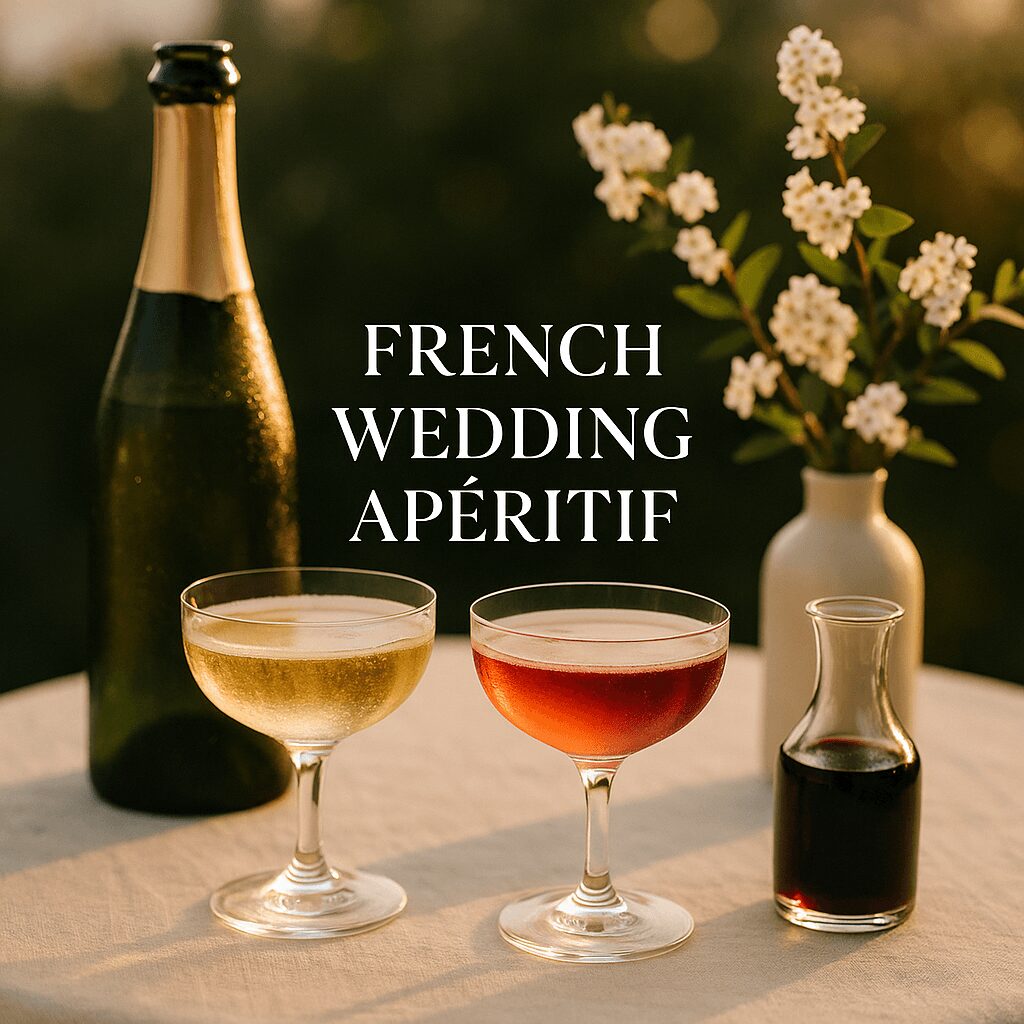
If you've been to even one wedding in France, you've felt it. That little shift in the day where everyone loosens up, the first hugs happen, the nervous laughter softens, and suddenly the room (or garden) turns warm and chatty.
That moment is the apéritif.
Not dinner. Not the party. The apéritif. The pre-dinner ritual that quietly sets the tone for everything that follows.
And if you're getting married in France, or you're building a French leaning wedding vibe (even if your guests are flying in and don't know a kir from a spritz), there are a few drinks that just make sense. Kir. Crémant. Maybe a light local white. Something pink and cold. A good non-alcoholic option that isn't an afterthought. And, honestly, enough ice.
This guide is here to help you choose. Not in a fussy, over-technical way. More like, what to serve, why it works, how much you need, and how to make it feel very French without turning your wedding into a themed restaurant.
If you're celebrating at a French estate like Domaine de Vavril in Beaujolais, this gets even easier because the setting already does half the work. Stone walls, vineyards, golden hour, that calm countryside air – the drinks just need to match the mood.
However, planning a wedding at such stunning venues also involves understanding French vineyard wedding costs. This comprehensive budget guide can provide valuable insights into managing expenses while still achieving your dream wedding.
A quick refresher: What is an apéritif, really?
In French weddings, the apéritif (often called vin d'honneur too) is usually a 1.5 to 3 hour window after the ceremony.
Guests gather. They mingle. They eat small bites. They drink something refreshing. Nobody is seated for long. Speeches might happen. Photos happen. Kids run around. Someone's aunt finds the cheese station and stays there forever.
It's not just a pre-dinner drink; it's the social glue.
That's why apéritif drinks are usually:
- lower alcohol than the night ahead
- bright, cold, easy to hold while talking
- not too sweet (but not harsh either)
- good with salty snacks like gougères, charcuterie, little tartlets etc
Kir and Crémant are basically built for this.
If you're considering an intimate celebration with close family and friends, micro-weddings in French vineyards could be an ideal choice for you.
Moreover, if you're dreaming of a fairytale wedding surrounded by lush vineyards and breathtaking landscapes, exploring fairytale wedding venues in French vineyards might inspire you further.
In addition to these considerations, it's important to think about sustainability when planning your wedding. Opting for sustainable wedding venues in French vineyards can significantly reduce your carbon footprint while still providing a stunning backdrop for your special day.
Lastly
Why Kir is still the most quietly perfect wedding drink
Kir is simple. White wine plus crème de cassis (blackcurrant liqueur). That's it.
And yet it feels like a proper French welcome. It also solves a bunch of wedding problems you don't realize you have until you're hosting 80 people.
Kir is:
- familiar enough for French guests
- novel enough for international guests
- forgiving to serve in bulk
- easy to drink slowly
- pretty in the glass
The classic: Kir (still wine + cassis)
Typical base wine: Bourgogne Aligoté is traditional, but in real life people use a dry, light white that isn't too aromatic. For more insights on French wine and wedding pairing, this guide provides valuable information.
Ratio: You'll see all sorts of ratios. The best wedding friendly one is:
- 10 cl white wine
- 1 cl crème de cassis
The mistake is going too heavy on cassis. It becomes syrupy fast. Keep it light.
The sparkling upgrade: Kir Royal (Crémant/Champagne + cassis)
Kir Royal takes the same idea and makes it feel instantly more celebratory. If you want that "first toast" energy without actually doing a formal toast yet, this is the move.
Ratio: even less cassis than classic kir. Sparkling + sugar can get cloying.
- 12 cl Crémant
- 0.5 to 1 cl cassis
When Kir works best at weddings
Kir is perfect when:
- your apéritif is outdoors, warm weather, lots of mingling
- your guests arrive in waves and need an easy welcome drink
- you want something that feels French without explaining it on a chalkboard
Also, it photographs well. Not a huge deal, but still. A line of pale ruby glasses on a tray looks like effort. Even if it was easy.
For those looking to delve deeper into French wedding traditions, or considering the benefits of hiring a French wedding planner, there are plenty of resources available. Additionally, for guests who may want to explore the local wine culture, wine tours for wedding guests and wine country wedding guest activities and entertainment can provide excellent options.
Crémant vs Champagne: The Honest Wedding Answer
Champagne is amazing. Everyone knows it. It's also expensive, and weddings burn through bubbles faster than you think.
Crémant is France's other sparkling wine category. Made in the traditional method (like Champagne), but produced in other regions. It's usually fresher on the budget, and honestly often better value for a big event.
Why Crémant is a Wedding Workhorse
- You can pour it generously without panic
- Guests say "ooh, sparkling" and don't actually ask what region it's from
- It pairs with almost everything you serve at apéritif
- It turns any moment into a moment
Which Crémant Styles to Consider
- Crémant de Bourgogne: great all rounder, crisp, classic
- Crémant d'Alsace: often very aromatic and bright
- Crémant de Loire: fresh, sometimes a little more floral
- Crémant du Jura / de Savoie: more niche, fun if you want something different
If your wedding is in Beaujolais, you're in luck! You're in a broader area where great sparkling options are easy to source through local networks and wine partners. At venues like Domaine de Vavril, you're already in wine country. Use that to your advantage. Guests love feeling like they're drinking something connected to the place they're standing in.
Suggested Apéritif Drink Menu (Simple, Balanced, Very French)
Here's a clean menu that works for most weddings. It's not a huge list. It's just enough.
Spring Weddings in French Wine Country
If you're considering spring weddings in French wine country, the local wines can play a significant role in your celebration.
Planning Your Wedding in France
For those planning a wedding abroad, wedding planning in France can be made easier with the right resources and guidance.
Vendor Networks for Weddings in France
Additionally, leveraging vendor networks while planning for a wedding in France from abroad can streamline your preparations and help you secure the best services for your big day.
Option A: The classic French welcome
- Kir (white + cassis)
- Crémant (served plain)
- Still water + sparkling water
- Non alcoholic "adult" option (more on that below)
This is elegant and easy. Also very traditional.
Option B: A little more modern, still French
- Crémant
- Rosé wine (dry, chilled)
- Kir Royal (as a welcome drink only, then switch to Crémant plain)
- Non alcoholic option
- Water everywhere
This gives guests choices without creating a chaotic bar line.
Option C: Vineyard vibe, light and local
- Local white wine (dry, light)
- Local red served slightly chilled (yes, really)
- Crémant
- Non alcoholic option
- Water
In Beaujolais, a lightly chilled red can be incredible at apéritif, especially later in the day when the sun drops. It's not mandatory, but it's a nice nod to place.
How much to buy. The part nobody wants to calculate
Okay. Let's do this without getting too spreadsheety.
First, decide how long your apéritif is. A common range is 2 hours.
Then assume average guests will drink:
- 2 to 3 drinks per person during apéritif
- plus water, obviously
- and a percentage will not drink alcohol
A practical rule of thumb
For 100 guests and a 2 hour apéritif:
- Crémant: 25 to 35 bottles
- White wine (for kir + maybe plain pours): 15 to 25 bottles
- Cassis: 2 to 4 bottles (depending on how kir heavy you go)
- Rosé (if offered): 10 to 20 bottles
- Non alcoholic: plan as if 20 to 30 guests will drink 2 each
If your guests are big celebrators or the weather is hot, add a cushion. Sparkling disappears fast in the sun.
Also, don't underestimate the effect of a pretty bar setup. If the drinks look inviting, people drink more. It's not a moral comment. It's just physics.
The cassis question. What to buy, and how to serve it without messing up
Crème de cassis varies a lot.
Some are jammy and heavy. Some are bright and tart. Some taste like candy. The good ones smell like real blackcurrant, not perfume.
Serving tip that saves you during service
Do not let guests free pour cassis into their own glasses unless you genuinely don't care how it tastes by the end of the hour. People will overdo it. Always.
Instead:
- pre batch a light kir in a carafe and keep it cold
- or have staff pour cassis with a measured pour, then top with wine
It's one of those small details that makes the whole apéritif feel polished.
Don't forget the non alcoholic apéritif. Make it feel intentional
This is where a lot of weddings accidentally get a little awkward.
If the non alcoholic option is "orange juice" and "Coke", guests who are pregnant, driving, sober, or just not drinking feel like they're sitting at the kids table.
You don't need a full mocktail menu. Just one or two choices that feel grown up.
Easy non alcoholic options that still feel French
- Sparkling water + citrus + fresh herbs (mint, rosemary, basil)
- Grape juice + sparkling water (choose a quality one, not overly sweet)
- Verjus spritz (verjus + sparkling water + lemon)
- Non alcoholic sparkling wine (if you find one you actually like)
If you want one perfect simple thing: sparkling water, lemon, and a little elderflower syrup. It tastes like "apéritif" without copying alcohol.
Food pairing. What Kir and Crémant actually want to eat with
During apéritif, the food is usually salty, bite sized, and designed to keep people standing and talking.
Kir and Crémant pair well with:
- gougères (cheese puffs)
- mini quiches, onion tartlets
- comté cubes, goat cheese on toast
- charcuterie, pâté, rillettes
- olives, almonds, pickles
- smoked trout or salmon bites
- anything crispy and savory
A small warning: if your apéritif is very spicy (less French, more fusion), kir can feel sweet. In that case, go heavier on Crémant and dry whites, lighter on cassis.
If you're looking for a more structured approach to pairing food with these drinks, consider following a champagne pairing dinner style.
A very French timeline that works (and feels calm)
Here's a flow that's common, and it just works:
- Arrival: Kir Royal welcome pour (one drink, feels festive)
- Mingling: Crémant and Kir (still) available
- Later: switch more toward still wines and water as dinner approaches
- Before dinner: quick top up for speeches, then transition inside
You do not want guests going into dinner already tired from too much sugar and bubbles. Keep it bright, not heavy.
Glassware and logistics (the boring part that decides everything)
This section is unglamorous. But it's what prevents panic.
Glasses
- Flutes look great but can be awkward for mingling and actually hide aromas.
- Tulip shaped sparkling glasses are ideal if you have them.
- White wine glasses are fine for kir and even Crémant if needed.
It's better to have enough glasses than the perfect style.
Temperature
Kir is only good when it's properly chilled. Crémant too.
- store bottles cold
- have backup ice
- keep carafes in tubs
- serve in shade outdoors if possible
Warm kir is… not it.
Ice
You need more ice than you think. Then more than that.
Even if you're not doing cocktails, you need ice for chilling bottles and water.
If your venue team or caterer has a system, trust it. If not, ask early.
Beaujolais twist. A local red at apéritif, yes really
Since we're talking about weddings in Beaujolais, it would be weird not to mention this.
A light Beaujolais red, served slightly cool, can be amazing during apéritif, especially if:
- the weather is mild or cooler
- your food leans charcuterie, pâté, mushroom bites
- you have guests who don't love sparkling or sweet drinks
It gives variety. And it ties your wedding to the region in a way guests actually feel. For more on how to choose the right season for your Beaujolais wedding, this is the kind of detail that makes the experience feel grounded in place, not just "we rented a pretty property".
If you're hosting at Domaine de Vavril, this local wine option becomes even more significant as it enhances the regional authenticity of your event.
The wedding bar, simplified. A few decisions that make everything smoother
If you want the apéritif to feel French and effortless, decide these things early:
1) Do you want kir as the signature welcome drink?
If yes, choose between:
- Kir (still) as the main welcome
- Kir Royal as the welcome, then switch to plain Crémant
If you're worried about sweetness, do Kir Royal lightly, once, then move on.
2) Are you offering more than one alcohol choice?
Two choices is usually the sweet spot:
- one sparkling
- one still (kir or rosé or white)
More than that is fine, but it becomes bar management, not hospitality.
3) What's the non alcoholic plan?
Pick one that looks good in a glass. That's the trick.
4) Who is pouring?
Staffed bar or self serve?
Self serve can work, but kir is one of the drinks that suffers when everyone becomes their own bartender. If you do self serve, consider pre batching.
Image ideas you can drop into the page (with suggested placements)
Add images that match the story. Not stock cocktail photos with neon colors. Think warm, real, French countryside wedding energy.
Image 1 (near the top): Apéritif tablescape outdoors
Image 2 (Kir close up): The color in the glass
Image 3 (Sparkling pour): Crémant vibe
Image 4 (Vineyard mood): Beaujolais atmosphere
If you're looking to elevate your wedding experience, consider incorporating some elements from rustic vineyard wedding decor ideas. This could be particularly beneficial if you're planning a destination wedding from Lyon to your vineyard.
For those dreaming of a romantic setting, exploring options for a South of France vineyard wedding might be worth considering. Additionally, if sustainability is a priority for your event, you might find some useful tips in this guide on planning a sustainable wedding at a luxury estate.
Image 5 (Non alcoholic): Pretty alcohol free option
Note: if you have your own photos from Domaine de Vavril, use them instead. Real venue images always land better than generic ones.
A sample apéritif menu card (copy paste friendly)
If you want a small sign near the bar, here's simple wording that doesn't feel try hard.
Apéritif
Kir (vin blanc & crème de cassis)
Kir Royal (Crémant & cassis)
Crémant (sparkling wine)
Rosé (dry, chilled)
Sans alcool
Sparkling water, citrus, fresh herbs
Water available throughout the garden
Small details that make it feel "French", without forcing it
A few subtle touches:
- Serve kir in regular wine glasses, not plastic cups
- Put water stations in multiple places, not just the bar
- Keep the bar area shaded and calm
- Let the apéritif last long enough that guests actually connect
- Don't rush everyone to dinner because the schedule says so
French weddings breathe. That's part of the charm.
Bringing it back to the venue (because the setting matters)
The best apéritif drinks are the ones that match the place.
If you're getting married at a vineyard estate like Domaine de Vavril in Beaujolais, you already have:
- a natural backdrop for an outdoor apéritif
- local wine culture baked into the experience
- that slow countryside pace that makes kir and Crémant feel obvious, not staged
If you're still planning your wedding weekend and want a venue where the apéritif can actually be an event in itself (not just a crowded hallway with a bar), it's worth taking a look at vavril.fr. The full property privatization is a big deal. It means you can design these moments without fighting the space.
Moreover, if you're considering incorporating wine tastings into your wedding weekend, this guide could provide valuable insights. And for those who are still in search of stunning outdoor vineyard wedding ideas for every season, we have compiled some incredible suggestions.
If you're looking for a comprehensive checklist on what to look for in a vineyard wedding venue, our vineyard wedding venue checklist will be immensely helpful. Additionally, if you're seeking an extensive guide on Beaujolais wine estate weddings, our complete guide will serve as an excellent resource.
Quick recap (so you can decide fast)
If you want the easiest French apéritif plan that guests love:
- Welcome: Kir Royal (light on cassis)
- Main pours: Crémant + classic Kir
- Backup still option: dry rosé or a light local white
- Non alcoholic: sparkling water with citrus and herbs
- Don't forget: ice, shade, and enough glassware
That's it. It'll feel French. It'll feel celebratory. And it won't steal energy from dinner or the party later.
And honestly. When guests remember a wedding, they remember the vibe first. The apéritif is where that vibe is born.
FAQs (Frequently Asked Questions)
What is the apéritif in a French wedding and why is it important?
The apéritif, often called vin d'honneur, is a 1.5 to 3 hour social window after the ceremony where guests mingle, enjoy small bites, and drink refreshing beverages. It sets the tone for the celebration by loosening up the atmosphere, encouraging conversation, and acting as the social glue before dinner and the party.
Which drinks are traditionally served during a French wedding apéritif?
Traditional apéritif drinks include Kir (white wine with crème de cassis), Crémant (sparkling wine), light local white wines, and something pink and cold. A good non-alcoholic option with plenty of ice is also essential to accommodate all guests.
Why is Kir considered the perfect wedding drink for French weddings?
Kir combines white wine with crème de cassis, offering a familiar yet novel taste that appeals to both French and international guests. It's easy to serve in bulk, easy to drink slowly, pairs well with salty snacks, and looks pretty in the glass—making it ideal for outdoor apéritifs with mingling guests.
How do you make a classic Kir and what is the ideal ratio of ingredients?
A classic Kir is made using a dry, light white wine like Bourgogne Aligoté combined with crème de cassis. The best wedding-friendly ratio is 10 cl of white wine to 1 cl of crème de cassis to keep it light and avoid syrupiness.
What is a Kir Royal and when should it be served at weddings?
Kir Royal is an upgraded version of Kir made with Crémant or Champagne instead of still white wine plus a smaller amount of crème de cassis (0.5 to 1 cl). It feels more celebratory and works perfectly as a 'first toast' drink during outdoor warm-weather apéritifs or when guests arrive in waves.
How can hosting your wedding at a French vineyard like Domaine de Vavril enhance your apéritif experience?
Hosting your wedding at stunning French estates such as Domaine de Vavril offers an idyllic setting with stone walls, vineyards, golden hour light, and calm countryside air that naturally complements the relaxed vibe of the apéritif. Additionally, understanding vineyard wedding costs helps you manage your budget while enjoying this picturesque backdrop.