
How to Evaluate a Winery Wedding Venue: 11 Key Questions
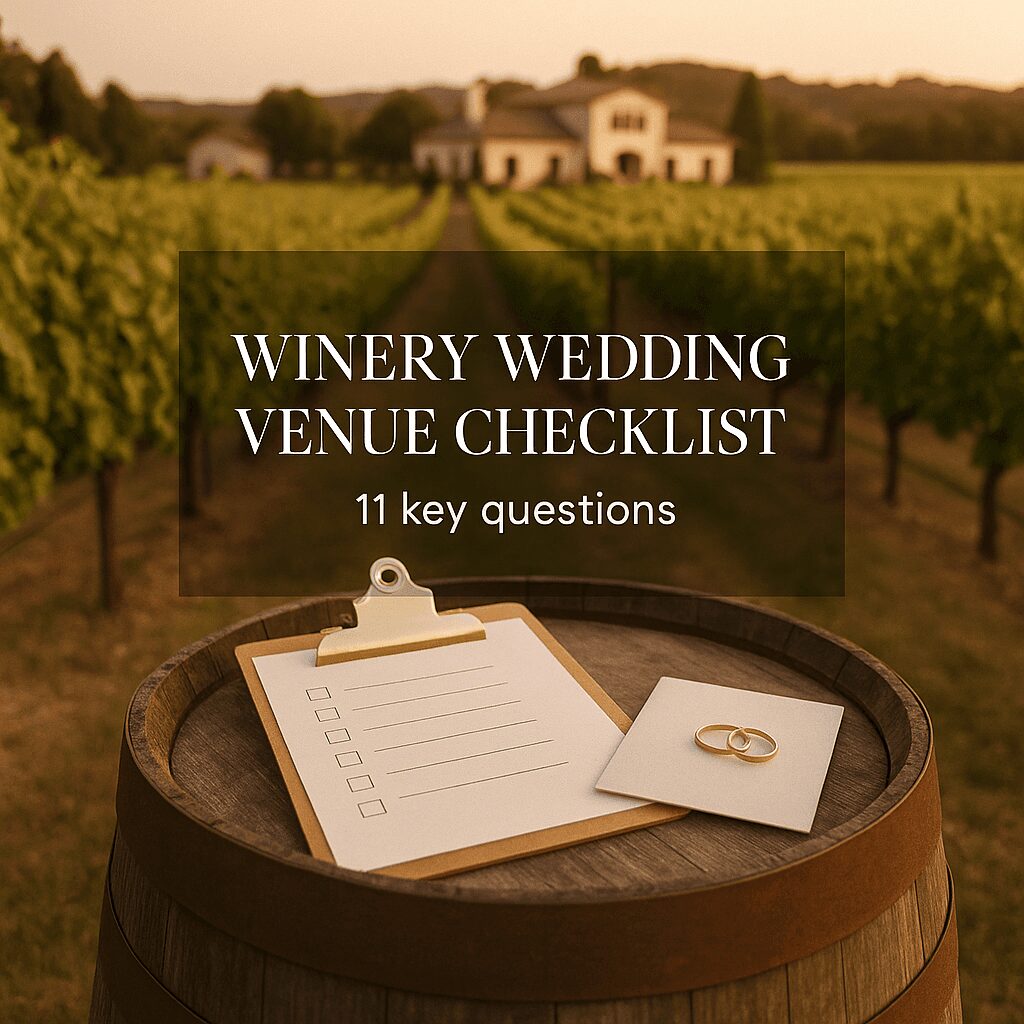
There's something about a winery wedding that sounds effortless.
Vines. Golden light. Long tables. A glass of something local in everyone's hand.
And then you start actually researching venues and you realize… okay, not every "vineyard venue" is the same. Some are basically a pretty backdrop with a parking lot and a loud road nearby. Some are gorgeous but complicated. Some are perfect, but only if you ask the right questions early.
So this is a practical guide. The stuff I'd want to know before I fall in love with the photos.
Below are 11 key questions to evaluate any winery wedding venue, plus what to listen for in the answers, and a few quiet red flags that tend to show up later if you miss them now.
A quick checklist first (before you even visit)
If you're still in the scrolling stage, here are a few "save yourself time" filters:
- Is the venue exclusive/private for your date, or shared with visitors?
- Do they have on site accommodation, or will everyone be driving at 2 am?
- Do they have a Plan B for weather that doesn't feel like a compromise? Here are some tips on planning a wedding while considering weather contingencies.
- Can you control noise and end time, or is it a hard stop?
- Are they used to weddings, or are they "open to it" in a vague way?
If those are unclear on the website, you'll want to ask. Which brings us to the real questions.
When considering rustic vineyard wedding decor ideas, it's essential to ensure that the venue aligns with your vision. A successful vineyard wedding isn't just about the location; it's also about how well the decor complements the natural beauty of the surroundings.
Moreover, if you're planning for an outdoor event, it's crucial to explore stunning outdoor vineyard wedding ideas for every season. This will help you understand how to make the most out of your chosen season while ensuring that your guests have an unforgettable experience.
Finally, don't forget about vineyard wedding photography best shots to request. Capturing the essence of your special day amidst the vines requires some thought into which moments you'd want immortalized through photography.
1. Is the venue fully private on the wedding day?
This one matters more at wineries than people expect.
Some wineries are primarily working tourism businesses. Tastings. Tours. Walk-in visitors. That can be lovely on a random Saturday. On your wedding day, it can feel… busy. Not intimate.
So ask directly:
"Is the entire property privatized for our wedding, including outdoor spaces, courtyards, gardens, parking, and any tasting areas?"
What you want to hear:
- Yes, full privatization, no other guests, no public access.
- Clear boundaries on what is included.
What to clarify:
- Are there staff or vineyard operations happening during your event?
- Is there any public path near the ceremony space?
- Will there be other bookings on site (like another dinner in a second room)?
If you're considering a destination wedding in France, full property privatization is a significant advantage as it simplifies many aspects of the event. For instance, venues like Domaine de Vavril in Beaujolais focus on privatizing their entire estate for weddings and private stays, which significantly reduces stress as it becomes your personal space for the weekend rather than a shared attraction.
Additionally, choosing a French vineyard over a château for your wedding can offer unique benefits. Understanding these advantages could help you make an informed decision.
Also, the season you choose for your wedding can greatly affect the overall experience. Therefore, it's crucial to select the right season for your Beaujolais wedding or event.
Finally, planning a destination wedding involves various costs and budgeting considerations. To assist with this aspect, we've prepared a complete budget guide that covers all essential financial aspects of hosting a wedding at a French vineyard.
Suggested image:
Replace with a real Domaine photo or your own venue visit shot.
2. What does a full wedding timeline look like there, hour by hour?
A venue can look perfect and still be awkward for an actual wedding flow.
So don't just ask, "How many guests can you host?" Ask:
"Can you walk us through a typical wedding day timeline here, from vendor arrival to last song?"
You're looking for:
- Where the ceremony usually happens, and how guests move to cocktail hour.
- Where cocktail hour happens, and what happens if it rains.
- Where dinner happens, and how the room flips (if it needs to).
- Where dancing happens, and whether it's in the same space or separate.
- Where the couple gets a quiet moment. Seriously, it matters.
Good venues have this down. They'll talk in specifics. They'll mention pinch points. They'll know where bottlenecks happen (like one narrow staircase everyone has to use).
If they can't describe the flow, it usually means you'll be inventing the flow. And that's fine if you have a planner. Less fine if you don't.
3. What is the real Plan B for weather, and does it still feel like "the wedding"?
Winery weddings often lean heavily on outdoor beauty, which is great until it's 12°C with wind or 34°C or it rains. Planning for a winery wedding reception requires considering these factors.
Ask:
"If the weather turns, what's the indoor ceremony option and how many guests does it comfortably fit?"
Then ask one more thing:
"Does Plan B require renting a tent or extra flooring, and if yes, what does that typically cost?"
You want:
- A Plan B that is already part of the venue, not a scramble.
- Indoor spaces that still feel intentional. Not "we can move you into the barrel storage area."
Also ask about heat and cold:
- Is there shade for outdoor ceremonies?
- Do they have indoor cooling or ventilation?
- Is there heating if it's chilly?
In regions like Beaujolais, evenings can cool down fast, especially in shoulder seasons. A venue that has thought through comfort is a venue that has done weddings properly.
When considering a vineyard wedding venue, make sure to follow this checklist.
Also remember to plan ahead when organizing a destination wedding in Beaujolais with this ultimate checklist.
4. How many guests can you host comfortably (not max capacity)?
Venues love quoting maximums.
But "max" is often:
- the room with chairs touching
- no dance floor
- tight tables
- no space for musicians
- buffet lines that clog everything
Ask:
"What is your comfortable seated dinner capacity with space for a dance floor, band or DJ, and service flow?"
Then ask:
- Round tables or long banquet tables?
- Where would the bar go?
- Where does the caterer stage?
If you're planning a winery wedding, you probably want that airy, open, not cramped vibe. The only way to know is to see an example layout.
Request:
- sample floor plans
- photos of weddings at your guest count
5. What accommodations are on site, and what does the weekend logistics look like?
This is one of the biggest differentiators between venues that feel magical and venues that feel like a shuttle schedule.
Ask:
"How many people can sleep on site, in how many rooms, and what is the check in/check out schedule?"
Then ask:
- Do you require a minimum night stay?
- Is the property exclusive for multiple nights (like a full weekend)?
- Are there quiet hours near bedrooms?
- Are linens, towels, and cleaning included?
If a large chunk of your guests can stay on site, it changes everything.
- More relaxed mornings.
- Fewer taxis.
- Less pressure to end early.
- More time actually together.
Domaine style estates that offer accommodations (like Domaine de Vavril, which focuses on wedding stays and privatization) tend to shine here because the wedding isn't just one evening, it becomes a small shared holiday. This concept aligns perfectly with the idea of authentic French wedding venues, where the venue itself adds to the magic of the event.
In such fairytale wedding venues in French vineyards, you can expect not just a beautiful setting but also sustainable practices that contribute to an eco-friendly celebration.
For those considering wedding planning in France, it's essential to know what to expect at a French vineyard wedding, including accommodation options and logistical aspects.
Suggested image:
6. What are the sound rules, music setup limits, and actual end time?
This is the question that prevents heartbreak later.
Some winery venues have strict local noise rules. Some have neighbors. Some are fine until midnight and then it becomes "background music only" which is… not a dance party.
Ask:
"What time does music need to end, and what are the decibel limits or sound restrictions?"
Also ask:
- Is dancing indoors only?
- Can speakers be placed outside for cocktail hour?
- Are there restrictions on live bands vs DJ?
- Do you have a recommended DJ list because of sound setup?
If your dream is dinner under the stars with music late, you need to know what's realistic.
And if the venue says, "It depends," ask what it depended on for previous weddings. Real examples.
7. What vendors are required, recommended, or restricted?
Most winery wedding venues will have some structure around vendors, especially catering.
Ask:
"Do you have an exclusive caterer list, or can we bring our own? Are there corkage fees if we serve other wines?"
Then:
- Can we bring our own planner?
- Can we bring our own florist?
- Is there a required security person?
- Is there a required cleaner or teardown crew?
This is also where you get clarity on hidden costs. Not in a suspicious way, just… in a real life way.
Some places are inexpensive until you realize you must use:
- their catering partner
- their rental partner
- their bar package
- their staffing
On the other hand, a venue with well curated partners can be a blessing. It can make planning smoother and the quality more consistent.
If you're browsing, it can help to look for venues that share partner/vendor recommendations openly. (Vavril.fr, for instance, highlights partner vendors like caterers, which signals they've built a working system and you're not the first wedding they've hosted.)
8. What is included in the venue fee, in plain language?
This question is about avoiding "oh, that's extra" ten times.
Ask for an itemized list:
"Can you list exactly what's included in the venue rental price, and what is not included?"
Typical inclusions to confirm:
- tables and chairs (and what style)
- basic lighting
- indoor and outdoor spaces
- getting ready rooms
- staff presence (venue manager? caretaker?)
- parking
- restrooms count and accessibility
- cleaning fees
Typical extras:
- tents
- heaters/fans
- generators
- additional bathrooms
- furniture upgrades
- late night hours
- rehearsal dinner spaces
- brunch the next day
You're not being difficult. You're being smart.
9. How does the wine experience work at the wedding?
This is the fun part, but it's also important. Because at a winery venue, wine is part of the identity.
Ask:
"How do you handle wine service? Is it sold by the bottle, per person package, or consumption? Can we do a tasting in advance?"
Also consider incorporating wine tastings into your wedding weekend, as this can enhance the overall experience for you and your guests.
If you're looking for ways to make your wedding more memorable, think about offering your guests wine tours during their stay. This not only gives them a unique experience but also allows them to appreciate the local wine culture.
Additionally, inquire about:
- Can you offer a welcome tasting for guests?
- Do you have a sommelier or staff who can present the wines?
- Do you have award winning cuvées or specific terroir stories you share?
- Can we purchase wine for the tables and take leftover bottles?
If the venue cares about its wine, you'll feel it in the answer. They'll talk about vintages, pairings, and how people usually enjoy it during cocktail hour.
And yes, it's okay to want the wine to be genuinely good. Guests remember.
Suggested image:
10. What does the venue team actually do on the day?
Some venues are "space only." Others are more hands-on. Neither is wrong, but you need to match it to your planning style.
Ask:
"Who will be on site on the wedding day, and what are their responsibilities?"
Clarify:
- Is there a day-of coordinator included?
- Is there someone managing vendor access and timing?
- Who handles emergencies (power, plumbing, weather flips)?
- Who locks up at the end of the night?
If you're not hiring a planner, having a venue team that's used to weddings is huge. Even if they're not coordinating details, they know how to keep things moving.
And honestly, the vibe matters. If the team feels calm and experienced during your visit, that's usually a good sign.
11. What are the "rules" that could affect the guest experience?
Every venue has rules. The key is to find out which ones will impact the kind of wedding you want.
Ask:
"Are there restrictions we should know about that commonly surprise couples?"
Then go through specifics:
- candles allowed? (real flame vs LED)
- fireworks or sparklers?
- confetti (and what type)?
- amplified ceremony?
- pets allowed?
- child safety around vineyard equipment, ponds, stairs?
- accessibility for elderly guests or wheelchairs?
- smoking areas?
And ask about parking and transport:
- How many cars can park on site?
- Can buses or shuttles access easily?
- Is the road safe at night?
These details sound boring until you're two weeks out and realize your ceremony plan depends on something that's not allowed.
If you want a venue comparison process that feels clean and not emotional chaos, ask every venue for the same set of documents:
- A full pricing brochure or package overview
- A sample contract
- A sample floor plan for your guest count
- A vendor guide (required vs recommended)
- A list of accommodation rooms and capacities
- Photos of real weddings (not just styled shoots)
- A clear outline of noise rules and end times
If a venue can provide this quickly, it often correlates with how smoothly planning will go later.
Here's a low effort way to compare venues.
Score each category from 1 to 5:
- Privacy/exclusivity
- Flow and logistics
- Plan B weather
- Guest comfort (shade, restrooms, accessibility)
- Accommodations
- Sound and party flexibility
- Vendor flexibility
- Included value for price
- Wine experience quality
- Team support
- Overall feeling (yes, this counts)
Then add one note:
- "What would annoy me on the day?"
Because usually there's one thing. A long walk to bathrooms. A hard midnight stop. A Plan B that's ugly. A weird shared entrance.
Name it now. Decide if you can live with it.
Beaujolais is kind of perfect for this style of wedding. Rolling hills, vineyards everywhere, that quiet countryside feeling, but still accessible from Lyon. It's romantic without being overly polished.
If you're looking for a French estate where the whole place is yours, you can browse Domaine de Vavril here: [Domaine de
Final thought
A winery wedding venue can be the easiest decision you make. Or the one that causes the most expensive last minute fixes. The difference is usually just these questions. Ask them early. Get answers in writing. And choose the place that still feels good when you imagine rain, a late night, tired guests, and a missing boutonnière.
If it still feels good then it's probably the one.
FAQs (Frequently Asked Questions)
What should I ask to ensure a winery wedding venue is fully private on my wedding day?
Ask if the entire property, including outdoor spaces, courtyards, gardens, parking, and tasting areas, will be privatized exclusively for your wedding. Confirm that no other guests or public access will occur during your event, and clarify if any staff or vineyard operations will be ongoing.
How can I evaluate a winery venue's suitability before visiting?
Use filters such as whether the venue is exclusive/private for your date, availability of on-site accommodation to avoid late-night driving, existence of a solid Plan B for weather contingencies, control over noise levels and event end times, and how experienced the venue is with hosting weddings.
Why is understanding the full wedding day timeline important when choosing a vineyard venue?
Knowing the hour-by-hour timeline—from vendor arrival to last song—helps assess how smoothly your wedding day will flow. It reveals where ceremonies and cocktail hours typically happen and how guests move between spaces, ensuring the venue's layout supports your plans.
How do rustic vineyard wedding decor ideas enhance the natural beauty of a winery venue?
Rustic decor complements the vineyard's natural surroundings by incorporating elements like wooden tables, soft lighting, and local floral arrangements. This alignment creates an effortless ambiance that highlights vines and golden light without overpowering the setting.
What are some tips for planning an outdoor vineyard wedding across different seasons?
Explore seasonal outdoor vineyard wedding ideas to make the most of your chosen time of year. Consider weather patterns, appropriate decor, guest comfort measures like shade or heaters, and timing to capture stunning natural light for photos.
What photography shots should I request to capture the essence of my vineyard wedding?
Request shots that highlight key moments among the vines—such as ceremony views framed by grapevines, intimate couple portraits with golden light, candid guest interactions at long tables, and detail shots of rustic decor—to immortalize your special day authentically.