

Chronicle of a noble place:
from medieval seigneury to today’s families
Prologue – Vavril, a watchful height
On the hills overlooking Beaujeu, Vavril stands like a belvedere and a place of memory. Before it was an estate, it was a seigneurial fiefdom.
And its history follows that of Beaujolais and, through alliances and successions, the great lineages of the French Crown: the Beaujeus, the Bourbons, the Montpensiers and the Orléans.
10th-13th centuries – Under the banner of the Sires de Beaujeu
Around the year 1000, Vaureille (one of Vavril’s former names) emerged as a fiefdom under the sires of Beaujeu. In a world where towns were often defended from the heights, this position was important: it guarded access routes, protected the surrounding area, and fell within the orbit of the Château de Beaujeu.
The Beaujeus were no ordinary lords. They founded towns, granted them franchises, were exceptional donors, built churches and castles, waged war and gradually drew closer to the Capetian monarchy. In the 12th century, one of their marriages bears witness to this: Guichard III married Lucianne de Montlhéry de Rochefort, formerly betrothed to Louis le Gros; a tangible sign of this established proximity to the royal entourage. In the 13th century, Guichard IV married Sibylle de Hainaut, sister-in-law of Philippe Auguste, another alliance directly linking the Beaujeu family to the monarchy.
In this game of alliances, it’s not just one family that rises to prominence, it’s an entire territory that takes its place on the political chessboard of the kingdom. And while the Beaujeus took part in the expeditions and crusades of their time, Vaureille/Vavril remained in their orbit: a discreet fiefdom, dominated by a family loyal to the House of Beaujeu: the Vaureilles.
11th-15th centuries – Place names and signs of privilege
Lords “de Vaureille / de Vareille” appear in ancient deeds. This family took the name of the place, as often happens when a fief forms a lineage. At the dawn of the 15th century, a “Mre Vareille” is mentioned among the finance and accounts people of the Baron de Beaujeu: a presence in the shadow of seigneurial administration.
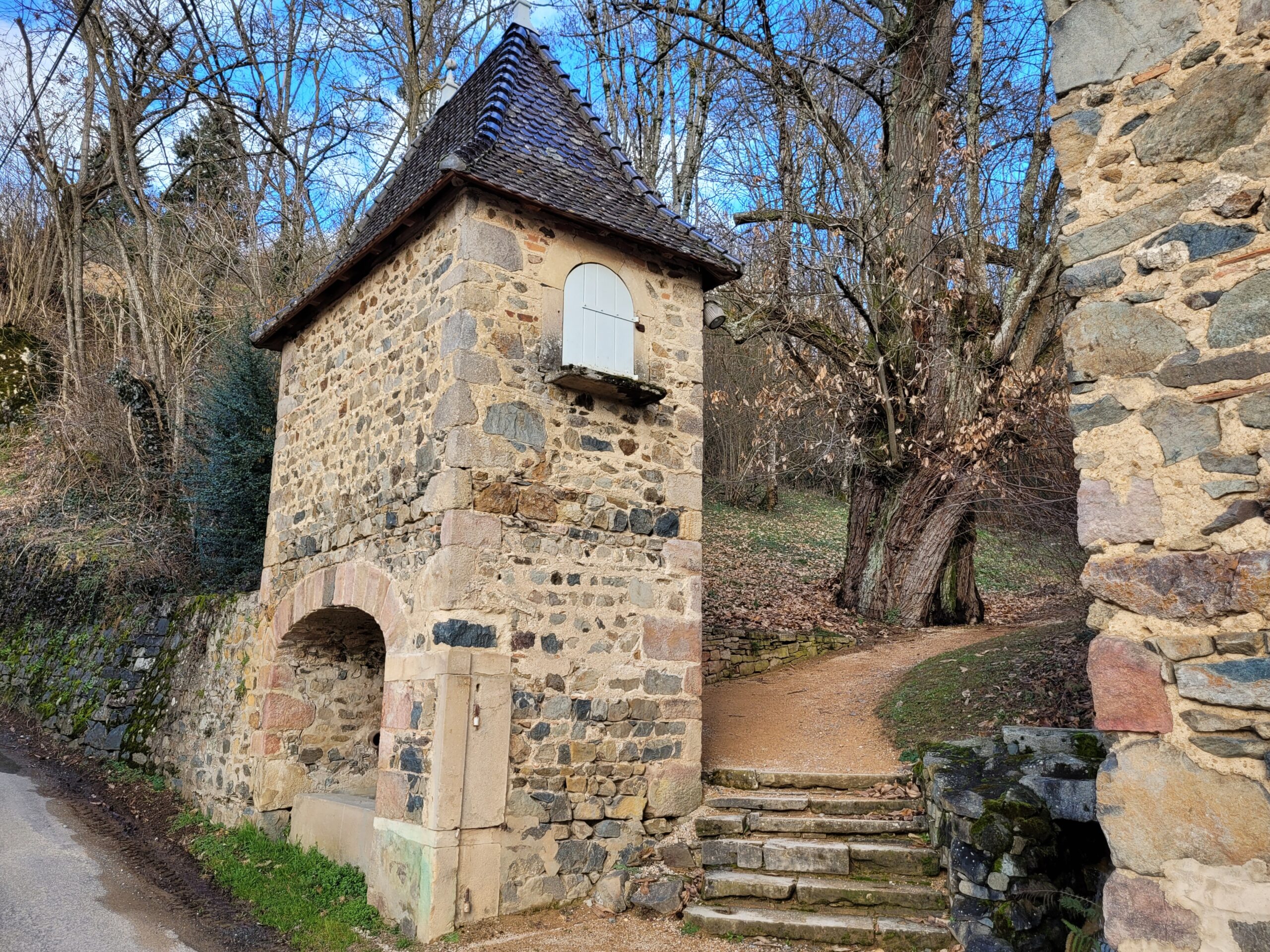
In the landscape of the estate, one marker still speaks for itself: the dovecote. Under the Ancien Régime, it was a seigneurial privilege, and its persistence is a reminder that land here was long associated with rank.
15th-17th centuries – Bourbon, Montpensier, Orléans: when Beaujolais touches the Crown
In 1400, Beaujolais passed to the Dukes of Bourbon. The stage was set for the kingdom’s politics, rivalries, loyalties and disgraces. One episode sums up this shift: Pierre de Bourbon, Louis XI’s favorite, married Anne de France, the king’s daughter. Anne became “dame de Beaujeu” and, on the death of Louis XI, she and her husband assumed the regency of the kingdom (1483-1491). In these years, Beaujolais was no longer just a province: it was one of the anchors of a royal power that governed France.
Then came the time of confiscations and restitutions: after the fall of the Constable de Bourbon, his possessions were reunited with the Crown (1531-1560), before being returned to the Duc de Montpensier. This inheritance led to the marriage of Marie de Bourbon to Gaston, brother of Louis XIII. This union produced the Grande Mademoiselle, Anne-Marie-Louise d’Orléans, who in turn passed on the estate to the Orléans, a princely branch destined to play a decisive role in French history.
15th-17th centuries – The Lords of Vaureille: alliances and offices close to Anne de France
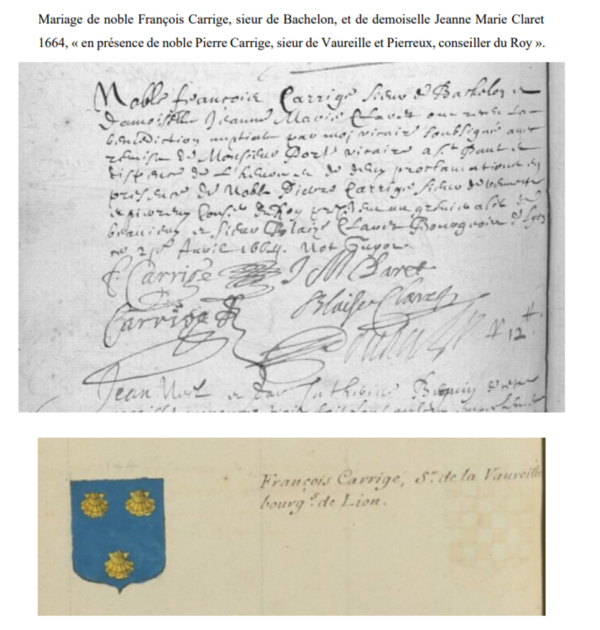
Within the de Vaureille fiefdom, alliances drew another, more intimate map. At the turn of the 15th-16th centuries, the de Vaureille family allied itself with the Carriges. This noble family took the title of seigneurs de Vaureille and followed a typical path of service nobility: merchants of excellence, aldermen, officers, royal notaries and advisors. Their world was one of offices and positions that linked a land to the State.
Philibert Carrige married Jeanne de Charreton de la Terrière. This de Charreton family was close to the powers that be, notably Jeanne’s grandfather Claude, who was made chancellor to Anne de France.
The thread is clear: through the offices, the house that holds Vaureille/Vavril is linked to the circle of Anne, daughter of Louis XI, regent of the kingdom. Nearby, the Barjots, lords of the neighboring fiefdom of Malleval, also appear in this web of obligations and loyalties around the Beaujeu and Bourbon families.
Whether in terms of services, alliances or a network of customers, the Vaureille/Vavril estate was part of the families and administrations that gravitated around Beaujeu, the Bourbons and their court.
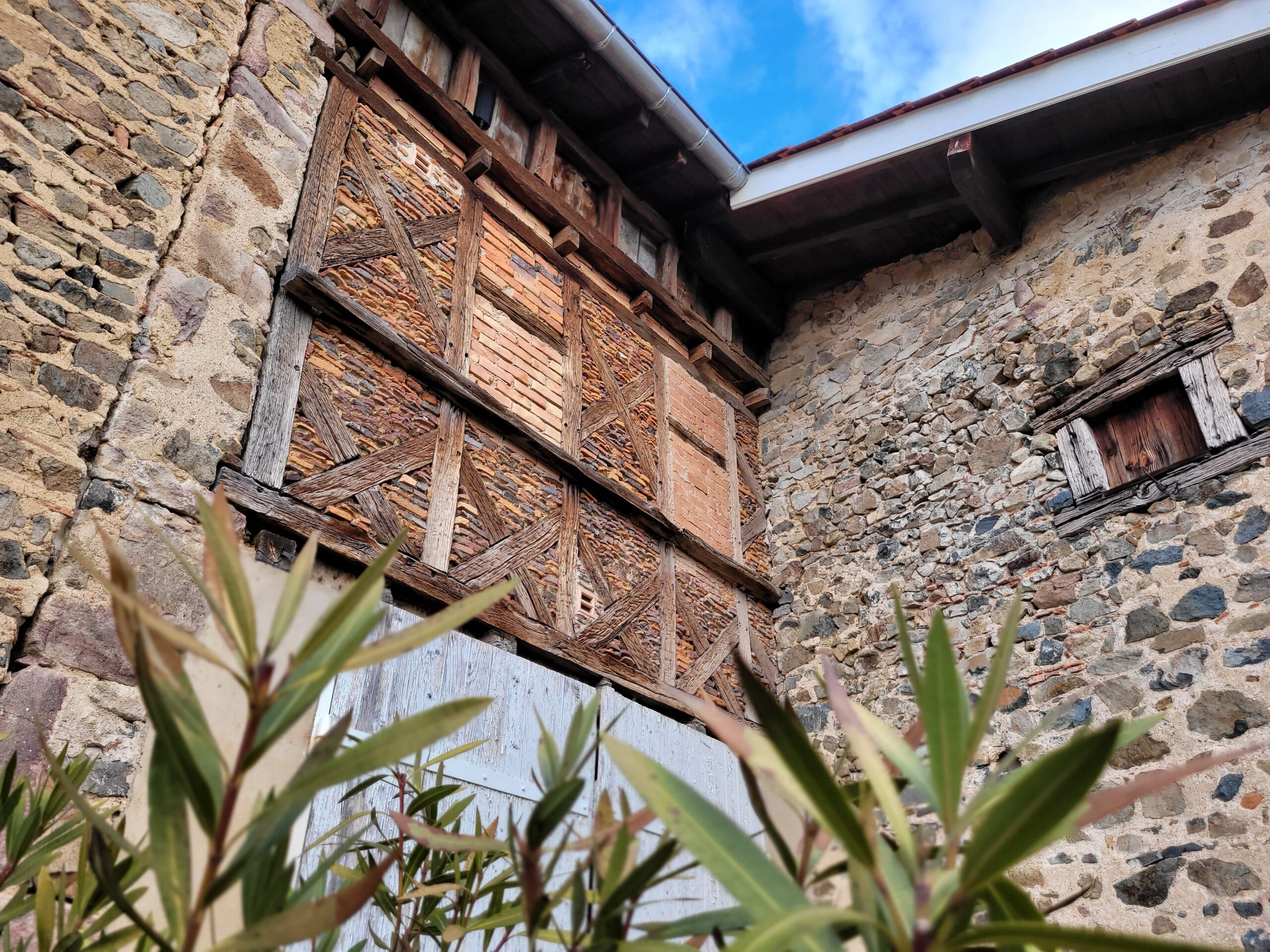
On the site itself, the early feudal watchtower was associated with farm buildings, one of which still features half-timbered walls with St. Andrew’s crosses, dating from the 15th – 17th centuries, testifying to the social standing of these lords and a complex way of life in this area.
A description of the estate, dated 1642, attests to this: “[…] two estates and a small house called Vaureille scituée en la paroisse des Estoux, consisting of houses, estables, hay barns, courtyards, garden, vercheres, meadows, l’ort, vines and boys taillis with a garenne, all joined together […]”.
18th century – From fiefdom to estate: rebuilding without erasing
At the beginning of the 18th century, the ownership of the fiefdom of Vaureille (Vavril) became less clear: tax records and leases suggest that the estate had “fallen into roture” on the death of François Carrige (1711), his daughter Marguerite, who had married the nobleman Pierre Gayot de la Rajasse, having predeceased him.
In the second half of the century, a Durieu/Durieux branch appeared as owner, in a context where bourgeois merchants were acquiring estates from former seigniorial domains.
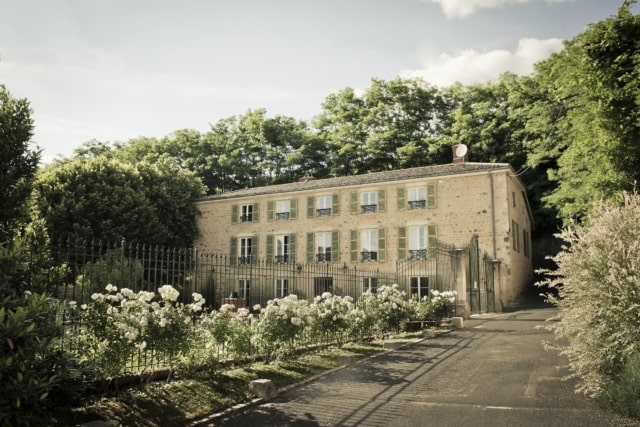
Jean-Baptiste Durieu (1737-1807), tax procurator for the Marquisate of Varennes and deputy of the Third Estate in 1789, is said to have commissioned the present mansion (after 1760, around 1765).
In this new architecture, the memory remains: cellars bearing witness to an ancient winegrowing tradition, terraces, and above all the dovecote, symbol of a seigneurial privilege, like a thread of stone linking the modernity of the building to the ancient status of the site.
19th century – The rise of Baroness de Beaujeu
In the 19th century, numerous archives (tables of leases, land registry, mortgages) enable the history of the estate to be traced. After the Durieu/Durieux family, the estate became the property of François Auguste Denis (merchant, future mayor of Beaujeu) and Magdeleine Félicité Sanlaville, by donation (Magdeleine being the first cousin of Jean-Baptiste Durieux).
Vavril underwent a reconstruction phase around 1850-1851.
On June 30, 1862, a marriage contract was drawn up in Lyon between Benoîte Marie Amélie Denis-Sanlaville and Antoine Aloïse de Reynold de Cressier (Fribourg, Switzerland), in the presence of her parents, the Baron and Baroness de Reynold de Cressier. The significant donations (money, trousseau, furniture) and the transfer of the Vavril estate underline the importance of this property, for which we have a detailed description, and of this family. This marriage sealed an alliance that gave the Vavril estate an explicitly titled framework.
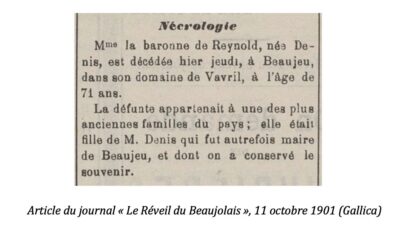
The Baroness (née Denis) lived at Vavril, embellished the site and died there in 1901, an episode recorded by the local press. She made her cousin Félicie Dubreuil her heir.
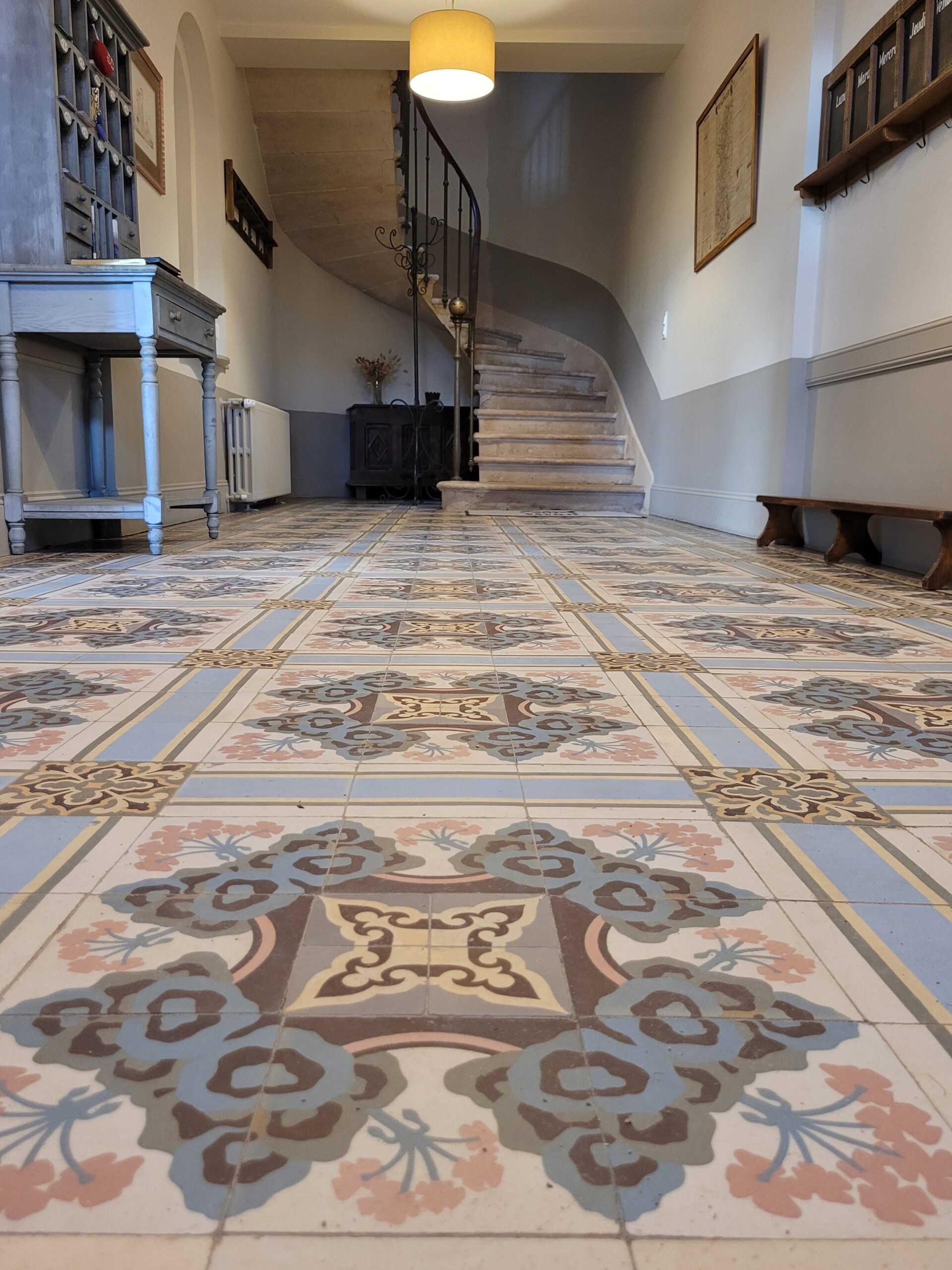
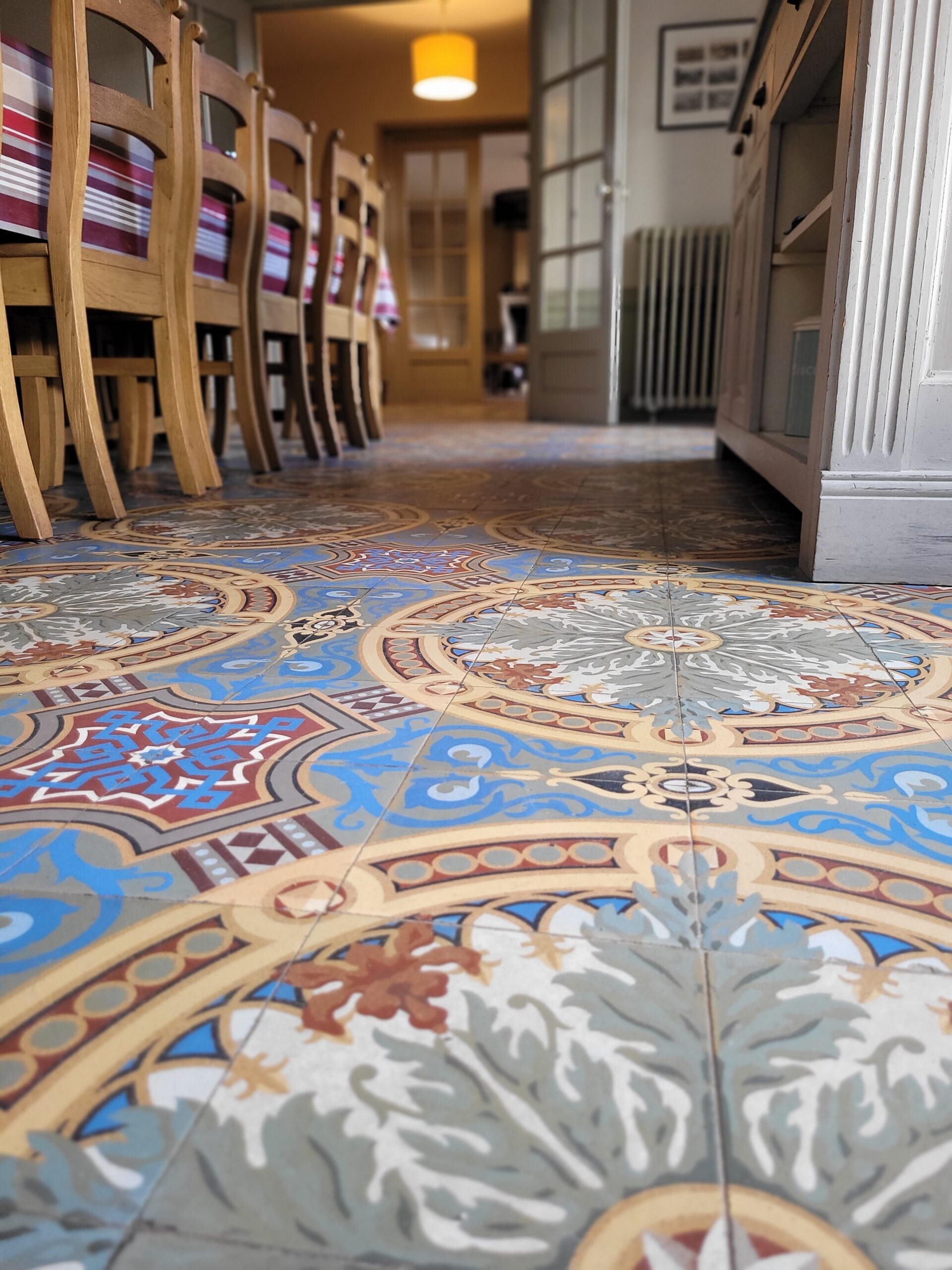
It was this baroness who carried out the extensive renovations and alterations at the end of the 19th century (painted cement tiles, etc.). All the rooms were carefully designed and furnished to reflect the social status of their owners and the practices of the period: linen room in the attic, small bedroom for the chambermaid in the master bedroom, study…). In keeping with the period, terraced gardens were laid out with a central pool. The old farm buildings were preserved.
20th-XXIst centuries – From urban elite property to heritage revival
In 1903, with the marriage of Félicie Dubreuil and Ernest Cuaz, the estate passed to a new family. Ernest was a magistrate in Lyon, a local historian and scholar, and the author of several historical monographs. Their son, Antoine Cuaz, subsequently held the estate (magistracy, bar, military commitment during the Great War), before joining other families (Roche, Boutillon, Perret). This period marked a turning point: the estate ceased to be a property handed down only within a lineage, and became more of a vacation and/or business property associated with the urban elite.
The estate crossed the century as a country estate owned by merchants-industrialists, and then went through a period of gradual fading.
In 2004, the Brague family acquired Vavril. The place opened a new chapter: restoration, respect for lines, a return to coherent volumes and stonework.
Seduced by the beauty of the site, Richard Brague, living in London, was looking for a place to gather family and friends. His criteria focused on ease of access and the need to get away from tourist areas that were losing their soul and cachet. He wanted a place that people could make their own, an authentic place that would stand the test of time. A place for sharing and exchange, where the generations mingle over good food and conviviality. A place that lives. Domaine de Vavril was love at first sight! His father, Bernard Brague, and his children have joined the project. With the help of a young winemaker, Jean-Luc Ducruix, they relaunched wine production and renovated the buildings, restoring Domaine de Vavril to its former glory. They have made it an exceptional reception venue, above all through the atmosphere they have been able to create.

More than just a reception venue, our customers make the Domaine their own family home for their event!
The estate team

Bernard BRAGUE
Manager
For his retirement, he has chosen to devote himself to the development of the Domaine de Vavril, coordinating event logistics and the upkeep of the estate.

Richard BRAGUE
Owner of Domaine de Vavril His international experience and entrepreneurial spirit led him to develop the Domaine by creating a variety of activities: exclusive stays, receptions, weddings and wine tourism.
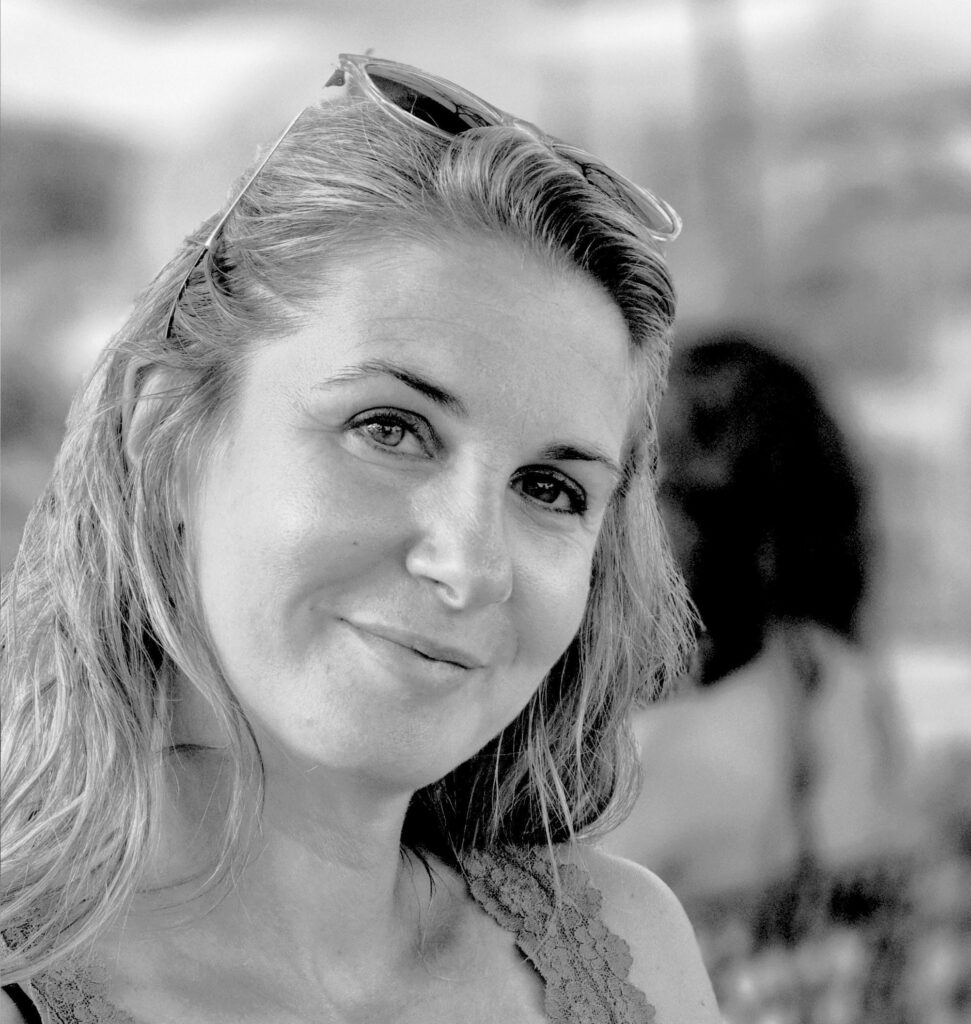
Adeline PANNETIER
Head of Events & Business Development
Your dedicated contact, she will accompany you every step of the way, with energy and organisation, to make your dreams come true, always with a smile.
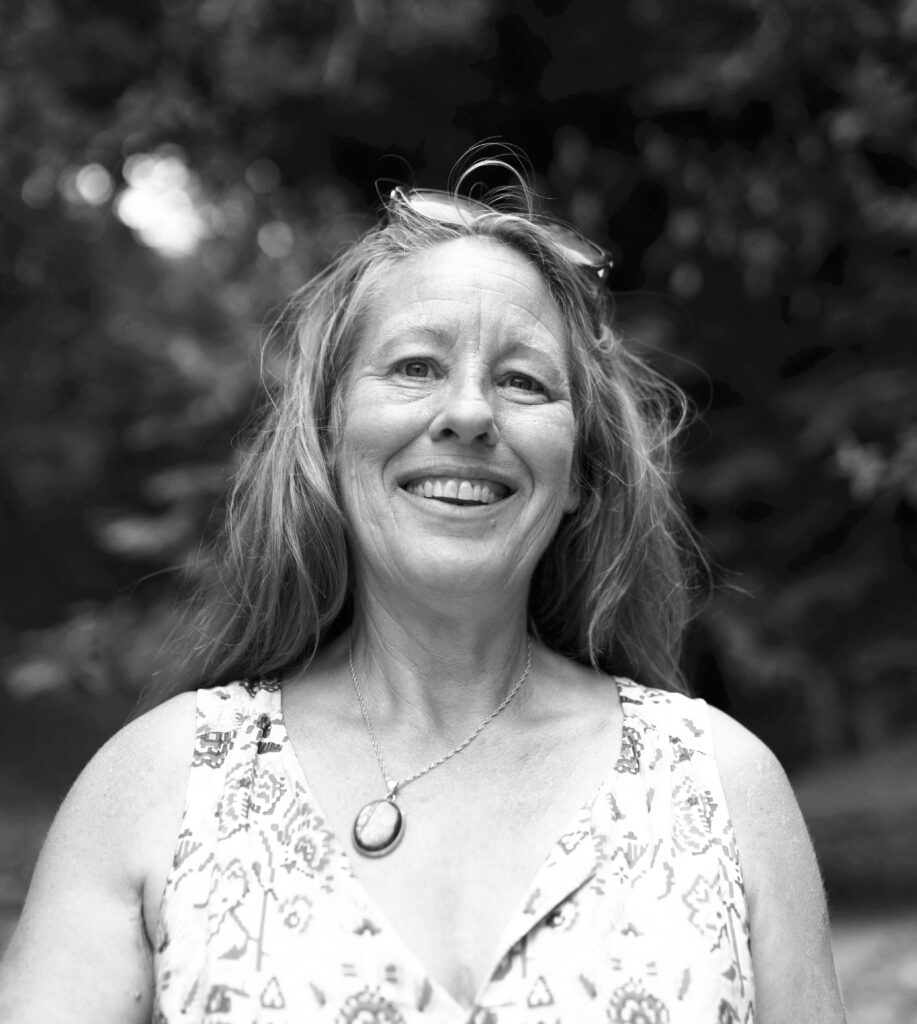
Fenella DOUGLAS-HAMILTON
Estate Manager
A bilingual Scottish estate manager who has lived in France for many years, she will be your local contact during your stay, and will be attentive to your needs to ensure that you enjoy your event with complete peace of mind.

Jean-Luc DUCRUIX
Winemaker and Cellar Master
His vision of the winemaking profession today: “Quite simply, to be in touch with nature and to produce a quality product by working with noble raw materials in a reasoned way”.