
A Guide to the 10 Beaujolais Cru Wines: From Morgon to Moulin-a-Vent
Beaujolais often gets pigeonholed as a one-trick pony, perceived solely as the light, fruity wine you drink slightly chilled and forget about by Tuesday. However, if you spend more than just a long weekend in the region or engage with the locals who cultivate these vineyards, you'll soon discover the depth of Beaujolais.
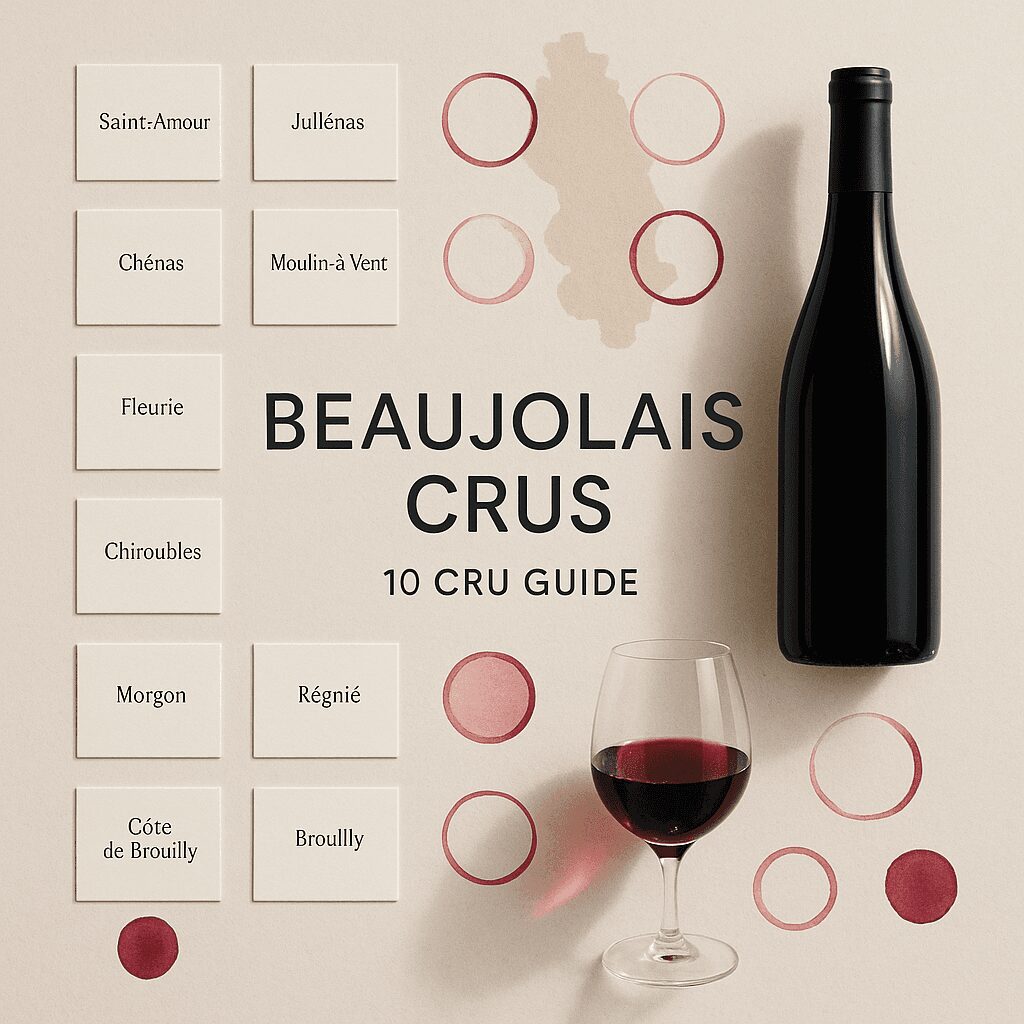
The region is home to ten Crus, which completely transforms your perception of Beaujolais. It suddenly feels larger, more serious, and intricately detailed. Each of these ten villages and their surrounding vineyards are where Gamay transcends its basic profile and starts reflecting the unique characteristics of granite, schist, sand, old vines, elevation, and slope. These wines are a product of meticulous micro-decisions and are influenced by little microclimates. Surprisingly, some of these wines also have aging potential.
This guide serves as a practical walkthrough of the 10 Beaujolais Crus, detailing their flavor profiles, ideal food pairings, distinguishing features, and tips for selecting bottles for various occasions—be it a wedding weekend, countryside gathering, or simply stocking up on reds that won't overpower your dining experience.
If you're planning to visit the area, it presents an opportunity to slow down and truly appreciate the beauty of the region. The Cru villages are nestled in the northern Beaujolais hills, close to Beaujeu, which is also home to Domaine de Vavril (Vavril). Opting for accommodation at Vavril, especially during multi-day events like weddings or family reunions, places you right in the heart of Cru territory. Wine tasting becomes an integral part of your experience rather than a hurried detour.
Moreover, the recent resurgence of Beaujolais has added a new dimension to its charm. This guide not only serves as an introduction to the exquisite wines produced in this region but also encourages you to explore the luxurious yet tranquil lifestyle that Beaujolais offers. Whether you're savoring a Beaujolais Villages Rouge or enjoying the serene landscape during your stay at Vavril, you're bound to fall in love with this enchanting region.
Quick refresher: what does "Cru Beaujolais" mean?
Beaujolais has several quality levels. The Crus are the top tier by reputation and by the way they behave in the glass.
- Grape: almost always Gamay (with rare small exceptions depending on producer rules and old plots, but think Gamay).
- Where: mostly the northern, hillier part of Beaujolais, on older rocks (granite, schist, volcanic bits).
- Style: from floral and silky to dark, structured, and ageworthy.
And yes, you can chill many of them slightly. Just not ice cold. Ten to fourteen degrees celsius is a sweet spot for a lot of Cru Gamay, especially with food.
The 10 Crus, at a glance (so you can orient yourself)
Here is the line up:
- Saint Amour
- Juliénas
- Chénas
- Moulin a Vent
- Fleurie
- Chiroubles
- Morgon
- Régnié
- Brouilly
- Côte de Brouilly
Now the fun part. Let's actually talk about each one like it is a person you have met.
1) Saint Amour: the charming one (and yes, people serve it at weddings)
Saint Amour is often the first Cru people try, partly because the name is irresistible. Especially around Valentine's Day. Especially for wedding toasts. But the wines are not just a gimmick.
Typical style
- Aromatic, red fruit forward (strawberry, raspberry, cherry)
- Often soft tannins, easy drinking
- Sometimes a little spice or floral lift
Where it shines
- Aperitif reds, casual lunches, picnic bottles
- A crowd friendly choice if you are serving red wine to mixed preferences
Food pairing
- Charcuterie, pâté, roast chicken, mushroom dishes
- Also sneaky good with salmon, if the wine is on the lighter side
If you are planning a wedding weekend near Beaujeu, Saint Amour is the kind of bottle that disappears fast during the "people arriving, hugging, snacking" phase.
2) Juliénas: structured, earthy, a bit rugged (in a good way)
Juliénas tends to feel more grounded. Less perfume, more substance.
Typical style
- Red and dark fruit (cherry, blackberry)
- More tannin than Saint Amour
- Often earthy, sometimes a faint gamey note, pepper, dried herbs
Why people love it It is one of the Crus that can feel "serious" without being heavy. You can drink it now, but decent bottles can hold a few years.
Food pairing
- Sausages, grilled pork, lentils
- Roast turkey, duck rillettes, terrines
- Anything with thyme, rosemary, bay leaf tends to click
3) Chénas: the smallest Cru, often the most quietly powerful
Chénas is tiny. Because it is small, it flies under the radar. Which is honestly great for buyers, since you can sometimes find gems that are not priced like their reputation.
Typical style
- Darker fruit profile
- Floral notes can show up, but often with a firmer backbone
- Can feel woodsy, spicy, more "winter" than "spring"
Aging Chénas can age nicely, especially from producers who farm old vines and do not chase bubblegum fruit.
Food pairing
- Beef stew, coq au vin, mushrooms, roasted root vegetables
- Hard cheeses, especially Comté
4) Moulin a Vent: the king of structure (the one Bordeaux lovers respect)
If someone tells you they "do not like Beaujolais" but they like Cabernet based wines. Hand them Moulin a Vent and wait.
This Cru is known for its structure and ability to age. It is the most "serious suit" in the closet.
Typical style
- Dark cherry, blackberry, plum
- Noticeable tannin, sometimes a graphite or iron note
- Often more oak involved, depending on producer
- With time, it can turn savory, truffly, complex
Aging Five to ten years is not unusual for good examples. Sometimes more.
Food pairing
- Steak frites, lamb, roast beef
- Richer sauces, pepper sauce, jus based dishes
- Stronger cheeses
If you are building a wine list for a multi day celebration at a venue like Domaine de Vavril, Moulin a Vent is a good "night two" wine. When dinner is longer, candles are lit, and you want something with more depth.
5) Fleurie: the floral, silky classic (but can still have substance)
Fleurie has a reputation for being all about flowers. And yes, it often is.
But good Fleurie is not just perfume. It can be very precise.
Typical style
- Violet, peony, iris, plus strawberry and cherry
- Silky texture, gentle tannins
- Elegant, airy, bright
Food pairing
- Roast chicken, pork tenderloin, quiche
- Sushi can work, surprisingly, if the wine is delicate
- Spring vegetables, goat cheese salads
It is also one of the best Crus to pour at big gatherings because it is almost never aggressive.
6) Chiroubles: the highest Cru, light on its feet
Chiroubles sits at higher elevation than the others, and you feel that in the wine. It is often the most delicate Cru, with bright acidity and a kind of mountain air effect.
Typical style
- Crunchy red fruit, sometimes cranberry
- Floral notes, light body
- Freshness first, not power
Food pairing
- Picnic foods, charcuterie, grilled vegetables
- Fish dishes if they are not too rich
- Salads with roasted beets, walnuts, goat cheese
This is the bottle you chill a bit more than the others and drink while the sun is still up. Pool nearby. People barefoot. You get it.
(And yes, if you are renting a countryside estate with a heated pool… Chiroubles is basically a plan.)
7) Morgon: the one that "morgons" (it starts fruity, then turns Burgundian)
Morgon has a saying associated with it: the wine "morgons" with age. This means it evolves to resemble Pinot Noir from Burgundy, becoming more savory, earthy, and complex.
It is one of the most renowned Crus, and for good reason.
Typical style
- Ripe cherry, plum, sometimes kirsch
- With time: dried fruit, forest floor, spice, a meaty depth
- Medium to full body for Beaujolais
Notable area The Côte du Py hill is legendary here. Volcanic, iron-rich soils lead to wines that can be brooding in youth.
Food pairing
- Duck breast, pork belly, roasted mushrooms
- French bistro dishes, pâté en croûte
- Anything with caramelized edges
If you only buy one Cru to understand why Beaujolais matters. Morgon is a good candidate.
8) Régnié: bright, straightforward, underrated
Régnié is the newest Cru (officially recognized in 1988). It is often joyful, fruit-forward, and immediate.
Typical style
- Fresh raspberry, red currant, sometimes banana in very young styles (less so with more traditional producers)
- Medium body, moderate tannin
- Easy and clean
Food pairing
- Burgers, roast chicken, pizza with mushrooms
- Weeknight food, basically
Régnié is the one I reach for when I want Cru character but do not want to overthink it.
9) Brouilly: generous, sunny, the big friendly circle
Brouilly is the largest Cru. Because of that, you get a range of styles. But broadly, Brouilly is known for being open and approachable.
Typical style
- Red berries, sometimes peachy hints
- Softer tannins, rounder mouthfeel
- Often a "sunny" vibe, generous and easy
Food pairing
- Grilled chicken, sausages, BBQ (not too smoky)
- Ratatouille, roasted peppers
- Cheese boards
For events like harvest season events in autumn, Brouilly is a safe bet. It rarely offends and tends to vanish quickly.
Understanding the weather patterns in Beaujolais region can also enhance your wine experience as it significantly influences the characteristics of the wine produced. For instance, during certain harvest seasons, specific styles may become more prominent based on the climatic conditions experienced throughout the year.
10) Côte de Brouilly: Brouilly's more intense sibling (steeper slopes, more backbone)
Côte de Brouilly is essentially the hill of Brouilly, characterized by steeper and more demanding vineyard sites. The soils here are different too, often featuring more blue stone with volcanic influence.
Typical style
- More depth and structure than Brouilly
- Darker fruit with a mineral edge
- Still friendly, but with more grip
Food pairing
- Pork chops, roast duck, grilled mushrooms
- Dishes with wine reductions
- Aged cheeses
If Brouilly is your daytime bottle, Côte de Brouilly is the one you reach for when dinner gets more serious.
A simple way to think about it.
If you like lighter, floral, silky reds
Go for:
- Fleurie
- Chiroubles
- Saint Amour
If you like medium body with spice and earth
Go for:
- Juliénas
- Chénas
- Régnié
If you like darker, structured reds (and want to age them)
Go for:
- Morgon or its prestigious variant,
- Moulin a Vent
- Côte de Brouilly
If you just want a safe, generous crowd pleaser
- Brouilly is your friend.
Two bottles can both say "Morgon" and taste wildly different.
Some producers use carbonic maceration for very fruity styles. Some do more traditional fermentations, longer macerations, older oak, less obvious fruit. Farming matters too.
If you want the shortcut: look for producers who talk about their parcels, soils, old vines, and who are not afraid of the word "structure". Also, if the wine tastes good on day two, that is usually a sign.
If you are hosting a multi-day celebration in Beaujolais, the wine list does not need to be complicated. It just needs to match the rhythm of the weekend.
Here is a simple, realistic flow:
- Arrival aperitif + charcuterie boards: Saint Amour, Chiroubles, Brouilly
- Main dinner (classic French catering): Fleurie for elegance, Morgon for depth
- Big meat course or late night cheese: Moulin a Vent or Côte de Brouilly
- Sunday lunch: Juliénas or Régnié, something cheerful and steady
And if you are doing this near Beaujeu, it is worth choosing a venue that makes that kind of pacing easy. Like having space for a long shared table meal, a garden aperitif, places for guests to actually stay on site.
That is basically the whole point of Domaine de Vavril. It is an estate built for multi-day privatized events, with accommodations on site, outdoor spaces, and that calm countryside feeling where opening "one more bottle" does not turn into a logistics problem.
![
FAQs (Frequently Asked Questions)
What makes Beaujolais wine more than just a light, fruity option?
Beaujolais wine is often misunderstood as only a light, fruity wine to be enjoyed chilled and quickly forgotten. However, the region's ten Crus showcase a deeper complexity where Gamay grapes reflect unique terroirs like granite, schist, and elevation. These wines vary from floral and silky to dark and structured, some even possessing notable aging potential.
What are the 'Crus' in Beaujolais and why are they important?
The 'Crus' in Beaujolais refer to ten top-tier villages known for producing wines with distinctive character and quality. These include Saint Amour, Juliénas, Chénas, Moulin-à-Vent, Fleurie, Chiroubles, Morgon, Régnié, Brouilly, and Côte de Brouilly. Each Cru reflects unique soil types and microclimates that influence the Gamay grape's expression, offering a diverse range of flavors and styles beyond standard Beaujolais.
How should Cru Beaujolais wines be served for optimal taste?
Cru Beaujolais wines are best enjoyed slightly chilled rather than ice cold. Serving them at about 10 to 14 degrees Celsius enhances their floral aromas and silky textures while complementing their structure. This temperature range is especially ideal when pairing with food.
Can you recommend food pairings for Saint Amour Cru Beaujolais?
Saint Amour wines are aromatic with red fruit notes like strawberry and cherry, often featuring soft tannins. They pair wonderfully with charcuterie, pâté, roast chicken, mushroom dishes, and even lighter preparations of salmon. Their approachable style makes them excellent for casual lunches or aperitifs during social gatherings such as weddings.
What experience does staying at Domaine de Vavril offer for visitors to Beaujolais?
Staying at Domaine de Vavril places guests in the heart of the Cru territory near Beaujeu. It offers an immersive experience where wine tasting becomes an integral part of your visit rather than a rushed activity. Ideal for multi-day events like weddings or family reunions, Vavril allows visitors to appreciate both the exquisite wines and the luxurious yet tranquil lifestyle of the Beaujolais region.
What recent trends have influenced the resurgence of interest in Beaujolais wines?
Beaujolais has experienced a recent resurgence due to renewed appreciation for its depth beyond simple fruity wines. The focus on quality Crus that express complex terroirs and aging potential has elevated its reputation. Additionally, lifestyle trends favoring slower travel and authentic experiences have drawn more visitors to explore the region's luxurious yet serene ambiance.