
Jewish Wedding Traditions at a French Vineyard: Blending Cultures Beautifully
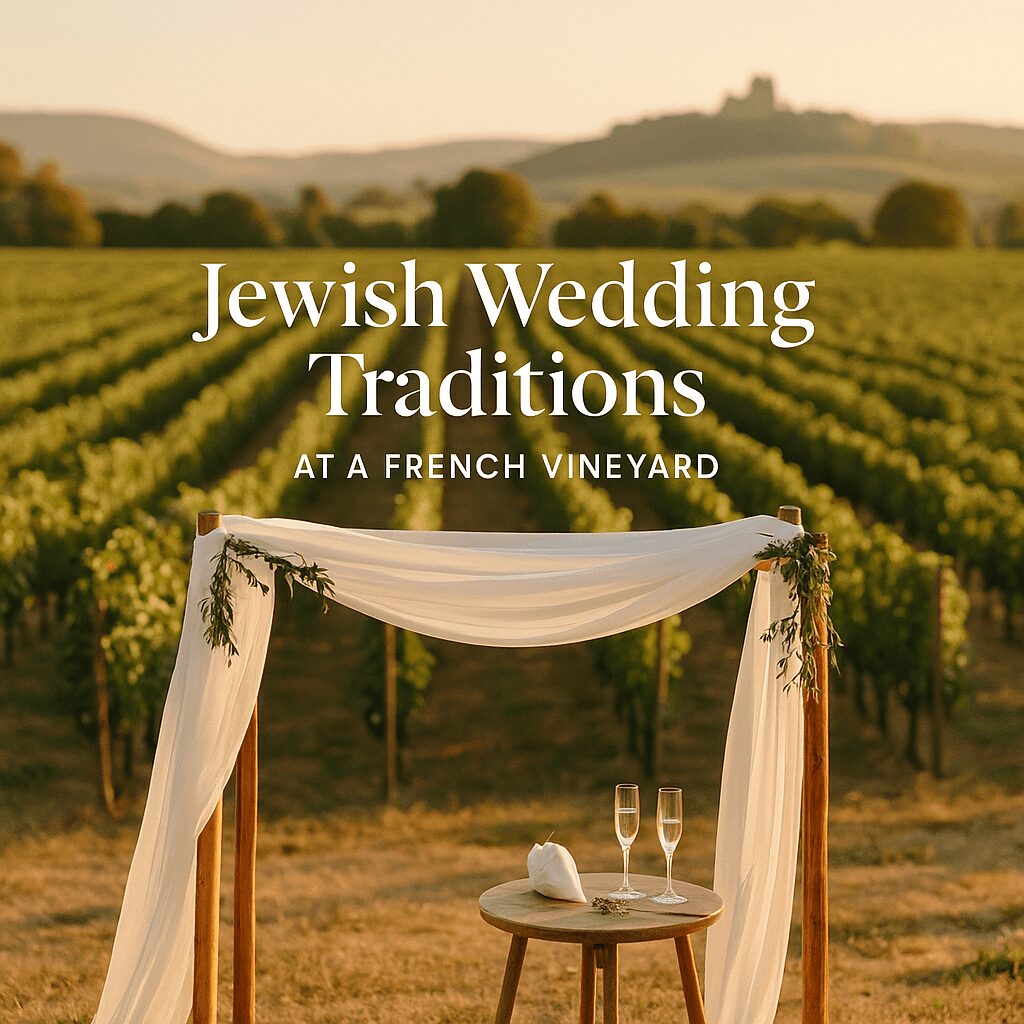
There's something kind of magical about a Jewish wedding on French soil.
Not just because France does romance well. Or because vineyards basically feel like they were invented for long tables and golden hour photos. But because Jewish weddings, at their core, are about building a home. A shared life. A little pocket of "us" in the middle of everything else.
Now put that next to a stone hall, a quiet Beaujolais hillside, vines stretching out in neat rows, and guests arriving for a whole weekend instead of a rushed six hour slot. Suddenly you're not just "hosting a ceremony". You're creating a world for a few days.
That's why a place like Domaine de Vavril (Vavril), near Beaujeu in the Beaujolais area, makes so much sense for this kind of celebration. Full privatization, on-site accommodation, gardens, and a real vineyard estate feel—not just a staged backdrop. This space can hold both the tradition and personal twists that make each wedding unique.
Below, I'll walk through the key Jewish wedding traditions and how they can fit naturally into a French vineyard wedding weekend without making it feel forced or turning it into a checklist. More like weaving two beautiful cultures together and letting them both shine.
A quick note on "Jewish wedding traditions" (because there's more than one way)
Jewish weddings vary a lot depending on background and level of observance. Ashkenazi, Sephardi, Israeli, French Jewish families, interfaith couples, modern Orthodox, Conservative, Reform, secular but traditional… all different.
So think of this article as a menu of options. You pick what feels true.
And if you're planning in France, there's also the legal side: most couples do the legal marriage separately (often a civil ceremony at the mairie) and then the Jewish wedding is the spiritual and cultural centerpiece. Totally normal.
Speaking of planning in France, it's essential to be aware of some French wedding traditions, which can beautifully complement your Jewish customs.
Moreover, when considering costs associated with such an event, it's helpful to have access to a complete budget guide that outlines what to expect financially when hosting your dream vineyard wedding.
It's also important to understand what to expect at a French vineyard wedding. This knowledge will help you navigate through the planning process with ease.
Lastly, if you're seeking luxury experiences for your celebration, here are five French vineyard wedding venues known for their luxury experiences.
The vineyard setting: why it works so well for Jewish weddings
A vineyard wedding is already symbolic. Harvest. Seasons. Blessing over the fruit of the vine. Community at long tables. It's basically speaking the same language.
Also, a multi-day stay changes everything.
Instead of squeezing a tisch, badeken, chuppah, cocktail hour, dinner, speeches, dancing, and maybe a second outfit into one sprint, you can spread it out. Guests settle in. Families actually talk. Jet lag fades. The energy softens in the best way.
At Domaine de Vavril, that multi-day rhythm is built in: private estate hosting with accommodations for up to about 41 people on site, which is huge if you have family flying in and you want the feeling of everyone being together, like a proper wedding "camp". The estate also offers a stone reception hall for around 150 guests, gardens and outdoor areas, and a heated pool.
The setting also allows for some unique elements to be incorporated into your wedding celebration. For instance, rustic vineyard wedding decor ideas can enhance the aesthetic appeal of your ceremony and reception.
Additionally, vineyard wedding photography can capture stunning moments against the picturesque backdrop of the vineyard.
The Kabbalat Panim and the Tisch: welcoming, gathering, grounding
Traditionally, the hours before the ceremony can include:
- Kabbalat Panim: separate receptions for the bride and groom (or partners), often with light refreshments
- Tisch: the groom (or one partner) is surrounded by friends and family, singing, toasts, words of Torah, general joyful chaos
If you're doing this at a vineyard estate like Vavril, you can make it feel like an elegant house party rather than a formal pre-ceremony event.
How it can look at a place like Vavril:
- Bride's gathering in a quiet salon space or shaded garden corner.
- Groom's tisch outdoors with wine barrels nearby or under trees with a table full of snacks.
- French apéritif style nibbles but kosher or kosher style depending on your needs.
And yes, you can absolutely do this without it feeling gendered or separated if that's not you. Many couples do two parallel gatherings based on friends and family circles instead.
Moreover, having your wedding at a vineyard opens up opportunities for incorporating wine tastings into your wedding weekend, adding an enjoyable interactive element for your guests.
Finally, when it comes to planning your winery wedding reception, there are numerous tips and ideas available to ensure everything runs smoothly and meets your expectations.
The Bedeken: a tradition that photographs beautifully, even in France
The bedeken is the veiling. Historically tied to the story of Jacob, Rachel, and Leah, it's a moment of recognition and intention. The groom (or partner) comes to veil the bride (or partner), often with singing and family close by.
What I love about this moment is that it's quiet for about ten seconds. In a day that moves fast, it's a pause.
In a French vineyard setting, the bedeken can happen:
- in a stone courtyard
- at the entrance of the hall
- in a garden with guests gathered close
You don't need much. Just space, and a little calm.
The Chuppah: the heart of it all, under the open sky
The chuppah is the wedding canopy. It symbolizes the home you're building together. It's open on all sides for hospitality and openness. And it is, honestly, one of the most powerful visuals in any wedding tradition.
A vineyard estate gives you choices here:
- chuppah facing the vines
- chuppah in the gardens
- chuppah near the stone buildings for that old world French texture
- indoor chuppah in case of weather, still beautiful with candles and greenery
If you're planning at Domaine de Vavril, you can design the chuppah to match the property. Think linen, vines, olive branches, wild florals. Something that looks like it belongs there.
For those considering a destination wedding in France's picturesque vineyards, these traditions like the bedeken and chuppah can be beautifully incorporated into your special day.
The Ketubah: make it art, make it bilingual, make it yours
The ketubah is the Jewish marriage contract. Many couples treat it as a serious legal style text, others as a spiritual promise, others as both.
In France, where guests may be bilingual (English, French, Hebrew), it's pretty common to choose:
- Hebrew + English
- Hebrew + French
- all three
And you can have a ketubah signing moment that feels intimate. Not rushed in a side room. Like a real ritual with a little wine, a few witnesses, and close family.
Pro tip: if you want a French vineyard vibe, commission a ketubah design that nods to terroir. Grapevines, pomegranates, local landscape lines. It can be subtle and still meaningful.
For those planning an intimate wedding in the French countryside, Vavril's guide offers invaluable insights into making your dream wedding a reality.
The Sheva Brachot: blessings, wine, and community
The Sheva Brachot are the seven blessings. They're usually recited under the chuppah, often over wine, and they bring in themes of joy, creation, companionship, and communal celebration.
This is where the vineyard setting is almost too perfect. Blessings over wine said on a wine estate – it lands differently.
If you want to include more guests in this special moment:
- invite different people to recite each blessing (in Hebrew, English, or French)
- print a small program so everyone can follow along
- have a transliteration for guests who want to participate
And if you're doing a full weekend wedding, consider hosting Sheva Brachot meals after the wedding day. This beautiful tradition allows you to extend the celebration with a long lunch or relaxed dinner the next day – turning the wedding into something that lingers.
For couples considering an elopement in French wine country or wanting to explore the option of having their wedding at a vineyard rather than a château, Vavril's elopement guide provides essential information on how to navigate this unique experience.
Breaking the glass: the moment everyone remembers
The glass breaking is one of the most recognizable Jewish wedding moments. It holds multiple meanings, including remembrance of the destruction of the Temple in Jerusalem, and the idea that even in joy, we hold complexity.
And then everyone shouts Mazel Tov and the energy spikes instantly. That shift is electric.
From a planning perspective, just make sure:
- your officiant cues it clearly
- you have a safe glass setup (wrapped, designed for breaking)
- your photographer is positioned well
Because this moment happens fast. Like blink and it's done.
Yichud: a private pause, especially helpful in destination weddings
Yichud is the private moment right after the ceremony. The couple is alone together for a few minutes. To breathe. To eat something. To be like, okay, we did it.
At a venue where you fully privatize the estate, yichud is easier to do properly. You can have an actual quiet room ready. Not a broom closet energy.
Even ten minutes can change your whole night.
Kosher, kosher style, or somewhere in between: how couples handle food in France
This is usually the biggest practical question for Jewish weddings in France.
Some couples need:
- fully kosher catering with certification and kosher kitchen logistics
Others do:
- kosher style menu (no pork or shellfish, meat and dairy separated in menu design, but not certified)
Others mix:
- kosher cocktail hour, then flexible dinner
- or a kosher plated dinner, with a non kosher late night snack offsite style
If you're choosing a place like Domaine de Vavril, one advantage is flexibility. The estate works with suggested partner caterers and vendors, and you can build the food plan around your requirements. The key is starting this conversation early because kosher logistics can affect staffing, equipment, and prep areas.
Also, French food is already amazing at:
- seasonal vegetables
- fish options (if kosher appropriate)
- beautiful dairy free desserts if needed
- wine pairings, obviously
For more insights on planning your wedding in France while incorporating unique cultural rituals from around the world, consider exploring this resource.
The hora and French dancing: yes, you can do both
You want the hora. You also want French party vibes. Good news, they're not in conflict.
The hora is the "lift them up" dance, often to Hava Nagila or other Jewish celebration songs, and it's usually the moment the dance floor becomes a single organism.
Then later, your DJ can slide into:
- French pop classics
- diaspora favorites
- Israeli hits
- whatever your families actually dance to
If your guest list is mixed culturally, you can make it fun by intentionally doing a "dance set journey". Ten minutes Jewish, then ten minutes French, then global party. People love being guided.
A French vineyard wedding weekend with Jewish rituals: a sample flow
Imagine hosting a wedding at one of those fairytale wedding venues in French vineyards, where you can seamlessly blend Jewish rituals with the picturesque charm of a vineyard setting. Here's a real world outline that works well when you have the venue for multiple days.
Day 1: arrivals + welcome dinner
- Guests arrive, settle in
- Casual welcome drinks by the pool or in the garden
- Light speeches, no pressure
- If you want, a short Shabbat style candle lighting moment (even if it's not Shabbat, some couples do a symbolic version)
Day 2: wedding day
- Kabbalat panim and tisch
- Bedeken
- Chuppah outdoors if weather allows
- Cocktail hour in the gardens
- Dinner in the stone hall
- Hora, then party
When planning such an event, you might wonder whether hiring a French wedding planner is really worth it. The answer is often yes. They bring invaluable local knowledge and expertise that can help streamline your planning process.
Moreover, if you're looking for inspiration or real-life examples of how other couples have successfully pulled off similar weddings, you can explore some real weddings at French vineyards which could provide some useful insights.
Additionally, to ensure your guests have an unforgettable experience beyond just attending the wedding ceremony and reception, consider incorporating some wine country wedding guest activities and entertainment into your plans.
Day 3: brunch + Sheva Brachot style toasts (optional)
- Late breakfast, pool time
- A relaxed circle of blessings, stories, or toasts
- People leave slowly, which is kind of the point
Small cultural touches that feel natural, not themed
If you're blending Jewish and French cultures, you don't need to scream it.
A few subtle things go a long way:
- printed menus in French and English, with Hebrew names for rituals
- a wine moment that nods to kiddush traditions
- a chuppah design using local greenery and vineyard elements
- French music during dinner, Jewish music for dancing sets
- welcome bags with local items, plus a small note explaining key moments like the glass breaking
This is one of those areas where less is more. The goal is "this is us", not "this is a concept".
Choosing the right vineyard venue in France (what matters for Jewish weddings)
Not every pretty vineyard is actually functional for a Jewish wedding. Here are some practical things to look for when selecting a venue:
- Ability to privatize the space (privacy helps rituals feel sacred, not observed by random hotel guests)
- Flexible indoor backup plan for chuppah weather issues
- Enough accommodation to keep close family together
- A hall that works for dancing and band or DJ setup
- Vendor flexibility, especially if kosher catering is involved
- Outdoor spaces that allow separate pre ceremony moments
This is where Domaine de Vavril really fits the brief. It's designed for multi-day privatized celebrations, with a strong sense of place and enough infrastructure to host a full wedding weekend without feeling like you're fighting the venue. For those early in planning, you can check photos, capacities, and availability directly on their website. The team at Domaine de Vavril can also assist in discussing your ceremony vision and vendor needs.
If you're interested in learning more about planning a romantic vineyard wedding in the South of France, or if you want some stunning outdoor vineyard wedding ideas for every season, I recommend checking out these resources: how to plan a romantic south of france vineyard wedding, vineyard wedding venue checklist, stunning outdoor vineyard wedding ideas for every season, how to personalize your wedding ceremony in the french countryside, and spring weddings in french wine country.
The part people don't tell you: blending cultures works best when it's personal
The most beautiful Jewish weddings I've been to were not the most "perfectly traditional".
They were the ones where the couple understood why they were doing each piece. Or they skipped what didn't resonate. Or they translated things so their friends could follow. Or they created a new ritual that still felt Jewish, still felt like family, but also felt like now.
And in a French vineyard setting, you get room to do that. Literally room. Space to breathe. Space to gather.
A wedding is one day, yes. But if you do it right, especially over a weekend at a place like Domaine de Vavril, it becomes a memory your guests carry for years. The chuppah in the gardens. The hora in the stone hall. The toasts that wander on too long. The vines outside in the morning light.
Messy, joyful, grounded. Beautiful.
FAQs (Frequently Asked Questions)
Why is a Jewish wedding in a French vineyard like Domaine de Vavril considered magical?
A Jewish wedding in a French vineyard such as Domaine de Vavril is magical because it blends the romance of French settings, the symbolic vineyard environment, and the deep tradition of building a shared life. The estate's private accommodations, gardens, stone halls, and authentic vineyard feel create an intimate world where Jewish traditions and French elegance harmoniously intertwine over a multi-day celebration.
What are some key Jewish wedding traditions that can be incorporated naturally into a French vineyard wedding?
Key Jewish wedding traditions like the Kabbalat Panim (separate receptions for bride and groom), the Tisch (gathering with singing and toasts), the Badeken (veiling ceremony), and the Chuppah (wedding canopy) can be beautifully woven into a French vineyard wedding weekend. These customs fit naturally within the relaxed, multi-day rhythm of a vineyard estate like Domaine de Vavril, allowing personalized twists while honoring cultural heritage without feeling forced.
How does hosting a multi-day Jewish wedding at a vineyard estate enhance the celebration experience?
Hosting a multi-day Jewish wedding at a vineyard estate such as Domaine de Vavril allows guests to settle in comfortably, fosters meaningful family interactions, softens jet lag effects, and spreads out traditional events like the Tisch, ceremony, speeches, and dancing. This extended timeframe transforms the wedding from a rushed event into an immersive experience where community bonds deepen amid beautiful natural surroundings.
What should couples planning a Jewish wedding in France know about legal marriage ceremonies?
In France, it's common for couples to have their legal marriage separately through a civil ceremony at the local mairie (town hall). The Jewish wedding then serves as the spiritual and cultural centerpiece of their union. Understanding this distinction helps couples navigate legal requirements while planning their meaningful religious celebrations within venues like Domaine de Vavril.
How can French wedding traditions complement Jewish customs during a vineyard wedding?
French wedding traditions can beautifully complement Jewish customs by adding local flair and elegance to celebrations. Elements such as French apéritif-style nibbles adapted to kosher needs, long communal tables reminiscent of vineyard harvest gatherings, and luxurious venue features enhance the overall experience. Integrating these traditions allows couples to honor both cultures seamlessly during their vineyard wedding weekend.
What amenities does Domaine de Vavril offer that make it ideal for hosting intimate Jewish weddings?
Domaine de Vavril offers full privatization of its estate near Beaujeu in Beaujolais with on-site accommodation for up to 41 guests, stone reception halls accommodating around 150 people, expansive gardens, outdoor areas perfect for ceremonies or gatherings like the Tisch, and even a heated pool. This combination provides an authentic vineyard atmosphere ideal for personalizing traditional Jewish weddings within an elegant French setting.