
What Is Beaujolais Nouveau? The Complete Guide to France’s Famous Wine Release
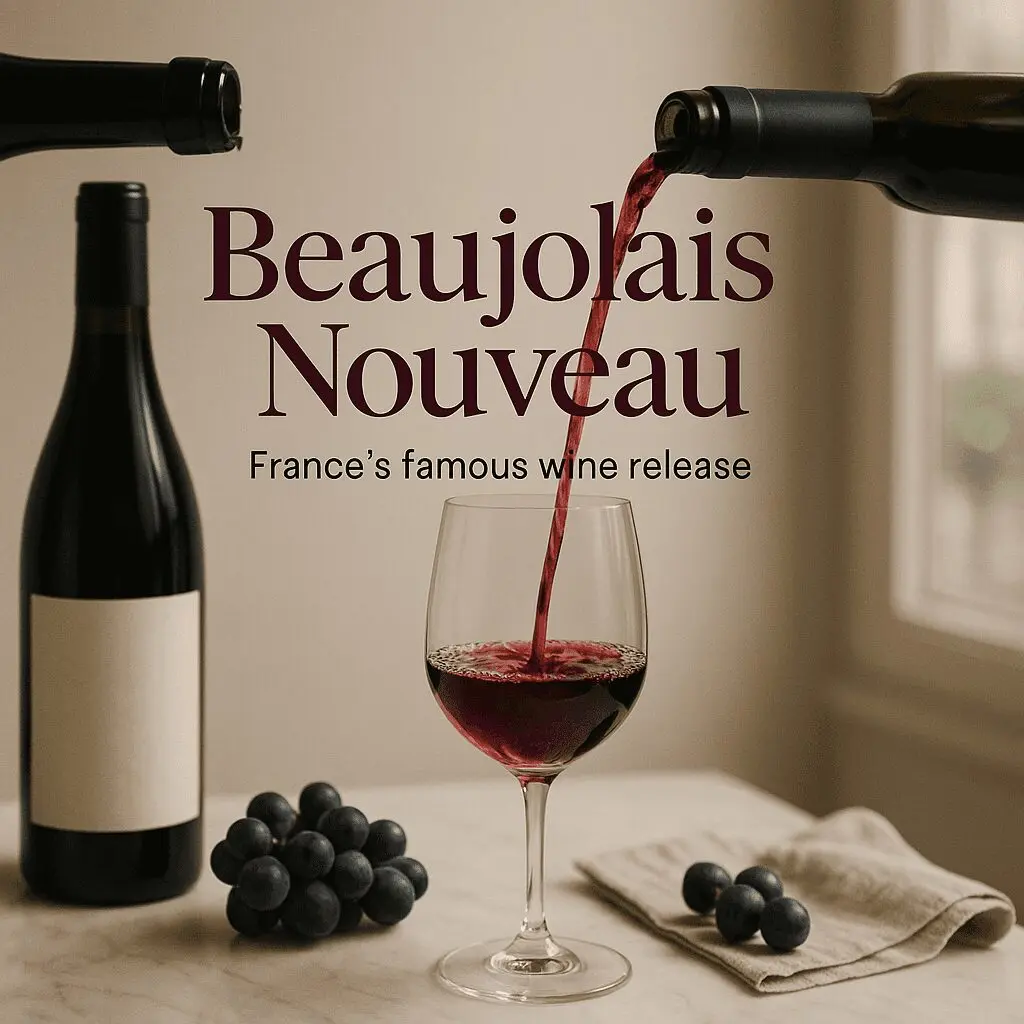
Beaujolais Nouveau is the wine that shows up before anyone is really ready.
It is barely finished being wine, rushed out the door, and arrives with a kind of cheerful chaos that France somehow makes look elegant. If you have ever heard the phrase “Le Beaujolais Nouveau est arrivé!” (Beaujolais Nouveau has arrived), that is not just marketing. It’s a whole moment. A seasonal ritual. A reason to gather, eat something good, and open a bottle that tastes like the first page of a new vintage.
And since Domaine de Vavril sits right here in the Beaujolais countryside near Beaujeu, this topic is kind of in the air every year. Guests ask about it all the time, especially people planning autumn weddings or long family weekends. So let’s unpack it properly.

So, what exactly is Beaujolais Nouveau?
Beaujolais Nouveau is a very young red wine from the Beaujolais region of France, released just weeks after harvest.
That is the headline definition. But the real point is this:
- It is meant to be drunk immediately, not aged.
- It is light, fresh, fruity, usually low in tannin.
- It is released on a fixed day every year, with lots of celebration around it.
Most Beaujolais Nouveau is made from the Gamay grape, which is basically the signature grape of Beaujolais. If you like reds that are bright, juicy, and not heavy, Nouveau is usually pretty easy to love.
This wine also pairs perfectly with some traditional dishes like oeufs meurette, making it an ideal choice for those planning weddings in a vineyard. The Domaine de Vavril offers beautiful settings for such events and can provide unique experiences like wine tours for wedding guests.
When is Beaujolais Nouveau released?
The official release date is:
The third Thursday of November, every year.
It is not random. It is written into the rules. At midnight (technically just after), bars, restaurants, cavistes, and supermarkets can start selling and serving it.
That timing is part of why it became famous. November can be grey, cold, and a bit long, typical of the weather patterns in the Beaujolais region. Nouveau shows up like a party crasher in a good way. Suddenly there is something to do.
Why is Beaujolais Nouveau such a big deal in France (and beyond)?
There are a few layers to it.
1) It is tradition, but also a smart invention
The “new wine” tradition is old. People have always tasted the first wines after harvest. But the massive global release, the race to get bottles shipped, the posters, the slogans. That took off more in the 20th century, especially post war, when Beaujolais producers and négociants realized they could create a yearly event.
And they did. Successfully.
2) It is about celebration, not perfection
Nouveau is not trying to be the most complex wine in your cellar. It is meant to be fun. It is meant to be shared. It is basically a wine that says, hey, harvest is done. We made it.
3) It turned into a worldwide “release day” culture
At its peak, Beaujolais Nouveau became a global thing. Tokyo, New York, London, Berlin. People were waiting for it. Some places still do. The hype is calmer now than it was in the 80s and 90s, but the tradition remains, and in France it is still a very real little seasonal heartbeat.
If you’re planning to experience this unique celebration and enjoy some of the best wines during your visit to France, consider checking out the best time to visit France in 2026 for optimal weather and fewer crowds!
What does Beaujolais Nouveau taste like?
If you have never tried it, here is what you can expect most of the time:
- Red berries: strawberry, raspberry, sometimes red cherry candy vibes
- Floral notes: a touch of violet, sometimes peony
- A hint of banana or bubblegum: not always, but common (more on that in a second)
- Light body: not heavy, not oaky, not brooding
- Very low tannin: it does not usually dry your mouth out much
- High drinkability: it goes down easily, sometimes too easily
One important thing. Not all Nouveau tastes the same. Quality varies a lot by producer. Some are charming and clean. Others can feel a bit thin or overly “candied.” So it helps to buy from a good domaine or a trusted shop.
Why does Nouveau sometimes smell like banana?
This is the famous part everyone jokes about.
A lot of Beaujolais Nouveau is made using carbonic maceration (or semi carbonic maceration), a fermentation technique where whole grape clusters ferment in a low oxygen environment. This tends to emphasize bright fruit aromas and can create those characteristic esters that smell like banana, pear drops, or bubblegum.
It is not “fake flavoring.” It is chemistry from fermentation.
And again, it varies. Some producers aim for fresher, purer fruit and less of that banana note. Others lean into it because people expect it.
Is Beaujolais Nouveau the same as Beaujolais Villages or Cru Beaujolais?
No, and this is where a lot of confusion happens.
Beaujolais has different “levels” of wine, and Nouveau is its own category.
Beaujolais Nouveau
- Released in November, very young
- Meant for immediate drinking
- Usually simple, bright, festive
Beaujolais (regular) and Beaujolais Villages
- Released later, more “normal” wine timeline
- Can still be fresh and fruity, but more structured
- Villages often has a step up in concentration and depth
Cru Beaujolais (10 crus)
This is where people get surprised by how serious Gamay can be. The 10 crus are:
- Morgon
- Moulin à Vent
- Fleurie
- Brouilly
- Côte de Brouilly
- Régnié
- Chiroubles
- Juliénas
- Chénas
- Saint Amour
These wines can age. They can be complex. They can even feel “Burgundian” in the best way, depending on the cru and producer. If Nouveau is the fun friend who gets everyone dancing, Cru Beaujolais is the friend who knows how to cook and also has excellent taste in books.
For a deeper understanding of these wines, you might find this Beaujolais 101 guide helpful.
How long does Beaujolais Nouveau last?
In terms of drinkability:
It is best within a few months of release.
Some bottles hold nicely into spring. Occasionally longer. But the point is that it is fresh and primary and fruity. It is not a wine built for cellaring.
If you are buying it, buy it with a plan to open it soon. Like, this weekend. Or for a cozy dinner. Or for a wedding welcome night when everyone is arriving and you want something easy.
However, if you’re considering a more extensive exploration of what Beaujolais has to offer beyond the Nouveau, it’s worth looking into how the region is set to become one of France’s largest viticultural areas, or even planning some wine country wedding guest activities that could include tastings of these exquisite wines!
How do you serve Beaujolais Nouveau?
This matters more than people think.
- Serve it slightly chilled: around 12 to 14°C is great
- Use simple glasses: you do not need giant Bordeaux bowls
- Do not overthink decanting: usually unnecessary
- Open and pour: that is kind of the whole vibe
If you serve it too warm, it can feel flat or overly sweet. A little chill keeps it snappy.
What food goes with Beaujolais Nouveau?
This is one of the reasons it works so well at gatherings. It is flexible. For more detailed pairings, you can refer to this guide on what to pair with Beaujolais Nouveau.
Here are some classic pairings that just make sense:
- Charcuterie boards, pâté, terrines
- Roast chicken, turkey, simple pork dishes
- Sausages, especially with lentils
- Mushroom dishes, fall vegetables
- Mild cheeses, raclette style comfort food
- Bistros classics like jambon persillé or even a croque monsieur
And yes, it works with Thanksgiving food if you are outside France and trying to make it a tradition. The timing lines up for a reason.
Is Beaujolais Nouveau “good” wine, or just hype?
Both answers can be true, depending on the bottle.
There was a period where Nouveau’s reputation dipped because a lot of mass production focused on quantity and speed, and the wine became a bit of a joke in some circles. Thin, overly candied, rushed. People rolled their eyes.
But in the last couple decades, more winemakers have brought care back into it. Better farming, better balance. Less caricature. You can absolutely find Nouveau that is genuinely delicious.
So the real answer is:
- Bad Nouveau exists.
- Good Nouveau is joyful and worth drinking.
If you choose well, it is not a novelty. It is a seasonal pleasure.
Planning a Destination Wedding in Beaujolais?
If you’re considering organizing a destination wedding in Beaujolais, it’s essential to choose the right season for your event. The beauty of this region shines through in different ways throughout the year. For insights on how to select the best season for your wedding or event in Beaujolais, make sure to explore local resources and advice!
Lastly, if you’re looking to host an unforgettable celebration around Beaujolais Nouveau, consider following some tips from this comprehensive [guide on hosting a Beaujolais Nouveau celebration](https://lechefswife.com/how-to-host-a-beaujolais-nouveau-cele
Where is Beaujolais Nouveau actually made?
Only wine from the Beaujolais region can be labeled Beaujolais Nouveau, under the appellation rules. The region sits just south of Burgundy, with rolling hills, granite soils in many areas, and an identity that is very much its own.
If you are visiting the area around Beaujeu, you are basically in the historical heart of it. Which is part of why people love being here in autumn. The landscape turns, the cellars are active, and the whole region feels like it is between seasons. This is especially true during harvest season, when the vineyards are bustling with activity.
Planning a trip for Nouveau season?
If you want to experience Beaujolais Nouveau in context, the best way is not just buying a bottle in a supermarket somewhere else. It is being here. Even for a short stay.
A few ideas that work well:
- Come for a long weekend around release day
- Visit a couple domaines, taste Nouveau and also taste crus (do both)
- Book a dinner with local food and keep it simple
- Make it social, because Nouveau is not really a solo wine
And if you are looking for a base in the Beaujolais countryside, Domaine de Vavril is set up for exactly that kind of stay. Big old stone spaces, gardens, the pool when the weather still cooperates, and on-site accommodation for a group. People use it for weddings, yes, but also for family reunions and friend weekends where wine tasting is basically the central activity.
If you’re considering hosting a destination wedding or planning the perfect anniversary celebration, Domaine de Vavril provides an ideal setting. Additionally, if you’re interested in exploring more of what Beaujolais has to offer before or after your celebration, check out these weekend itinerary ideas.
Beaujolais Nouveau and weddings (a quick, practical note)
This is not a rule, just a thought.
If you are hosting a wedding in Beaujolais in November, or even late October, incorporating Nouveau can be a fun piece of the weekend. Not necessarily as the main “serious” wine at the reception, but as:
- A welcome drink the night guests arrive
- A casual bottle on the brunch table
- A local talking point with a little story behind it
It creates atmosphere without trying too hard. And in a place like Vavril, where the estate has a wine identity baked into it, it fits naturally.
For those considering hosting a wedding in this beautiful region, you might want to explore our comprehensive guide on French vineyard wedding costs, which provides a complete budget breakdown that can help you plan your dream wedding.
Quick FAQs
Is Beaujolais Nouveau always the same producer style?
No. Some are more floral and fresh, some more candy-like, some surprisingly structured for Nouveau. Producer matters a lot.
Is it only red wine?
Beaujolais Nouveau is overwhelmingly red (Gamay), but there is also Beaujolais Nouveau Blanc (usually Chardonnay). It is less common, but it exists.
Do French people still drink it?
Yes. Maybe not with the same mass hype as decades ago, but the tradition is alive. In the region, especially, it is still a thing.
Is it worth buying if I like fuller reds?
Maybe, but go in with the right expectation. It is light. If you want deep tannins and oak, look to other styles or to Moulin à Vent or Morgon instead.
If you’re planning an intimate celebration instead of a grand affair, consider our guide on micro-weddings in French vineyards. Alternatively, if you’re contemplating a spring wedding in this picturesque wine country, our article on spring weddings in French wine country could provide valuable insights.
Finally, understanding how to choose the right season for your Beaujolais wedding or event can significantly impact your experience. Our guide on how to choose the right season for your Beaujolais wedding or event offers helpful tips to make your decision easier.
Wrap up
Beaujolais Nouveau is not trying to be a masterpiece. It is trying to be a moment.
A wine you open because it is November, because people are around the table, because the year is moving on and you want something bright in your glass. If you pick a good bottle and serve it with the right food, it makes total sense why it became famous.
And if you ever want to taste it where it actually lives, in the Beaujolais hills near Beaujeu, you can build a whole weekend around it. That is the best version, honestly.
For stays, private gatherings, or multi day wedding celebrations in the heart of Beaujolais, you can take a look at Domaine de Vavril here: https://vavril.fr.
FAQs (Frequently Asked Questions)
What is Beaujolais Nouveau wine?
Beaujolais Nouveau is a very young red wine from the Beaujolais region of France, released just weeks after harvest. It is light, fresh, fruity, usually low in tannin, and meant to be drunk immediately rather than aged.
When is Beaujolais Nouveau officially released each year?
Beaujolais Nouveau is officially released on the third Thursday of November every year. At midnight following this day, bars, restaurants, and stores can begin selling and serving it.
Why is Beaujolais Nouveau such an important tradition in France?
Beaujolais Nouveau represents both an old tradition of tasting new wines after harvest and a 20th-century invention that created a global release event. It celebrates the end of harvest with fun and shared enjoyment rather than aiming for complexity or perfection.
What grape variety is primarily used to make Beaujolais Nouveau?
The Gamay grape is the signature grape of the Beaujolais region and is primarily used to produce Beaujolais Nouveau wines known for their bright, juicy character and low tannins.
What flavors and aromas can I expect when tasting Beaujolais Nouveau?
Beaujolais Nouveau typically offers red berry flavors such as strawberry and raspberry, floral notes like violet or peony, sometimes hints of banana or bubblegum, a light body, very low tannins, and high drinkability making it easy to enjoy.
How does Beaujolais Nouveau fit into celebrations or events like weddings in the Beaujolais region?
Beaujolais Nouveau’s cheerful and fresh character makes it perfect for gatherings and special occasions like autumn weddings. Venues such as Domaine de Vavril offer beautiful vineyard settings along with unique experiences like wine tours for wedding guests to enhance these celebrations.