
How to Travel to France With Your Wedding Dress Without Ruining It
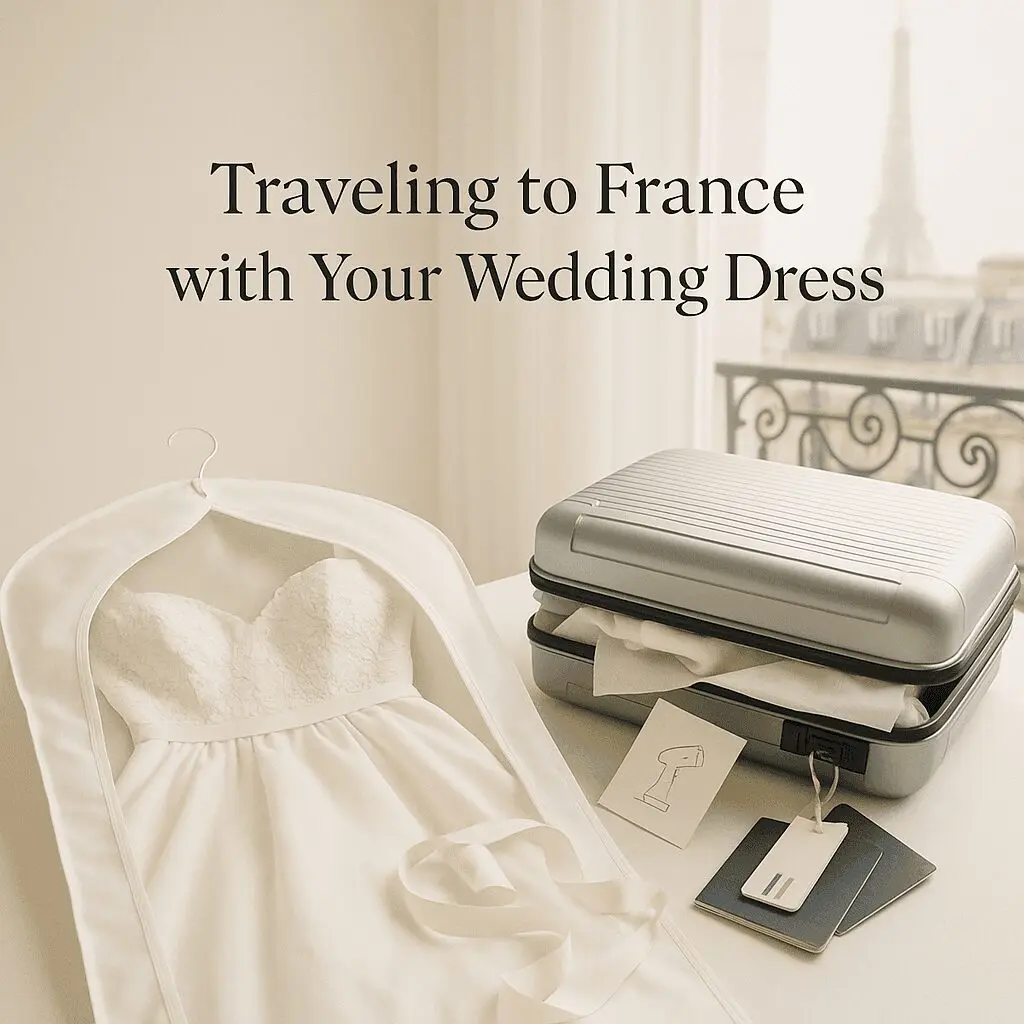
There are a lot of things you can forget on a wedding trip and recover from.
Phone charger. Extra mascara. Even your shoes, technically, if you have enough time and a decent emergency budget.
But your wedding dress. That’s the one item where, if something goes wrong, it feels like the whole trip is suddenly about damage control.
And if you’re coming to France for a destination wedding, perhaps landing in Lyon or Paris before heading out to the countryside or a vineyard for an unforgettable experience, there’s a lot to consider. You’re dealing with flights, transfers, car trunks, staircases, humidity, a hotel iron you absolutely should not touch… the whole thing.
So let’s keep it simple. This is the practical, real world guide to getting your wedding dress to France safely. No panic. No “hope for the best”. Just a plan.
First, decide. Are you carrying it on, or checking it?
Carry on, almost always. Like 99 percent of the time.
Checked luggage is where dresses go to disappear for two days, get crushed under hard shell suitcases, or arrive with a mystery stain you cannot explain to anyone without sounding insane.
So yes, the best move is to bring your dress in the cabin.
What you want to aim for:
- Dress as a carry on item (in a garment bag)
- Your regular carry on suitcase (or personal item) for everything else
That said, airlines vary. Some are lovely about garment bags. Some are not. Which leads to the next step.
If you’re planning on having your wedding in regions known for their beautiful vineyards such as Beaujolais or Provence, it’s essential to know the best times for vineyard weddings. And if you’re considering an elopement package in France or Italy, it’s worth exploring the differences between weekend elopement packages in these two countries.
Lastly, for those who are organizing a destination wedding specifically in Beaujolais, we’ve compiled the ultimate checklist that might be helpful. If you’re also interested in planning a sustainable wedding at a luxury estate in France, we have resources available on how to plan such an event.
Call the airline. Not email. Call.
I know. Calling airlines is… a vibe.
But if you want a straight answer about whether you can bring a garment bag as carry on, and whether they have a closet onboard (some long haul planes do), you need to speak to a person.
Here’s what to ask, word for word:
- “Can I bring a wedding dress in a garment bag as my carry on?”
- “Does the aircraft on this route have a hanging closet?”
- “If not, can the garment bag be laid flat in an overhead bin?”
Write down the name of the agent and the date you called. If you’re the kind of person who likes receipts. This is one of those moments.
Choose the right garment bag. This matters more than people think.
Not all garment bags are made for flying.
You want one that is:
- Structured enough that it does not flop around
- Long enough for your dress, but foldable
- Clean inside (no old makeup, no dust, no weird closet smell)
- Light so you’re not fighting it through the airport
If your dress is heavy or has a long train, ask your boutique for advice. They’ve seen every horror story. They’ll tell you what actually works.
The ideal setup
- Dress inside a bridal garment bag
- Then placed inside a second protective outer bag (optional, but useful if you’re traveling in bad weather)
Also, put a luggage tag on it. Even if it’s “carry on”. Things get set down. Picked up. Confused with someone else’s all black garment bag. It happens.
And while we’re on the topic of wedding dresses, it’s worth exploring some French wedding traditions. These traditions often include unique customs surrounding the attire and could provide valuable insights or inspiration for your own wedding planning process.
Speaking of luggage, it’s crucial to choose the right type for your travel needs. For instance, this Reddit thread offers some insightful advice on selecting the perfect bag or suitcase for your journey.
Furthermore, understanding luggage size guidelines can also be beneficial in ensuring that your garment bag fits within airline restrictions.
Get your dress packed properly at the boutique
When you’re preparing for a destination wedding, whether it’s in a picturesque vineyard or a stunning winery, it’s essential to ensure your dress is packed properly. Ask your boutique to show you how to fold it for travel.
Some dresses travel better folded (yes, even expensive ones). Especially if they’re big and you know you won’t get closet space on the plane.
What you can request:
- Tissue paper between folds to reduce creasing
- Straps secured so they don’t snag
- Beading protected so it doesn’t rub
- A quick explanation of what parts can be steamed safely
If you’re doing alterations, try to schedule the final fitting early enough that you’re not traveling 12 hours after it’s been pressed and perfect. Because travel will undo “perfect” anyway. You just want it to arrive intact.
Take photos of the dress before you leave
Not a photoshoot. Just clear documentation.
- Full front
- Full back
- Close ups of delicate areas (beading, lace edges, buttons)
- Any existing tiny flaws (so you don’t blame yourself later)
If something happens in transit, you’ll be glad you did this.
What to do at airport security (without getting your dress dirty)
Security trays are not clean. Like, at all.
So don’t put the garment bag directly on the belt if you can avoid it.
A few practical tips:
- Ask the agent if you can have it inspected by hand (often yes)
- Keep the dress zipped inside the bag
- Carry a couple of clean plastic bags in your carry on, just in case you need to protect the bottom while you set it down
Also, avoid wearing a ton of jewelry that snags lace. This sounds random, but it’s real. Airports are chaotic. You’ll be juggling.
When planning your wedding reception at a vineyard, consider these wedding reception planning tips and ideas. Additionally, for capturing those beautiful moments during your vineyard wedding, make sure to request these best shots for vineyard wedding photography. If you’re considering an overseas wedding venue, here are some insights on how to choose the perfect wedding venue abroad.
On the plane. Your goal is “flat, clean, and untouched”
If the plane has a closet, ask a flight attendant politely as soon as you board. Like immediately. Not after everyone has piled in.
If no closet:
- Lay the garment bag flat in the overhead bin if possible
- If you must fold it, fold it once, gently, with tissue paper at the fold
Do not cram it in on top of roller bags. Your dress is not a sweater. For more tips on how to properly fly with your wedding dress, you can refer to this helpful guide.
If you have a connection, plan like a paranoid person (in a good way)
Connections are where the calm plan starts to wobble.
If you can, choose:
- Longer layovers (less running)
- Fewer connections (obvious but worth saying)
- Earlier flights (less delay domino effect)
And if you’re taking a train after landing in France, same idea. Don’t book the 18 minute connection where you’re sprinting through Gare de Lyon in wedding related stress.
Arriving in France. Don’t leave it in the car trunk
This is the part people forget. You land, you’re excited, you’re tired, you’re heading to the venue, and the dress ends up in a hot trunk while you stop for lunch.
Heat can do weird things. Humidity too. And car trunks can smell like… car trunk.
So:
- Keep the dress with you in the cabin area if possible
- If it must go in the trunk, put it on top of everything, never under suitcases
- Avoid long stops in the sun
Also, when planning your wedding in France, be mindful of the common mistakes to avoid when booking an exclusive use venue. Consider venues like Domaine de Vavril, which offer beautiful settings for intimate weddings. If you’re envisioning a vineyard wedding, make sure to follow this vineyard wedding venue checklist to ensure everything goes smoothly.
Remember to keep these 15 tips to avoid air travel issues in mind for a smoother journey.
Where to store the dress once you arrive
You want it hanging, away from:
- steamy bathrooms
- direct sunlight
- food
- makeup bags
- curious children and pets (love them, but no)
Ideal: a closet with space so the fabric can breathe.
If you’re arriving at a wedding venue that hosts destination couples often, they’ll usually have a plan for this. If you’re getting married in the Beaujolais and looking for a place that’s used to weddings, group stays, and the whole multi-day flow, it’s worth choosing a venue where the team is actually experienced in managing these logistics.
For instance, at Domaine de Vavril, couples can privatize the property for wedding weekends. This arrangement significantly reduces the stress of figuring out where to safely store the dress since you’re not juggling between multiple hotels and last-minute room swaps.
If you’re still in the process of planning your stay, you can explore the venue and lodging options available at Domaine de Vavril by checking their website here.
Steaming in France. Do it the safe way.
Most dresses need steaming after travel. Even if you did everything right. It’s normal.
But, and this is important, not every fabric reacts well to heat and not every “steamer” is trustworthy.
My honest recommendation
If your dress is delicate, consider hiring a local professional (or ask your venue/coordinator for a trusted contact). It’s one of those small expenses that can prevent a disaster. If you’re having your wedding at a vineyard like Domaine de Vavril, which offers sustainable wedding venues in French vineyards, they may also have recommendations for local professionals who specialize in handling delicate fabrics.
If you steam it yourself
Bring:
- A small travel steamer (dual voltage if needed)
- A heat glove
- A clean white cloth
Then follow these rules:
- Steam from the inside of the dress when possible
- Keep the steamer head not touching the fabric, especially lace and tulle
- Do a test area near the hem or inside seam first
- Never steam in a tiny bathroom that turns into a sauna in 3 minutes
If your dress is satin, be extra careful. Satin loves to show water spots. It’s dramatic like that.
Wrinkle emergencies. The stuff people do that you should not do.
Things to avoid, even if someone insists it’s fine:
- Using a hotel iron directly on the dress
- Hanging the dress in the bathroom with a boiling shower for an hour (hello humidity marks)
- Spraying wrinkle release products without testing
- Putting the dress in a dryer (please do not)
If something goes wrong, pause. Take a breath. Then contact a pro cleaner or bridal alteration specialist locally. France has plenty.
What to pack in your “wedding dress travel kit”
This is a small pouch that lives in your carry on, not checked luggage.
- Small sewing kit (clear thread if possible)
- Safety pins (various sizes)
- Fashion tape
- Stain remover pen (test on a hidden spot first)
- White chalk (for tiny marks on some fabrics)
- Lint roller
- A couple of clean microfiber cloths
- Tissue paper
- A big clean plastic bag (for ground emergencies)
- A mini flashlight (sounds silly, but helpful when you’re checking a hem)
You probably won’t use most of it. But you’ll feel like a genius for having it.
If you’re bringing the dress back home after the wedding
Same rules. But you add one more.
Make sure it’s fully dry before packing. Champagne spills, dancing sweat, outdoor grass. Even if it looks fine, moisture trapped in a bag is how you get mildew smells later.
If you can’t clean it before you fly home, at least:
- Let it air out in a safe place
- Pack it with tissue paper
- Get it cleaned as soon as you’re back
Quick checklist (save this for the day you fly)
- Airline confirmed garment bag carry on policy
- Dress photographed before travel
- Dress packed with tissue paper
- Garment bag labeled
- Dress stays with you, not checked
- No trunk heat, no bathroom steam chamber
- Steaming plan ready (pro or careful DIY)
- Emergency kit packed
One last thing. Build a schedule that gives you breathing room.
A lot of “dress disasters” aren’t really about the dress.
They’re about arriving too late, being too rushed, and trying to fix something at midnight in bad lighting with five opinions flying around the room.
If you’re planning a wedding trip to France, give yourself at least a day buffer before the wedding. Arrive, unpack, hang the dress, let it settle. Walk around a little. Eat something real.
And if you’re still choosing your wedding location, picking a venue that’s set up for full wedding weekends and onsite stays can make all of this calmer. Less moving pieces. Less driving the dress around. More time to actually enjoy France. For instance, venues like Domaine de Vavril offer such setups in the Beaujolais region: Domaine de Vavril.
If you’re considering a vineyard wedding in South France or looking for fairytale wedding venues, or even need assistance with vendor networks when planning from abroad, it’s essential to build a schedule that gives you breathing room. This will not only help avoid potential « dress disasters » but also allow you to fully enjoy your special day.
Relevant images to include in the article
Add these throughout the post in WordPress (or keep as Markdown if your setup supports it). Replace with your own photos if you have them. Venue images perform especially well, if they’re real.
- A bride holding a garment bag at an airport
- Close up of delicate lace or beading

- A suitcase and travel essentials laid out (flat lay)

- A French countryside road or vineyard vibe (nice for destination context)

- Wedding venue exterior or reception setup (use a real Domaine de Vavril image if possible)


Incorporating relevant images can greatly enhance your article, especially when discussing topics such as how to personalize your wedding ceremony in the French countryside, or when providing tips on planning your intimate French vineyard wedding from America. Additionally, it’s beneficial to understand the difference between authentic and commercial French wedding venues, and to have a clear idea about the costs associated with a French vineyard wedding.
Moreover, while planning such significant events, it’s essential to consider incorporating elements of culturally responsive teaching into your wedding ceremony. This approach can help create a more inclusive and personalized experience for all attendees.
FAQs (Frequently Asked Questions)
Should I carry on or check my wedding dress when flying to France for a destination wedding?
Almost always, you should carry on your wedding dress. Carrying it in the cabin, preferably in a garment bag, reduces the risk of your dress getting lost, stained, or crushed. Checked luggage often leads to delays and damage, so carrying on is the safest option about 99% of the time.
How can I confirm if my airline allows a garment bag as a carry-on for my wedding dress?
It’s best to call your airline directly rather than emailing. Ask specifically: ‘Can I bring a wedding dress in a garment bag as my carry on?’, ‘Does the aircraft have a hanging closet?’, and ‘If not, can the garment bag be laid flat in an overhead bin?’ Make sure to note the agent’s name and date of your call for reference.
What features should I look for in a garment bag suitable for flying with my wedding dress?
Choose a garment bag that is structured enough to hold its shape without flopping around, long enough to accommodate your dress but foldable for travel convenience, clean inside (free from makeup stains or odors), and lightweight to ease handling through airports. Using a bridal garment bag inside an optional protective outer bag is ideal.
How should my wedding dress be packed by the boutique for air travel?
Ask your boutique to pack your dress properly by showing you how they fold it for travel. Some dresses, even expensive ones with big trains, travel better folded rather than hung. Proper folding helps minimize wrinkles and protects delicate fabrics during transit.
Are there special considerations when planning vineyard weddings in regions like Beaujolais or Provence?
Yes. It’s important to know the best times for vineyard weddings in these regions to ensure optimal weather and scenery. Additionally, consulting resources like seasonal guides and ultimate checklists specific to Beaujolais can help streamline your destination wedding planning process.
Where can I find more information about French wedding traditions and sustainable luxury weddings?
You can explore detailed insights into French wedding traditions that cover unique customs related to attire and celebrations. For those interested in eco-friendly options, resources are available on how to plan sustainable weddings at luxury estates in France, providing guidance on combining elegance with environmental responsibility.