
German Couples: Beaujolais vs the Rheingau for a Wine Country Wedding
There’s a certain type of couple, you might be one of them, who doesn’t want a wedding that feels like a production.
You want it to feel… real. Like people can breathe. Like the wine is actually good, and not just “wedding wine”. Like the place has a little soul.
For German couples considering wine country weddings, the comparison that pops up a lot is Beaujolais (France) vs the Rheingau (Germany). Both are gorgeous. Both are wine-first regions. Both can do elegant without being stiff.
However, they offer different vibes. Once you see the differences clearly, the decision usually gets easier.
So let’s break it down properly. No fluff. Just the actual tradeoffs.
First, the big picture difference (the one you feel immediately)
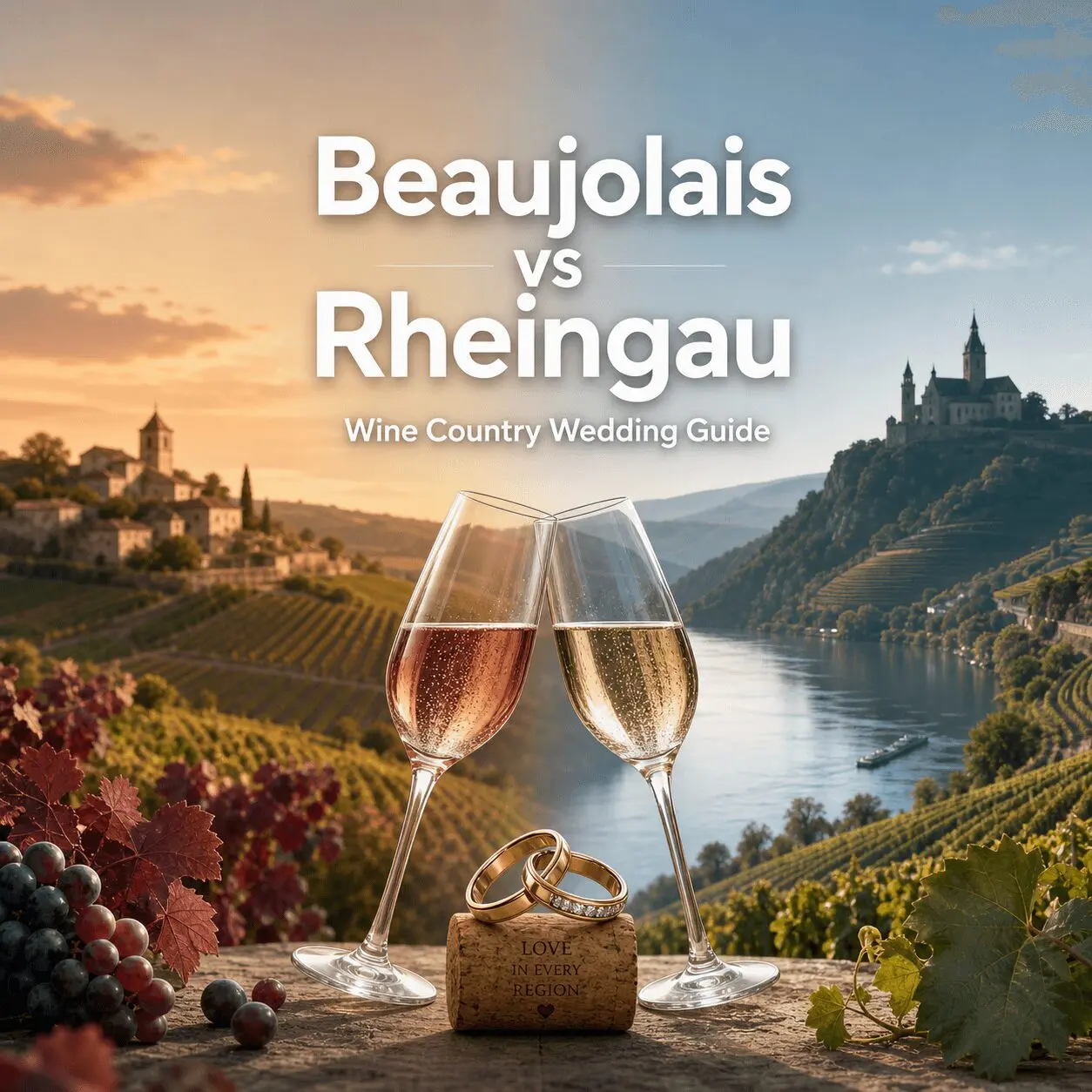
The Rheingau is classic German wine romance. River curves, vineyards climbing the hills, tidy villages, castles in the distance, Riesling everywhere. It’s polished. It’s structured. It’s easy to reach. And yes, it can be seriously beautiful.
On the other hand, Beaujolais, especially around Beaujeu and the “Pierres Dorées” area, offers more of a warm French countryside energy. Golden stone houses. Rolling hills. Less “tourist postcard”, more “we found this amazing estate and everyone’s staying together for three days”. If you’re a couple that wants the wedding to feel like a little holiday with your closest people, Beaujolais tends to win hearts fast.
The wine question (because it’s kind of the point)
Let’s be honest. If you’re doing wine country, the wine has to be more than background.
From Napa to Beaujolais: Wine Country Weddings Guide provides insight into how to navigate this aspect effectively.
Moreover, understanding the complete guide to Beaujolais wine estate weddings can help you make informed decisions about venues and French wine and wedding pairing will ensure your big day is as memorable as possible.
Rheingau wine experience
The Rheingau is Riesling territory. Crisp, mineral, often elegant and age-worthy. If your family loves white wine, or you’re the kind of couple that gets excited about vineyard sites and Spätlese styles, the Rheingau is a dream.
Moreover, German wine culture is familiar to many. Your guests “get it” immediately. No translation required.
Beaujolais wine experience
Beaujolais is Gamay country, and the best bottles are not “simple”. They’re vibrant, food-friendly, and honestly perfect for a wedding weekend where people eat, laugh, and keep refilling glasses.
Additionally, Beaujolais has this underrated advantage for weddings: it works for mixed crowds. Wine enthusiasts can geek out on Morgon, Fleurie, Moulin à Vent while casual drinkers just enjoy something that tastes good without needing a lecture.
And if you want to widen the menu beyond Gamay, you’re close to Burgundy and the Rhône, so your tasting options get big fast. Incorporating wine tastings into your wedding weekend can add an exciting element to your celebration.
The wedding style question: formal day vs multi-day “everyone together”
This is where the decision often happens.
Rheingau weddings: easier for a single day
The Rheingau is excellent if you want a one-day wedding with a clean schedule. Ceremony, reception, party, guests head home or to hotels nearby. Very manageable.
However, if you’re hoping for that very specific destination wedding feeling—where everyone stays in one place, swims, eats brunch together—and the wedding becomes a weekend affair; you need to be more selective with venues. For such destination wedding planning, considering vineyard venues in the Rheingau or Beaujolais can provide an unforgettable experience.
Beaujolais weddings: perfect for multi-day celebrations
On the other hand, Beaujolais lends itself beautifully to multi-day celebrations. The relaxed atmosphere of this region allows guests to unwind and enjoy each other’s company over several days. With its breathtaking landscapes and exceptional wines, hosting a wedding in Beaujolais could turn your special day into an extended celebration filled with joy and laughter.
Regardless of whether you choose Rheingau or Beaujolais for your nuptials, both regions offer unique experiences that cater to different wedding styles. And don’t forget about incorporating some local wine into your wedding reception, it’s sure to be a hit among your guests!
Beaujolais weddings: naturally built for a wedding weekend
Beaujolais is full of estates, maisons, and private domains where a wedding can expand into a three-day rhythm without feeling forced.
This is exactly the style that Domaine de Vavril (Vavril) is set up for. It’s a fully privatized 18th-century wine estate in Beaujeu, renovated and designed for multi-day events, built around the idea that your guests aren’t scattered across five hotels.
You basically get to create a mini world for a few days. Ceremony, reception, late nights, pool time, slow breakfasts, the whole thing.
If you want to see what that looks like, the best starting point is simply browsing the property and event flow here:
https://vavril.fr
However, it’s not just about the venue. The experience your guests will actually have matters more than any brochure can convey.
Your guests won’t remember the square meter size of the reception room. They remember moments. The walk to breakfast. The view when they arrive. The feeling of being “inside” the wedding instead of attending it like an appointment.
Guest experience in the Rheingau
- Very convenient for German guests, especially if many are coming by car.
- Strong hotel infrastructure. Easy to book rooms.
- The region is used to hosting tourists, which is good… and sometimes a little busy, depending on the season.
It can feel like: arrive, celebrate, leave. Which is totally fine if that’s what you want.
But if you want your wedding to be more than just an event, consider incorporating elements that make it memorable. For instance, requesting specific shots from your vineyard wedding photography. These photographs can capture those fleeting moments and beautiful landscapes that your guests will remember long after the celebration is over.
Also, don’t forget to explore some local wine festivals during your stay. These events could provide a unique experience for your guests and add an extra layer of enjoyment to their visit.
Guest experience in Beaujolais
- Feels like a true escape, but still accessible via Lyon.
- You can host people on site (depending on the venue), which changes everything socially.
- It’s quieter. Less performative. More intimate.
It can feel like: we’re all here together, we’re living in this place for a few days.
Travel logistics from Germany (the practical reality check)
Let’s not pretend travel doesn’t matter. If your guest list is mostly German, you’ll probably be weighing “ease” pretty heavily.
Getting to the Rheingau
Easy. Frankfurt is nearby. Trains are straightforward. Driving is simple. Fewer language gaps. Guests can come even if they only have one free day.
Getting to Beaujolais
Still doable, just different.
Most international guests fly into Lyon. From there, it’s a manageable drive to the Beaujolais area. Many couples arrange shuttles from Lyon or a nearby train station, especially for the core group.
What couples often find, though, is that once guests commit to France, they commit properly. They take a long weekend. They treat it as a holiday. And the wedding atmosphere gets deeper because of that.
Season and weather: what’s actually comfortable
Rheingau climate for weddings
Spring and early autumn are lovely. Summers can be warm but usually manageable. Because it’s a river region, you can get humidity, and sometimes unpredictable rain. Nothing dramatic, just… plan for options.
Beaujolais climate for weddings
Beaujolais summers can be warm, dry, and long evening friendly. Late spring and early autumn can be that perfect sweet spot according to this guide. And if you choose a venue with outdoor spaces and indoor fallback, you’re in a strong position.
A venue with gardens and a pool becomes more than a “nice extra”. It becomes part of the wedding weekend’s rhythm.
The venue feel: castles and wineries vs private estates
This is where the aesthetic differences get real.
Rheingau venues
You’ll see:
- Winery restaurants and tasting rooms adapted for weddings
- Hotels with event spaces
- Castle style venues with a more formal tone
It can be stunning. But it often comes with a more “public” feeling, unless you book very carefully.
Beaujolais venues
You’ll see:
- Stone estates with courtyards and gardens
- Private domains where you can privatize everything
- More of that relaxed French country luxury
Domaine de Vavril is a good example of this Beaujolais style: renovated historic estate, reception spaces, gardens, accommodation, and that sense that you’re not sharing your wedding with other guests on the property. For those considering a destination wedding in Beaujolais, it’s worth noting that this region offers not just beautiful venues but also a unique cultural experience around food which is an integral part of any celebration.
Food and catering: the part German families will talk about for years
In the Rheingau, you’ll get excellent regional cuisine, often very well organized. Think seasonal menus, local ingredients, sometimes a little more traditional.
In Beaujolais, food is a whole culture. The Lyon area especially is… kind of famous for eating well. Wedding catering there tends to lean into abundance. Long meals. Multiple courses. Cheese that people remember.
And yes, you can absolutely design it to feel modern and light too. But the baseline expectation of “good food” is very high, in a good way.
Language and planning support (a quiet source of stress)
If you’re German and planning in Germany, the Rheingau can feel safer. Vendor emails in German. Contracts feel familiar. Less mental load.
Planning a wedding in Beaujolais can be just as smooth, but you’ll want a venue like Domaine de Vavril that is used to international couples and can support you in English (and ideally understands the “destination wedding” flow). This is where choosing an established wedding focused estate matters more than choosing a random pretty building.
For those planning from afar, such as organizing an intimate French vineyard wedding from America, having a supportive venue can significantly ease the process.
Budget: what changes, what doesn’t
This is tricky because budgets vary wildly. But some patterns show up.
Rheingau budget patterns
- Great range of venues, from mid to high end.
- Costs can increase quickly for exclusive venues, especially castles or luxury properties.
- Guest accommodation is separate, which means guests pay hotel rates, and you manage logistics.
Beaujolais budget patterns
- If you book a private estate with accommodation, you’re often bundling experiences into one place. This could be a part of your French vineyard wedding costs.
- You may spend more on privatization, but sometimes save on transport complexity, plus the “everyone together” factor reduces hidden costs like late night taxis.
Also, destination weddings often reframe value. You’re not just buying a room for one night. You’re buying a whole atmosphere for a weekend.
Which one feels more “special” for German couples?
This is subjective, but let’s say it out loud.
For many German couples, the Rheingau is beautiful… but it can also feel familiar. Like a region you might visit anyway. That’s not a bad thing. It can be comforting.
Beaujolais tends to feel more like an intentional choice. A little adventure, without being complicated. France has that romance factor, sure, but more than that, the architecture and light and pace feel different. People behave differently. They slow down.
And weddings benefit from that.
A simple decision shortcut (because you’re busy)
Pick the Rheingau if:
- Most guests need a very easy trip
- You want a one day celebration more than a full weekend
- Riesling is basically your love language
- You prefer familiar planning processes and German vendors
Pick Beaujolais if:
- You want a multi day wedding that feels like a shared vacation
- You like the idea of privatizing an estate and hosting everyone together
- You want that golden stone French countryside look
- You want guests to actually disconnect and be present
For those considering the Beaujolais option, there are plenty of weekend itinerary ideas exploring Beaujolais before and after your celebration, ensuring that your wedding becomes not just an event but an unforgettable experience. For more insights into planning French vineyard weddings, including venue selection and budget management, these resources provide valuable information.
What a Beaujolais wedding weekend can look like (example flow)
Just to make it concrete, here’s the kind of rhythm couples often build around a private estate in Beaujolais.
Day 1 Guests arrive, settle in, casual welcome drinks in the garden. No pressure. People swim if there’s a pool. You eat something simple but great.
Day 2 Wedding day. Slow morning, getting ready on site. Ceremony outdoors if weather allows. Reception in a stone hall. Party late into the night without worrying about transport.
Day 3 Brunch. Leftover cake. Stories from the night before. Some guests nap, some take a walk, some open another bottle. And then departures.
It’s not “extra”. It just feels complete.
If you’re curious about a venue that’s specifically positioned for this kind of fully private multi-day format, you can explore Domaine de Vavril, a perfect example of a fairytale wedding venue in the French vineyards.
Moreover, if you’re considering comparing options for your wedding venue, such as UK manor houses versus French vineyards, Domaine de Vavril offers an ideal setting that can cater to both intimate and grand celebrations.
To add more personal touch to your wedding experience, you might want to delve into some real couples’ stories and experiences at French vineyard weddings, which could provide valuable insights and inspiration for your own wedding planning.
Images to include in the article (suggested placements)
Below are image suggestions you can drop into WordPress. Replace with your own media library images, or use these as prompts for what to show.
1) Vineyard landscape mood image (intro)
2) Rhine river vineyards mood image (Rheingau section)

3) Wedding table wine country vibe (food and wine section)

4) French stone estate vibe (venue feel section)

The quiet truth
If you’re reading this because you’re stuck between “beautiful and easy” vs “beautiful and memorable”, you’re not overthinking it. This choice shapes the entire emotional tone of your wedding.
The Rheingau gives you structure, convenience, and a very classic German wine country feel.
Beaujolais gives you space. Time. That softened pace where guests stop checking their phones and start actually being together.
And if your dream version of this wedding includes everyone staying on site, sharing breakfasts, stretching it into a weekend, and doing it all in a private wine estate setting, Beaujolais is hard to beat. You can explore the unique guest experience of staying at a wine estate to get a better understanding of what this could look like.
When you’re ready to look at a venue that fits that exact format, take a look at Domaine de Vavril (Vavril) and see if it matches what you’ve been picturing. Their offerings for weekend elopement packages are particularly noteworthy.
If you’re considering planning your wedding in France, Vavril also provides valuable insights into the wedding planning process in the country. And if you’re uncertain about the necessity of hiring a local wedding planner, their article on the worth of hiring a French wedding planner might provide some clarity.
FAQs (Frequently Asked Questions)
What are the main differences between Rheingau and Beaujolais for wine country weddings?
Rheingau offers a classic German wine romance with polished, structured settings featuring river curves, vineyards on hills, tidy villages, and castles. It’s ideal for those who appreciate Riesling and a more formal single-day wedding. Beaujolais, especially around Beaujeu and Pierres Dorées, provides a warm French countryside vibe with golden stone houses and rolling hills, perfect for multi-day celebrations with close friends in a relaxed atmosphere.
Which region is better suited for couples wanting a multi-day wedding celebration?
Beaujolais is perfect for multi-day wedding celebrations due to its relaxed atmosphere and beautiful landscapes. It encourages guests to unwind, eat, laugh, and enjoy each other’s company over several days. Rheingau is more suitable for single-day weddings but can accommodate longer events if venues are carefully selected.
How do the wines of Rheingau and Beaujolais differ for wedding events?
Rheingau is renowned for its crisp, mineral-rich Rieslings that are elegant and age-worthy—ideal for guests who love white wine or appreciate vineyard nuances. Beaujolais features vibrant, food-friendly Gamay wines that appeal to both wine enthusiasts and casual drinkers alike. Its proximity to Burgundy and Rhône also allows for diverse wine options beyond Gamay.
Can Beaujolais wines cater to mixed crowds at weddings?
Yes, Beaujolais wines are excellent for mixed crowds. Wine lovers can explore varieties like Morgon, Fleurie, and Moulin à Vent while casual drinkers enjoy approachable, tasty wines without needing detailed explanations. This versatility makes Beaujolais an excellent choice for inclusive wedding celebrations.
Is the Rheingau region easy to access for guests attending a wedding?
Absolutely. The Rheingau is known for being easy to reach with well-connected transport options. Its familiar German wine culture means guests often understand the setting immediately without needing translations or explanations.
What should couples consider when choosing between Rheingau and Beaujolais for their wedding venue?
Couples should consider their preferred wedding style—whether they want a formal single-day event (Rheingau) or a relaxed multi-day celebration (Beaujolais). They should also think about the type of wine experience they desire: Riesling-focused elegance or vibrant Gamay wines suitable for diverse palates. Venue availability and how the location fits into the overall wedding vibe are also crucial factors.